
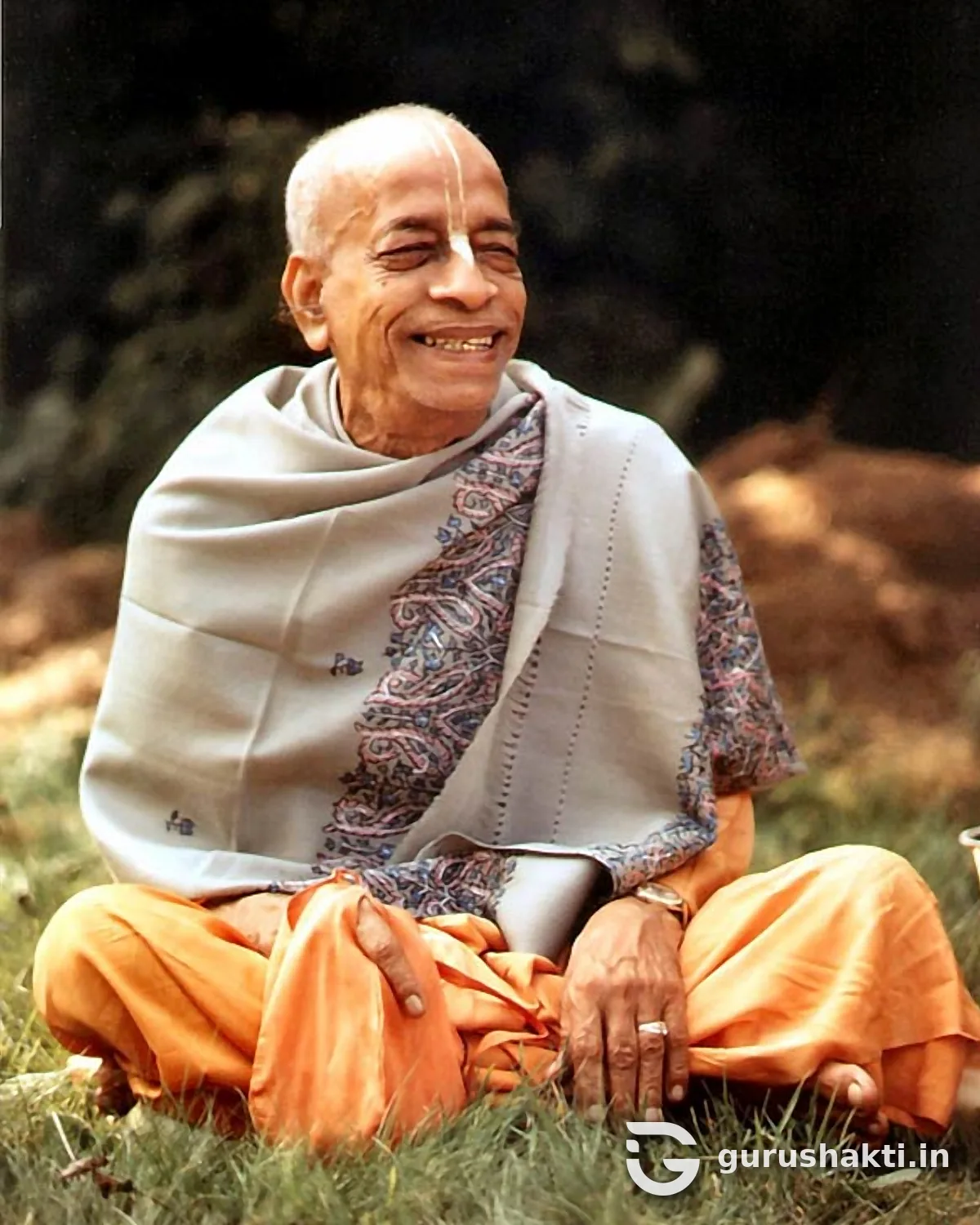
On 17 September 1965, a cargo ship called the Jaladuta docked at Commonwealth Pier in Boston. Its only passenger who was not crew was a monk from Vrindavan, 69 years old. He had survived two heart attacks on the 35-day crossing from Calcutta. He carried a few dollars' worth of rupees and a crate of his own translations of sacred Sanskrit texts. Two days later the ship reached New York.
That monk was A. C. Bhaktivedanta Swami, known to his followers as Srila Prabhupada. Within a year he had a small storefront temple in New York, and people were chanting the names of Krishna in a city park. He founded the International Society for Krishna Consciousness (ISKCON), the Hare Krishna movement. His life shows two things a seeker can carry today: that the holy name needs no special qualification, and that it is never too late to begin the work you were asked to do.
Life story
A boy from Calcutta
Abhay Charan De was born on 1 September 1896 in Calcutta. His father, Gour Mohan De, was a cloth merchant, and his mother was Rajani. The family followed the Gaudiya Vaishnava tradition, the path of devotion to Krishna taught by Sri Chaitanya Mahaprabhu.
From 1916 he studied English, philosophy and economics at the Scottish Churches' College in Calcutta. He declined his diploma, in support of Gandhi's movement for independence. He married, and worked as a manager in a pharmaceutical firm.
The instruction of 1922
In 1922, in Calcutta, he met Srila Bhaktisiddhanta Sarasvati, a leading Gaudiya Vaishnava teacher. At that first meeting the teacher asked the young man why he did not preach Sri Chaitanya's message throughout the world, in the English language. Abhay never forgot it. He later took formal initiation from Bhaktisiddhanta Sarasvati, and devoted the rest of his life to carrying out that one request.
At first he did this alongside family duties. In 1944, single-handed, he began an English magazine called Back to Godhead. In 1947 the Gaudiya Vaishnava Society honoured his learning and devotion with the title "Bhaktivedanta".
Vrindavan and the vow of sannyasa
In 1950 he retired from family life. In 1954 he took vanaprastha, the stage of life in which one withdraws from household concerns. He settled in Vrindavan at the Radha-Damodara temple, where he was given two rooms. There he worked on the Srimad-Bhagavatam and on Back to Godhead, printing in Delhi.
On 17 September 1959 he took sannyasa (the vow of renunciation) at the Sri Keshavaji Gaudiya Math in Mathura. It was given by his godbrother, Srila Bhakti Prajnana Keshava Goswami, and he became Bhaktivedanta Swami. In 1962 the first volume of his English Srimad-Bhagavatam came out. He completed three volumes before he left India.
The voyage and New York
On 13 August 1965 he sailed from Calcutta on the Jaladuta. He reached Boston on 17 September and New York on 19 September. In July 1966 he registered ISKCON in New York, with a small storefront temple at 26 Second Avenue on the Lower East Side.
On 9 October 1966 he sat beneath an American elm in Tompkins Square Park and led the Hare Krishna chant in the open air. It was the first time the maha-mantra (great chant) had been sung outdoors in this way outside India. The poet Allen Ginsberg joined in.
Eleven years around the world
In the years that followed he travelled across six continents. He opened over a hundred temples, along with schools and communities. He wrote and published without pause: Bhagavad-gita As It Is (abridged in 1968, complete in 1972), many volumes of the Srimad-Bhagavatam, and Sri Caitanya-caritamrta (1974–75). In all he left over sixty volumes, translated into many languages, and initiated nearly 5,000 disciples.
He also brought the work home to India. On Rama Navami in 1975 he opened the Sri Sri Krishna Balaram Mandir at Raman Reti in Vrindavan. At Mayapur in West Bengal, the Sri Mayapur Chandrodaya Mandir is ISKCON's world headquarters. He passed away in Vrindavan on 14 November 1977, aged 81. His samadhi stands at the Krishna Balaram Mandir.
Core teachings
The holy name
At the centre of his teaching is the Hare Krishna maha-mantra. In the Introduction to Bhagavad-gita As It Is he gives it in full. He taught, in the Preface and Introduction, that Krishna and His name are not different. To chant the name, then, is to be with Krishna. A person can chant on beads, sing it with others in kirtan (congregational chanting), or repeat it quietly while walking or working.
The soul as an eternal servant
"Everyone should know that a living entity is eternally a servant," he writes in the Preface to Bhagavad-gita As It Is. Each of us serves something, all the time: family, work, ambition, our own desires. He taught that the soul's natural position is to serve Krishna. Unless one serves Krishna, he wrote, one serves illusion instead. The only choice is whom to serve.
The Gita as it is
He called his translation Bhagavad-gita As It Is for a reason. In its Preface he writes: "I have tried to present Bhagavad-gita as it is, without any adulteration." He felt that many editions used the Gita to support their own ideas. He asked readers to take the text plainly, as Krishna's own words, and to read it in a spirit of devotion. In the Introduction he states that the reader should not think he is equal to Krishna.
Work offered to Krishna
Prabhupada did not ask people to leave their duties. In the Introduction to the Gita he points to Krishna's words to Arjuna: think of Krishna, and at the same time continue your prescribed duty. The difference lies in whom the work is for. In the Preface he explains that satisfying the Lord, rather than one's own senses, is the highest perfection of life.
Sharing what you have received
His own life was his clearest teaching. One instruction from his guru in 1922 shaped everything he did for the next 55 years. He wrote, translated and published so that others could read the bhakti texts in English. He gave his life to that sharing. He began his mission abroad at 69.
Principles for daily life
- Chant the name each day. Set aside a fixed time this week, morning or evening, to chant the Hare Krishna maha-mantra, on beads or aloud.
- Read a little of the Gita. Read a few verses daily, slowly, in a spirit of devotion rather than debate.
- Offer your work. Before you start a task, offer it to Krishna in your mind, and do it with care.
- Remember it is never too late. He began his main work at 69. If you have put off something good, take the first small step this week.
- Share what you value. Give a book, a meal or an hour of your time to someone, as a small act of daan (giving).
- Sing together. Join a kirtan at a nearby temple, or sing the name at home with your family.
Places of pilgrimage
- Sri Sri Krishna Balaram Mandir, Raman Reti, Vrindavan, Uttar Pradesh. The temple he opened in 1975, with his samadhi shrine and the house where he lived.
- Radha-Damodara temple, Vrindavan, Uttar Pradesh. Where he lived and wrote before he left for America.
- Sri Mayapur Chandrodaya Mandir, Mayapur, West Bengal. The world centre of ISKCON, with his Pushpa Samadhi Mandir and Bhajan Kutir.
- Sri Keshavaji Gaudiya Math, Mathura, Uttar Pradesh. Where he took sannyasa in 1959.
- Tompkins Square Park and 26 Second Avenue, New York, USA. The Hare Krishna Tree and the site of his first storefront temple.
Legacy today
The movement he started in a New York storefront in 1966 grew to over a hundred temples in his lifetime. The Sri Sri Krishna Balaram Mandir in Vrindavan keeps his house and his samadhi. At Mayapur, ISKCON's world centre holds his Pushpa Samadhi Mandir and Bhajan Kutir. His Bhagavad-gita As It Is, Srimad-Bhagavatam and Sri Caitanya-caritamrta remain in print and in use, and ISKCON has translated the Gita and other texts into many languages. Back to Godhead, the magazine he began alone in 1944, is still published. On 1 September 2021, his 125th birth anniversary was marked in India with a special commemorative coin.
Images
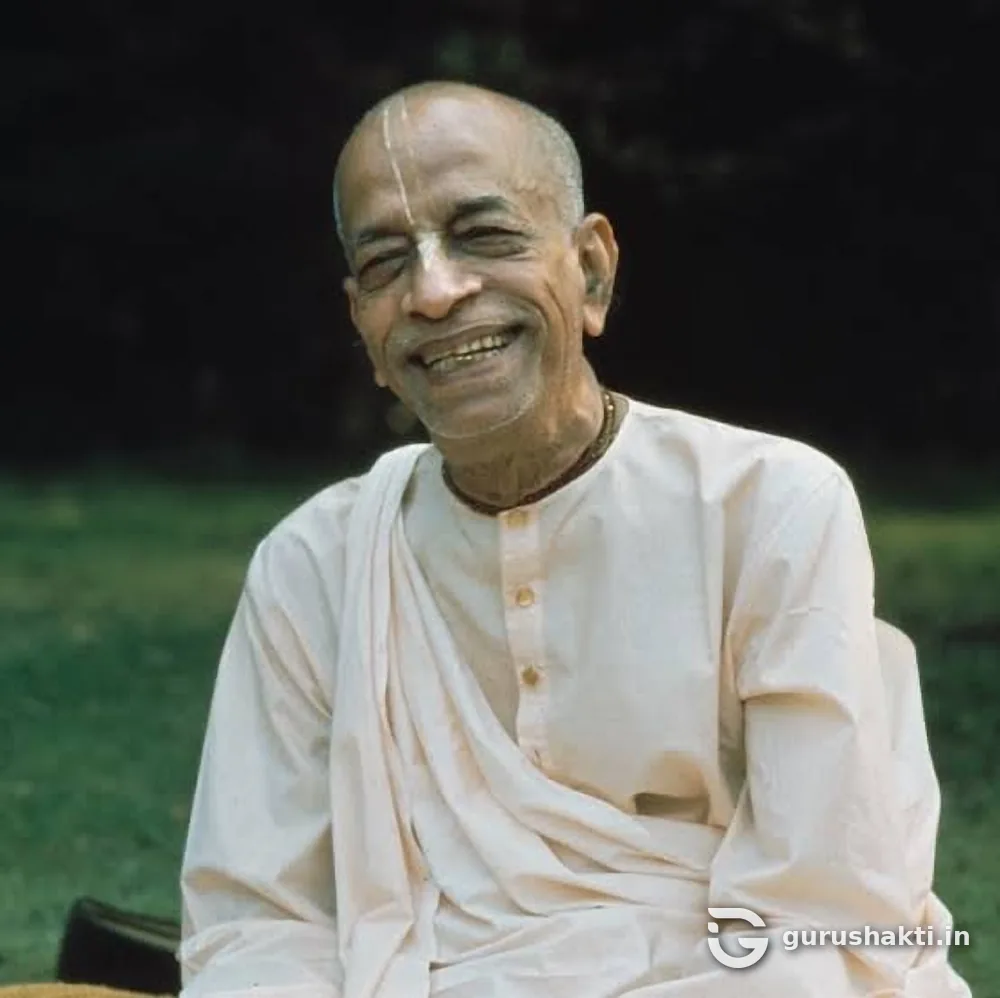
Image may be restored, upscaled or regenerated with generative AI.
Walk the path
Srila Prabhupada asked for nothing complicated. This week, set aside ten quiet minutes each day. Sit comfortably and chant the Hare Krishna maha-mantra slowly, listening to each word. If you can, read one verse of the Bhagavad Gita afterwards. You might also visit a nearby temple for kirtan, or offer a simple meal to someone as seva (selfless service). Begin wherever you are, at whatever age. That is the example he left.
Frequently asked questions
Who was Srila Prabhupada's guru?
His guru was Srila Bhaktisiddhanta Sarasvati Goswami, a leading teacher of the Gaudiya Vaishnava tradition. They first met in Calcutta in 1922, when the teacher asked him to spread Sri Chaitanya's message in English. Abhay later took formal initiation from him. In 1959 he received sannyasa from his godbrother, Srila Bhakti Prajnana Keshava Goswami, in Mathura.
When and how did Srila Prabhupada go to America?
He sailed from Calcutta on 13 August 1965 aboard the cargo ship Jaladuta, aged 69. He was the only passenger who was not crew, and he suffered two heart attacks during the 35-day voyage. The ship reached Boston on 17 September 1965 and New York two days later, on 19 September.
What is the Hare Krishna maha-mantra?
The maha-mantra is the chant "Hare Krishna, Hare Krishna, Krishna Krishna, Hare Hare, Hare Rama, Hare Rama, Rama Rama, Hare Hare." He gives it in the Introduction to Bhagavad-gita As It Is, and taught that Krishna's name is not different from Krishna. It can be chanted on beads, quietly, or sung together in kirtan.
What is Bhagavad-gita As It Is?
It is Srila Prabhupada's English translation of the Bhagavad Gita, with the Sanskrit text and his commentary. An abridged edition appeared in 1968 and the complete edition in 1972. In the Preface he explains that he tried to present the Gita as it is, without adding his own ideas, and asks readers to approach it with devotion.
Where is Srila Prabhupada's samadhi?
Srila Prabhupada passed away in Vrindavan on 14 November 1977, aged 81. His samadhi shrine stands at the Sri Sri Krishna Balaram Mandir in Raman Reti, Vrindavan, the temple he opened in 1975. ISKCON's centre at Mayapur in West Bengal also has a Pushpa Samadhi Mandir in his memory.
Sources
Researched and written by GuruShakti, October 2026.