
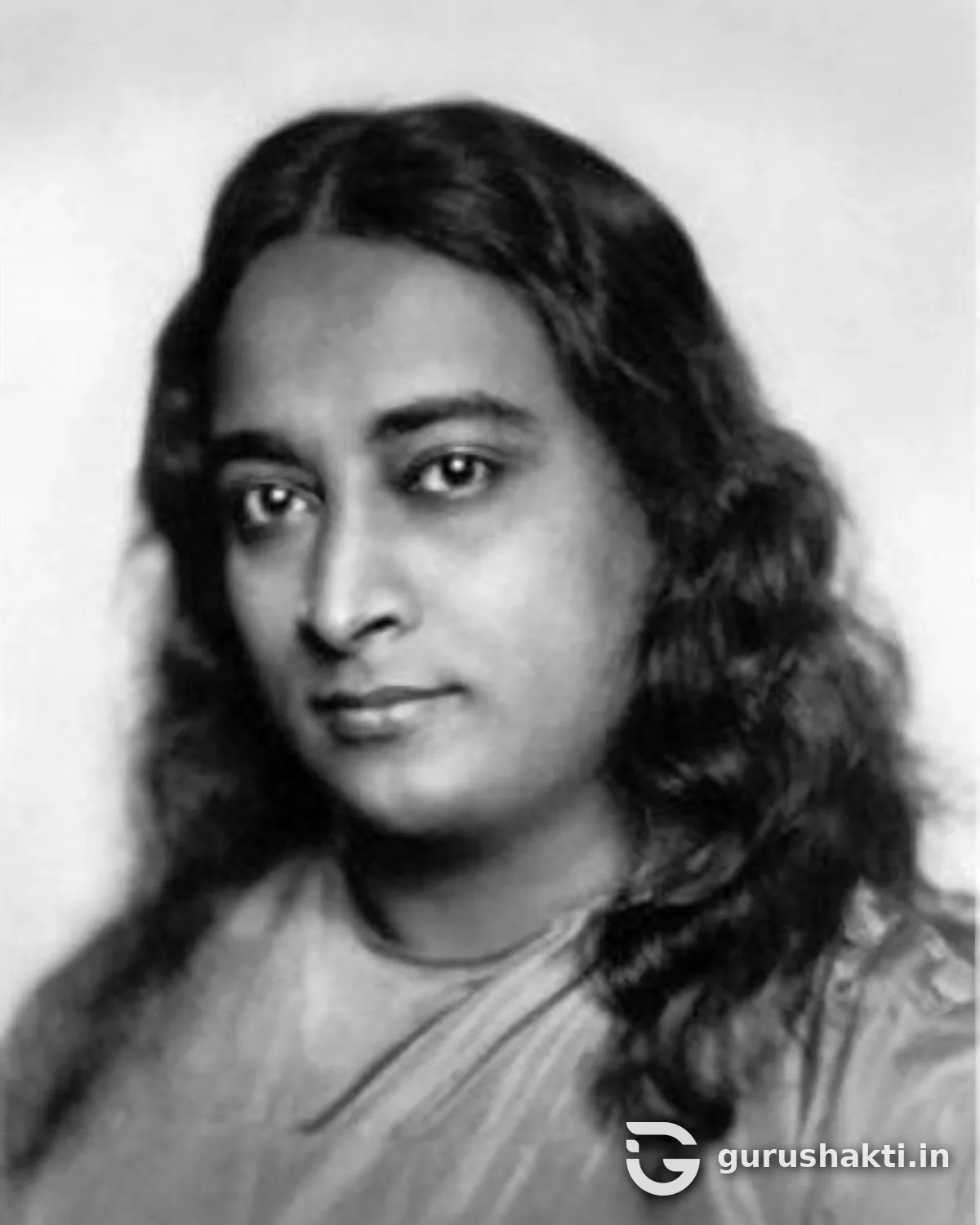
In September 1920 a young Indian monk arrived in Boston. He was 27, and he had come as India's delegate to the International Congress of Religious Liberals. His talk was titled "The Science of Religion". He had come with a larger task as well: to teach Kriya Yoga, a meditation practice from his own line of gurus, to people who had never heard of it. Before he left, his followers say, Mahavatar Babaji had told him he was chosen for exactly this.
That monk was Swami Yogananda, later Paramahansa Yogananda. He spent most of his later life in America, yet his first school and ashram were at Ranchi, and the society he founded in India still teaches his method today. His Autobiography of a Yogi tells the story of his search and of the saints he met. For a seeker today, his message is practical: sit in meditation each day, care for body and mind, and look for the one truth beneath every sincere faith.
Life story
A child of Gorakhpur
Mukunda Lal Ghosh was born on 5 January 1893 in Gorakhpur, Uttar Pradesh, into a devout Bengali family. His parents were disciples of the yogi Lahiri Mahasaya. When Mukunda was an infant, Lahiri Mahasaya blessed him and foretold that he would become a yogi. In Autobiography of a Yogi, Yogananda records the words: the child "will carry many souls to God's kingdom." The link with Lahiri Mahasaya did not end there: the guru Mukunda later found was one of his disciples.
Ten years with Sri Yukteswar
In 1910, at 17, Mukunda met his guru, Swami Sri Yukteswar Giri, himself a disciple of Lahiri Mahasaya. For about ten years he trained in Sri Yukteswar's hermitage. In 1915 he graduated from Calcutta University. The same year he took monastic vows in the Giri branch of the Swami order and received the name Yogananda.
In 1917 he founded a school for boys that joined ordinary studies with yoga and meditation. It was soon based at Ranchi, where he taught beneath a litchi tree. That tree, and his room at the ashram, are preserved to this day. That same year he founded Yogoda Satsanga Society of India (YSS), which still carries his teaching in India.
Carrying Kriya Yoga to the West
In September 1920 he reached Boston as India's delegate to the International Congress of Religious Liberals and spoke on "The Science of Religion". That year he started Self-Realization Fellowship (SRF), his society for the West. Devotees recount that shortly before he sailed, Mahavatar Babaji appeared to him and charged him with spreading Kriya Yoga there. Through 1924 and 1925 he lectured across America to full halls. In 1925 he set up the Mount Washington headquarters in Los Angeles, which became the SRF Mother Center.
Among his close disciples were Rajarsi Janakananda (James J. Lynn), Sri Daya Mata, Sri Gyanamata, Tara Mata and Mrinalini Mata.
Return to India, 1935–36
In 1935, the year SRF was legally chartered in America, Yogananda returned to India. At Wardha he met Mahatma Gandhi, who asked him for initiation into Kriya Yoga. He also met Sri Ramana Maharshi and Sri Anandamoyi Ma. During this visit Sri Yukteswar gave him the title "Paramahansa". On 9 March 1936, Sri Yukteswar passed away.
The book and the last years
In 1946 he published Autobiography of a Yogi. It tells of his family, his search, his guru and the saints he met, and it remains his best-known work. Much of it was written at the SRF Hermitage in Encinitas, California. In 1950 he dedicated the SRF Lake Shrine at Pacific Palisades, which holds a portion of Gandhi's ashes.
On 7 March 1952 he spoke at a banquet at the Biltmore Hotel in Los Angeles in honour of India's ambassador, Dr Binay R. Sen. Just after his speech, he entered mahasamadhi (a great yogi's final, conscious exit from the body). His body was interred at Forest Lawn Memorial-Park in Glendale. The mortuary director later testified that no decay was visible even 20 days after death.
Core teachings
Kriya Yoga
At the heart of his teaching is Kriya Yoga, a meditation practice handed down from Mahavatar Babaji through Lahiri Mahasaya and Sri Yukteswar. SRF describes it as an ancient technique that calms the breath and life-energy so the mind can turn inward to God. He crossed an ocean to teach it. The technique itself is taught only through the YSS and SRF Lessons and initiation, not in books or web pages.
Self-realization
For Yogananda the purpose of life is to know God directly, not only to believe. In his words, quoted by YSS: "Self-realization is the knowing in body, mind, and soul that we are one with the omnipresence of God." He taught that this oneness is not something we gain from outside. It is already true, and meditation uncovers it. This is why he placed daily meditation, not belief alone, at the centre of his teaching.
The unity of true religions
Yogananda taught that the original teachings of Krishna in the Bhagavad Gita and of Christ in the Gospels point to the same truth. He wrote commentaries on both, including God Talks with Arjuna on the Gita. In his view the truth behind all sincere faith is not proved by argument. It is experienced in meditation. For his students this meant respecting every faith and looking for the common truth beneath it.
Balanced living
Yogananda asked his students to care for body, mind and soul together, not one at the cost of the others. YSS sums up his advice as right diet, exercise, positive thinking and daily meditation. His boys' school at Ranchi was built on this idea, with yoga and meditation alongside ordinary lessons.
The guru-disciple bond
Yogananda received Kriya Yoga through an unbroken line: Mahavatar Babaji, Lahiri Mahasaya, Sri Yukteswar. He taught that divine guidance flows through such a line of realised masters. The disciple's part is sincere, regular practice of the guru's method; help then comes. His own ten years in Sri Yukteswar's hermitage, and his parents' devotion to Lahiri Mahasaya before him, were the ground of everything he later taught.
Principles for daily life
- Keep a fixed meditation time. Sit at the same hour each morning and evening this week, even for 10 to 15 minutes.
- Bookend the day with gratitude. Begin and end each day with a short, silent prayer of thanks.
- Look after the instrument. Choose simple food, some exercise, enough rest and positive thought.
- Honour other faiths. When you meet a different belief, look for the common truth beneath it instead of the difference.
- Work as an offering. Serve others quietly and treat your daily work itself as an offering to God.
Places of pilgrimage
- Yogoda Satsanga Sakha Math, Ranchi, Jharkhand. His first ashram and school; his room and the litchi tree under which he taught are preserved.
- YSS Dakshineswar Ashram, Kolkata, West Bengal. The headquarters of Yogoda Satsanga Society, on the Ganga.
- Gorakhpur, Uttar Pradesh. The city of his birth.
- YSS Noida Ashram, Noida, Uttar Pradesh. A major YSS centre near Delhi.
- SRF Lake Shrine, Pacific Palisades, USA. Meditation gardens he dedicated in 1950, with a shrine holding part of Gandhi's ashes.
- SRF Hermitage, Encinitas, USA. Where he wrote much of Autobiography of a Yogi.
Legacy today
The two societies Yogananda founded continue his work. Yogoda Satsanga Society of India, founded in 1917, has its headquarters at Dakshineswar in Kolkata and ashrams at Ranchi and Noida. Self-Realization Fellowship, begun in 1920, is based at the Mount Washington Mother Center in Los Angeles. Both teach Kriya Yoga through home-study Lessons and initiation, as he arranged. In California, visitors still walk the Lake Shrine gardens he dedicated in 1950 and visit the Encinitas Hermitage where he wrote much of his autobiography. Autobiography of a Yogi, published in 1946, appears in Hindi in the YSS edition as Yogi Kathamrit. The Ranchi school he began in 1917 stands where his room and litchi tree are kept.
Images
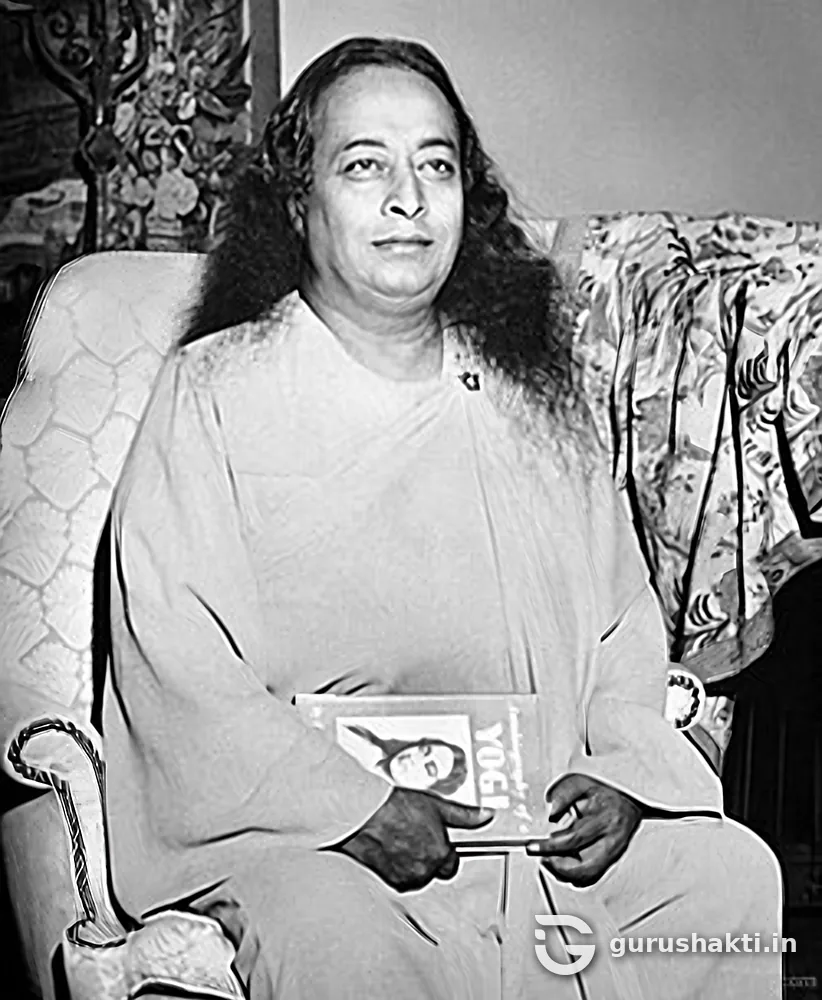
Image may be restored, upscaled or regenerated with generative AI.
Walk the path
Yogananda's first advice was simple: meditate every day. This week, choose a fixed time, morning and evening, and sit quietly for ten or fifteen minutes. Begin and end the day with a silent word of thanks. If you would like to learn Kriya Yoga itself, the Yogoda Satsanga Society of India teaches it through its Lessons, as he intended. You might also visit the Ranchi ashram, or simply read a chapter of Autobiography of a Yogi slowly before sleep.
Frequently asked questions
Who was the guru of Paramahansa Yogananda?
His guru was Swami Sri Yukteswar Giri, whom he met in 1910 at the age of 17 and with whom he trained for about ten years. Sri Yukteswar was a disciple of Lahiri Mahasaya, whose own guru was Mahavatar Babaji. Yogananda's parents were also disciples of Lahiri Mahasaya.
What is Kriya Yoga and how can I learn it?
Kriya Yoga is an ancient meditation technique, passed down from Mahavatar Babaji, that calms the breath and life-energy so the mind can turn inward to God. Yogananda's societies teach it only through their home-study Lessons and initiation. In India, Yogoda Satsanga Society of India (YSS) is the place to begin.
Why is Autobiography of a Yogi so famous?
Published in 1946, Autobiography of a Yogi tells Yogananda's own story: his family's devotion to Lahiri Mahasaya, his years with Sri Yukteswar, and the saints he met in India. It is his own account of the masters of his line and of how he came to the work they gave him. YSS publishes it in Hindi as Yogi Kathamrit.
Where is the Yogananda ashram in India (Ranchi)?
Yogoda Satsanga Sakha Math is in Ranchi, Jharkhand. It was his first ashram and the home of the boys' school he founded in 1917. His room and the litchi tree where he taught are preserved there. The YSS headquarters is at Dakshineswar, Kolkata, and there is also a major ashram at Noida.
How did Paramahansa Yogananda die?
On 7 March 1952, just after giving a speech at a Biltmore Hotel banquet in Los Angeles for India's ambassador, Dr Binay R. Sen, he entered mahasamadhi. He was interred at Forest Lawn Memorial-Park, Glendale. The mortuary director later testified that no decay was visible even 20 days after death.
Sources
Researched and written by GuruShakti, October 2026.