
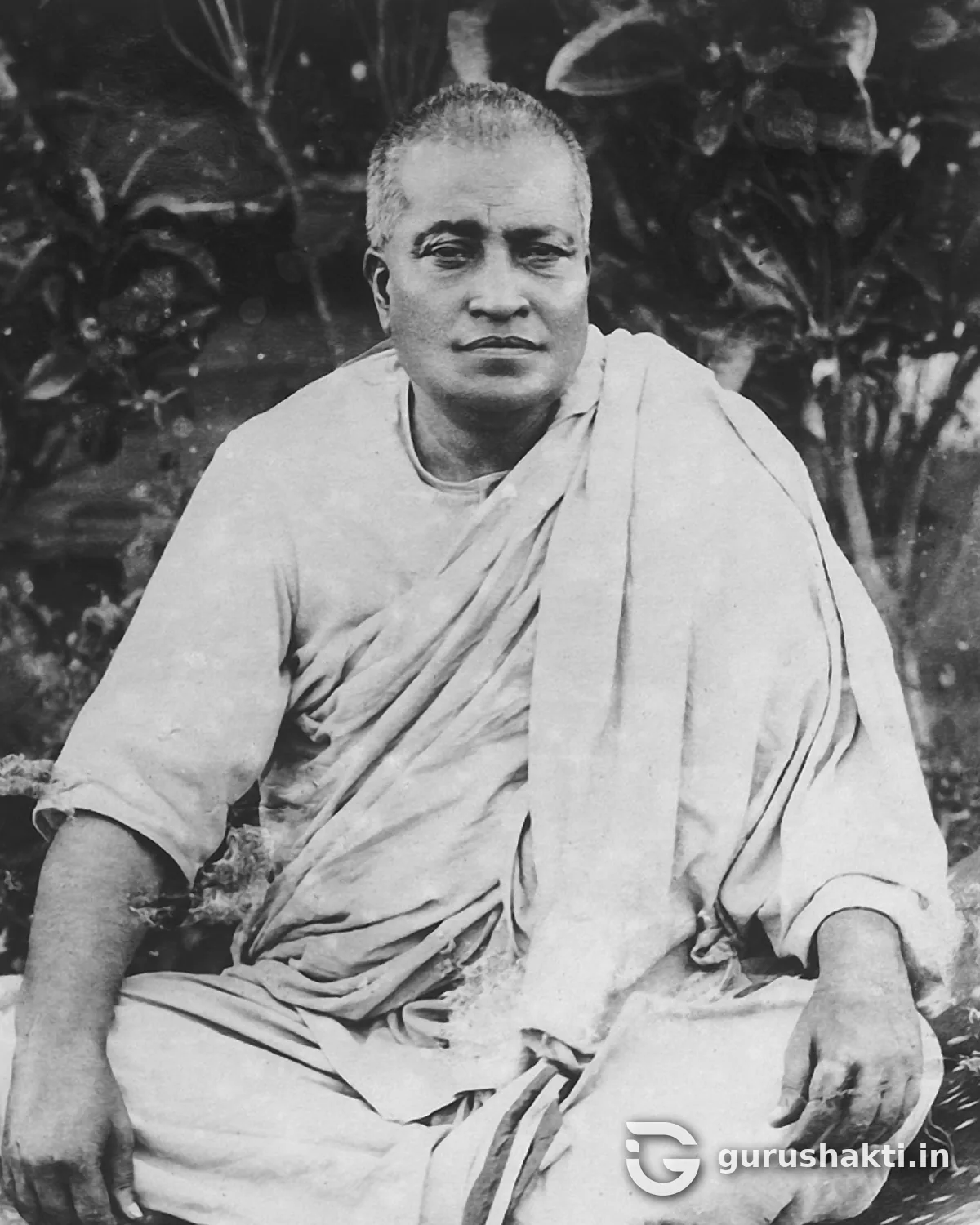
On 8 May 1924, a man of thirty-six reached Rishikesh as a wandering seeker, with no post and no practice. Only a year earlier he had been a doctor in Malaya, managing an estate hospital and treating poor labourers. Within weeks of arriving, on 1 June 1924, he took sannyasa (formal renunciation) from Swami Vishvananda Saraswati. Dr Kuppuswamy became Swami Sivananda Saraswati.
He never stopped being a doctor. In his first years of hard practice by the Ganga, he ran a small dispensary for sick monks and pilgrims. Later he summed up the whole spiritual life in six plain words: "Serve, Love, Give, Purify, Meditate, Realise." Swami Sivananda of Rishikesh (1887–1963) matters today because his path begins with ordinary kindness and daily habit, things anyone can start this week.
Life story
A revenue officer's son in Pattamadai
Kuppuswamy was born on 8 September 1887 in Pattamadai, a village in the Tirunelveli district of Tamil Nadu. His father, P.S. Vengu Iyer, was a revenue officer and a devotee of Shiva. His mother was Parvati Ammal.
In the early 1900s he studied medicine at the Medical School in Tanjore. He then practised at Tiruchi, and while there he published a medical journal called The Ambrosia. He paid for it himself and gave it away free.
The doctor in Malaya
In 1913 he went to Malaya and took charge of an estate hospital at Seremban. For about ten years he served the workers there, many of them poor labourers. The Divine Life Society records that he was known for treating them free and with great care.
It was a comfortable career. Yet in 1923 he gave up his practice and came back to India. He did not return to a hospital. He set out on the road as a wandering seeker.
Sannyasa and the years at Swarg Ashram
He reached Rishikesh on 8 May 1924. On 1 June, Swami Vishvananda Saraswati initiated him into sannyasa in the Saraswati branch of the Dashanami order of monks. The doctor now carried a new name.
The mid-1920s were years of intense sadhana (spiritual practice) at Swarg Ashram. He did not use that time only for himself. Near Lakshman Jhula he ran a charitable dispensary for sadhus (wandering monks) and pilgrims, carrying medicines and nursing the sick himself. Meditation and medicine went side by side.
The Divine Life Society
In 1936 he founded the Divine Life Society at Rishikesh and registered it as a trust the same year. In September 1938 its journal, The Divine Life, began to appear.
On 3 December 1943 he started the Akhanda Mahamantra Kirtan, round-the-clock kirtan (devotional chanting) of the Mahamantra, the great chant of the divine names. It is still sung at the ashram, day and night. In 1945 he opened the Sivananda Ayurvedic Pharmacy, and in 1948 the Yoga-Vedanta Forest Academy for training students.
He wrote constantly. The Society counts more than three hundred books under his name; other sources give 296. Titles include Bliss Divine and Practice of Yoga.
Travels and the last years
In 1950 he made an All-India and Ceylon tour, carrying the message of Divine Life across the country.
Among his disciples, Swami Chidananda and Swami Krishnananda went on to lead the Divine Life Society. Others who were influenced by him founded separate movements of their own.
Swami Sivananda entered mahasamadhi (a realised soul's final leaving of the body) on 14 July 1963 at Shivanandanagar. His samadhi shrine, the Samadhi Mandir, stands in the ashram where the kirtan he began is still being sung.
Core teachings
Serve, Love, Give, Purify, Meditate, Realise
His six-word motto is a map of the whole spiritual life, in order. You begin outside yourself, with service and generosity. Love and giving soften the heart. Then the mind is cleansed, and only then does meditation go deep, leading to realisation of God. The Divine Life Society keeps the motto at the centre of his story: "Serve, Love, Give, Purify, Meditate, Realise." Many people want to start with meditation. He started with service.
The Yoga of Synthesis
Swami Sivananda did not ask his students to choose one yoga and ignore the rest. He taught a Yoga of Synthesis that combined four paths: karma yoga (selfless action), bhakti yoga (devotion), jnana yoga (the path of knowledge) and raja yoga (meditation). Each one balances the others. Service keeps devotion practical, devotion keeps knowledge warm, and meditation gives all three a steady centre.
See God in all
He asked his students to live with open hands. The Sivananda Yoga Vedanta Centres preserve his instruction "To serve all, to love all, to mix with all...", which goes on to ask the seeker to see the Divine in every being. For him this was not a mood but a discipline. The patient, the pilgrim and the stranger at the door were all to be met as forms of God.
Practice over theory
He wanted spiritual talk to become action. His teaching, as recorded by his followers, was that a small amount of real practice is worth far more than heaps of theory. What changes a person is disciplined sadhana done every day: a little japa (repetition of a divine name), a little study, a little meditation. Steady habits, kept up over years, were his method.
Selfless service as worship
He served the sick before he ever took sannyasa, as a doctor in Tiruchi and Malaya, and he kept doing it at his free dispensary in Rishikesh. He taught that caring for the sick and the poor is itself a path to God. Seva (selfless service) was not a step before the "real" practice. Done without wanting reward, it was the practice.
Principles for daily life
- Do one act of unselfish service each day. It can be small: carrying a bag, making a call, sitting with someone who is unwell.
- Give something regularly. Set aside money, food, time or knowledge this week and give it without announcing it.
- Keep a short daily routine. Ten minutes of japa, a page of study and a few minutes of meditation are enough to begin.
- Look after your body. He was a doctor first; treat health as a tool for spiritual life and rest and eat with care.
- Let go of grudges quickly. His notebook advice was to "forget like a child any injury done by somebody immediately". Try it with one small hurt this week.
Places of pilgrimage
- Sivananda Ashram, Shivanandanagar, Rishikesh, Uttarakhand. Headquarters of the Divine Life Society and home of his Samadhi Mandir, where the Akhanda Mahamantra Kirtan begun in 1943 is still sung.
- Swarg Ashram, Rishikesh, Uttarakhand. Where he spent his early years of sadhana after sannyasa.
- Lakshman Jhula area, Rishikesh, Uttarakhand. Site of his early charitable dispensary for sadhus and pilgrims.
- Pattamadai, Tirunelveli district, Tamil Nadu. The village where he was born.
Legacy today
The Divine Life Society, founded in 1936, still has its headquarters at Shivanandanagar in Rishikesh. Swami Chidananda and Swami Krishnananda led it after him. Its journal, The Divine Life, has appeared since 1938, and the Mahamantra kirtan he started in 1943 is still sung at the ashram.
His influence also reached beyond the Society. Several founders of separate organisations were shaped by him: Swami Chinmayananda of the Chinmaya Mission, Swami Satyananda of the Bihar School of Yoga, and Swami Vishnudevananda of the Sivananda Yoga Vedanta Centres. These are independent movements inspired by his teaching, not branches of the Divine Life Society. His books, around 300 of them, carry his voice to readers who never met him.
Images
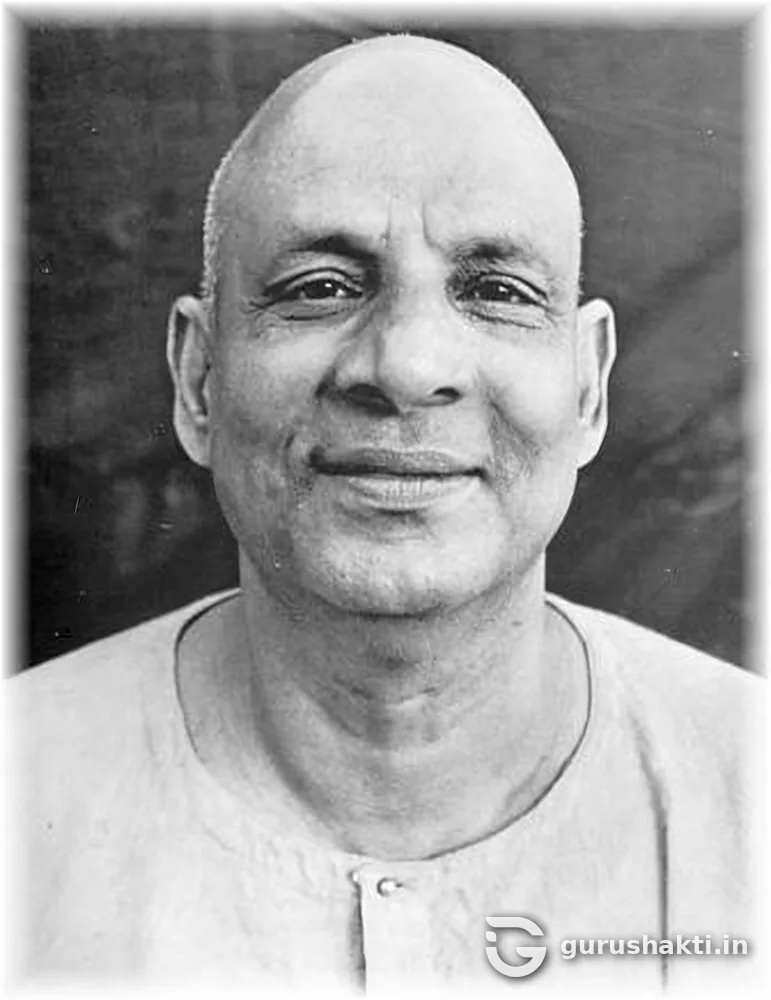
Image may be restored, upscaled or regenerated with generative AI.
Walk the path
Swami Sivananda's path begins with the first word of his motto: serve. This week, choose one simple act of seva and do it quietly, perhaps helping someone unwell or giving food to someone who needs it. Add a short daily routine: a few minutes of japa with a name of God you love, a page from a spiritual book, and a little stillness. If someone hurts you, try forgetting it "like a child". Nothing more is needed to begin.
Frequently asked questions
Who was Swami Sivananda of Rishikesh?
Swami Sivananda of Rishikesh (1887–1963) was born Kuppuswamy in Pattamadai, Tamil Nadu. He trained as a doctor and served poor labourers in Malaya before taking sannyasa in Rishikesh in 1924. He founded the Divine Life Society in 1936 and taught a Yoga of Synthesis centred on service, devotion, knowledge and meditation.
When was the Divine Life Society founded?
Swami Sivananda founded the Divine Life Society at Rishikesh in 1936, and it was registered as a trust the same year. Its journal, The Divine Life, began in September 1938. The Society's headquarters is still Sivananda Ashram at Shivanandanagar, Rishikesh, where his samadhi shrine stands.
What is the meaning of "Serve, Love, Give, Purify, Meditate, Realise"?
It is Swami Sivananda's six-word summary of the spiritual life. Begin with service and love, practise generosity, cleanse the mind of selfishness, then meditate, and finally realise God. The order matters to him: action and kindness prepare the heart, and meditation goes deeper in a purified mind.
Who was Swami Sivananda's guru?
Swami Vishvananda Saraswati initiated him into sannyasa in Rishikesh on 1 June 1924, a few weeks after he arrived there on 8 May. With this initiation he entered the Saraswati branch of the Dashanami order of monks and received the name Swami Sivananda Saraswati.
How many books did Swami Sivananda write?
He wrote around 300 books. The Divine Life Society counts more than three hundred, while other sources give 296. Well-known titles include Bliss Divine, Practice of Yoga and Sure Ways for Success in Life and God-Realisation. He also started the journals The Ambrosia and The Divine Life.
Sources
Researched and written by GuruShakti, October 2026.