
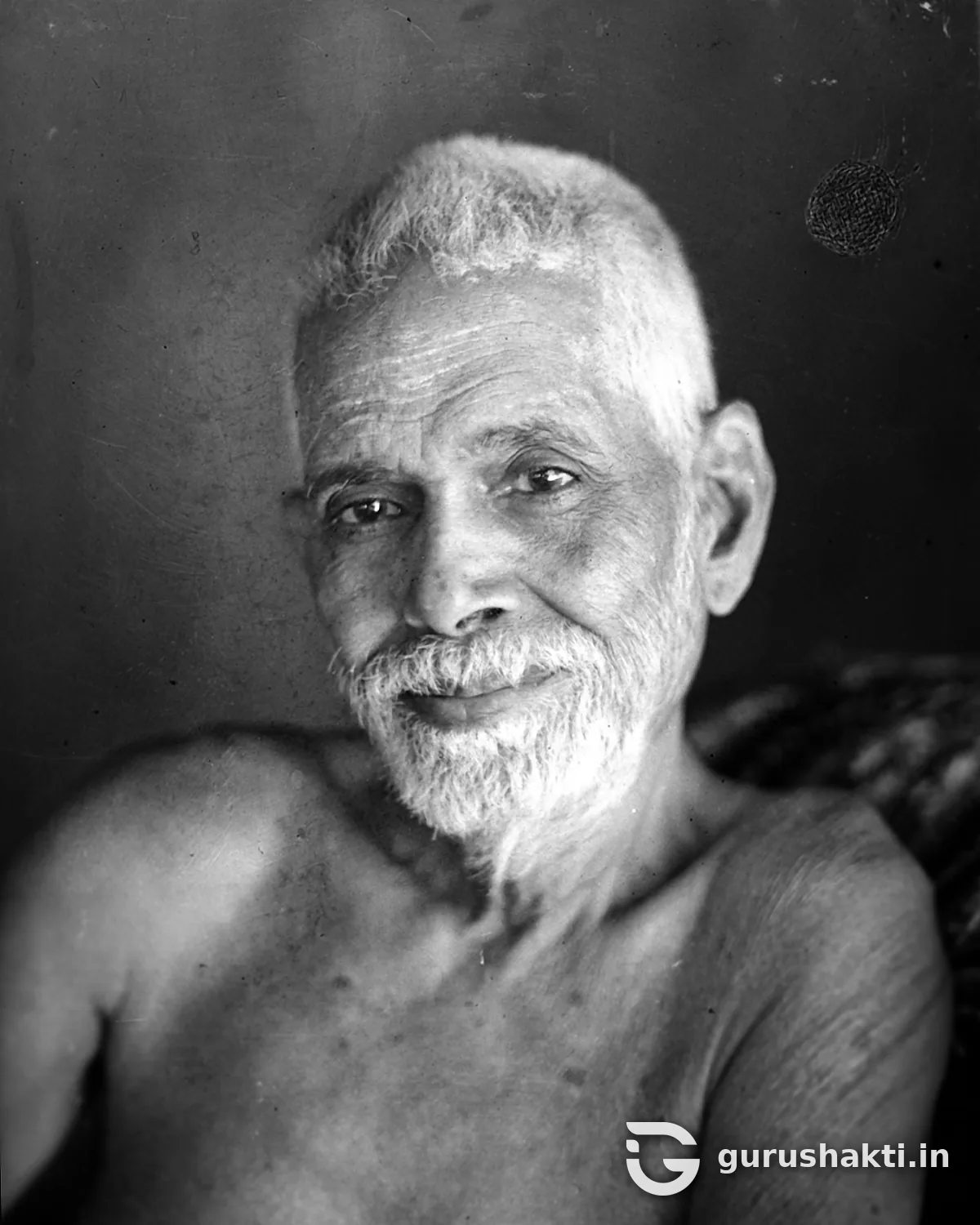
In the middle of July 1896, a schoolboy of 16 sat alone in an upstairs room of his uncle's house in Madurai. A sudden fear of death came over him. He lay down, stretched out like a corpse, held his breath and asked what it is that dies. The body would die, he saw, yet the "I" remained. From that day, the fear of death never came back.
That boy was Venkataraman, later known as Bhagavan Sri Ramana Maharshi. He gave the world no new ritual, no organisation to join and no fee to pay. He gave one question: "Who am I?" Anyone can ask it, in a kitchen or an office, in a few quiet minutes. For a seeker today, tired of noise and of chasing happiness in things, his plain method and his own life on the hill of Arunachala remain a clear example of peace that does not depend on circumstances.
Life story
A boy from Tiruchuzhi
Venkataraman was born on the night of 29–30 December 1879 at Tiruchuzhi, near Madurai in Tamil Nadu. It was the night of Arudra Darshan. His mother was Alagammal. The family home there is now called Sundaram Mandiram. In 1891 he moved to Dindigul and later to Madurai for his schooling.
In November 1895 an elderly relative mentioned the name "Arunachala" in passing. The word stirred the boy deeply. Arunachala is the holy hill at Tiruvannamalai, worshipped as Shiva himself. He did not yet know why the name moved him so much.
The death experience in Madurai
The following July, at his uncle's house in Madurai, came the fear of death and the enquiry described above. He was 16. He saw that the Self is untouched by death. The house where this happened is now Ramana Mandiram.
A few weeks later, at the end of August 1896, he left home without telling anyone. Between 29 August and 1 September he made his way to Tiruvannamalai, to the hill whose name had stirred him the year before. He never left Arunachala again.
Years of silence on the hill
His first years there were spent in deep absorption. He sat in the Patala Lingam, an underground vault inside the Arunachaleswarar Temple, and later at a place called Gurumurtam. From February 1899 he lived on the hill itself, mostly in Virupaksha Cave, for about 17 years.
Seekers came with questions, and around 1900 to 1902 he wrote his answers for them. One of these devotees, M. Sivaprakasam Pillai, recorded the questions and replies that became the small book Who am I? (Nan Yar?). Another set became Self-Enquiry. On 18 November 1907 Kavyakantha Ganapati Muni declared that this silent young swami should be called Bhagavan Sri Ramana Maharshi. The name stayed.
Mother and son at Skandashram
His mother had come to Arunachala once before, begging him to come home. He did not speak. He wrote her a note saying that what is destined will happen, and the best course is to remain silent. She went back. In 1916 she returned to stay, when he moved to Skandashram, a home on the hillside. She lived beside him there until she attained samadhi on 19 May 1922. Her shrine, the Matrubhuteswara temple, became the centre around which the present Sri Ramanasramam grew at the foot of the hill.
The last years
The ashram's doors were never closed, even at night. Seekers came to sit with him in the Old Hall. Most of his teaching in these years took the form of conversations, answering questions put to him, and devotees wrote them down. He also composed hymns to Arunachala and short works such as Upadesa Saram and Ulladu Narpadu. The writer Paul Brunton was one visitor whose books brought him to Western readers. On 1 September 1946 devotees marked the Golden Jubilee of his arrival at Arunachala.
In 1949 a sarcoma appeared in his left arm. He declined to be anxious about the body. He left the body at 8:47 pm on 14 April 1950, at Sri Ramanasramam.
Core teachings
Self-enquiry: "Who am I?"
His central practice is atma vichara (self-enquiry). Every thought arises to someone. Instead of following the thought, turn back and ask: to whom did this come? To me. And who am I? Holding this question, he explains in Who am I?, quietens all other thoughts, and the mind sinks back into its source. It is less a question to be answered in words than a turning of attention. It can be practised anywhere, at any time, without special equipment or setting.
The "I"-thought is the root
In Who am I? (question 9), he explains that the mind is really the sense of "I" that rises along with the body. This "I"-thought is the first thought. Every other thought follows it, like branches from one root. So there is no need to fight thoughts one by one. Look instead for the source of the "I". When that root is found, the other thoughts lose their hold and fall away by themselves.
Happiness is our nature
We usually believe happiness lies in objects, people or success. Ramana pointed to a simple fact of daily life. In deep sleep we have nothing, yet we wake saying we slept happily. In Who am I? (question 24) he writes, "Happiness is the very nature of the Self." When the mind is still, that happiness shows itself. This is why he asked seekers to look inward, rather than chase one object after another.
Surrender is equal to enquiry
Not everyone takes easily to enquiry. Ramana did not ask them to. In Who am I? (question 18) he explains that giving oneself completely to God, leaving no room for any thought except the Self, leads to the same goal. Devotion and enquiry were not rivals for him. He wrote hymns to Arunachala himself. The one who truly surrenders and the one who truly enquires both arrive at the same stillness.
Silence and acceptance
His reply to his mother sums up his attitude to events. What is destined to happen will happen. So the wise course is to remain silent and at peace. This is not laziness. He did his part fully, and later welcomed his mother to live beside him. But he did not struggle against what came, even in his final illness.
Principles for daily life
- Ask "To whom?" When a worry rises this week, quietly ask "To whom does this come?" and return to the simple feeling of "I am".
- Sit in silence. Spend a few minutes each day simply being, without trying to achieve anything.
- Look within for happiness. Notice the peace of deep sleep and of quiet moments, and stop expecting things to supply it.
- Do the work, offer the results. Do your duties fully, then hand over the outcome to God.
- Keep your door open. Be kind to animals and to everyone who comes to you, as his ashram never closed its doors, even at night.
- Let things be. When something cannot be changed, practise his advice to his mother: stay silent and at peace.
Places of pilgrimage
- Sri Ramanasramam, Tiruvannamalai, Tamil Nadu. Sit in the Old Hall where he received visitors, and visit his samadhi shrine and the Matrubhuteswara temple over his mother's samadhi.
- Virupaksha Cave, Arunachala hill, Tiruvannamalai, Tamil Nadu. The cave where he lived for about 17 years; a quiet place for silent sitting.
- Skandashram, Arunachala hill, Tiruvannamalai, Tamil Nadu. His hillside home from 1916 to 1922, where his mother lived with him.
- Patala Lingam, Arunachaleswarar Temple, Tiruvannamalai, Tamil Nadu. The underground vault where he first sat in deep absorption.
- Sundaram Mandiram, Tiruchuzhi, Tamil Nadu. The house where he was born.
- Ramana Mandiram, Madurai, Tamil Nadu. The house where the death experience took place.
Legacy today
Sri Ramanasramam still stands at the foot of Arunachala in Tiruvannamalai, around his samadhi shrine and his mother's Matrubhuteswara temple. The Old Hall where he sat for years is open to visitors who wish to sit in silence. Ramana had no human guru. His teaching continues through his own small writings. Who am I?, recorded by M. Sivaprakasam Pillai, is published by the ashram. Upadesa Saram, Ulladu Narpadu and his hymns to Arunachala are read and sung by his devotees, along with the conversations they recorded. Paul Brunton's books first brought his name to Western readers. Today the question "Who am I?" is still practised by seekers who never met him.
Images
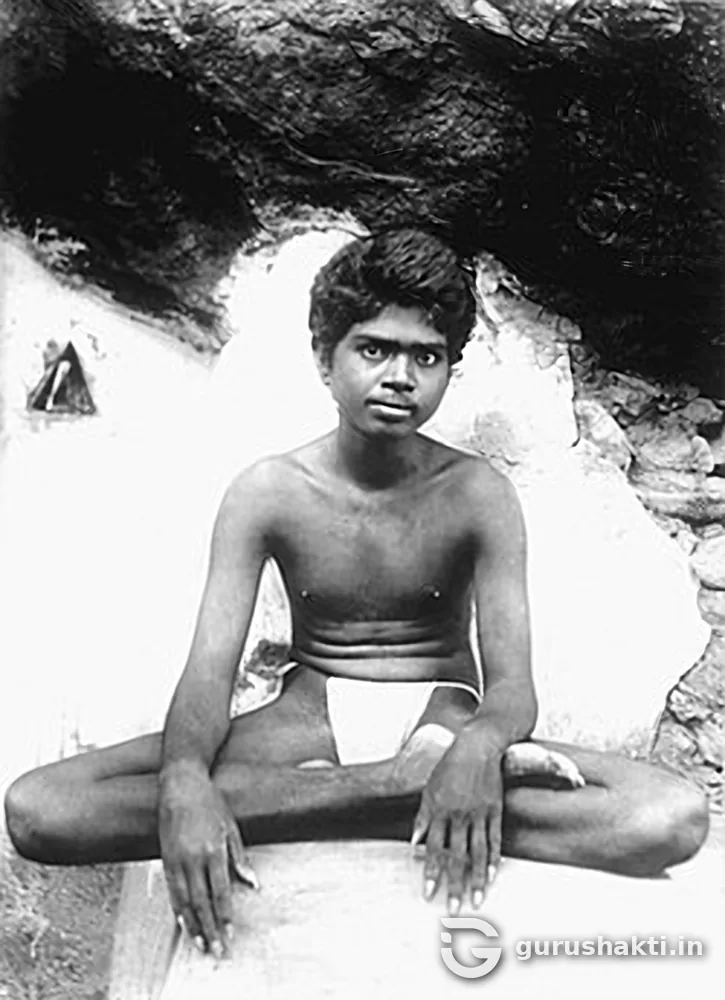
Image may be restored, upscaled or regenerated with generative AI.
Walk the path
Ramana asked for no special preparation. This week, choose a quiet time, perhaps early morning or before sleep. Sit comfortably for five or ten minutes. When a thought comes, do not follow it. Ask gently, "To whom does this come?" and rest in the plain sense of "I am". If enquiry feels hard, simply offer your day to God, which he said leads to the same place. You might also feed an animal or welcome someone at your door, in the spirit of his ashram, whose doors were never closed.
Frequently asked questions
What is Ramana Maharshi's "Who am I?" self-enquiry and how do you practise it?
Self-enquiry means turning attention from thoughts to the one who has them. When a thought arises, ask "To whom does this come?" The answer is "to me". Then ask "Who am I?" and stay with the feeling of "I". In Who am I? he explains that this quietens other thoughts and the mind returns to its source.
Who was the guru of Ramana Maharshi?
Ramana Maharshi had no human guru. He regarded Arunachala, the holy hill at Tiruvannamalai worshipped as Shiva, as his Guru. The name alone stirred him deeply when he heard it as a boy in 1895. After he reached Tiruvannamalai in 1896, he never left Arunachala for the rest of his life.
What happened in Ramana Maharshi's death experience?
In mid-July 1896, at 16, he was seized by a sudden fear of death at his uncle's house in Madurai. He lay still like a corpse, held his breath and asked what dies. He realised the body dies but the Self is untouched by death. The fear never returned, and weeks later he left for Arunachala.
How do I visit Ramana Ashram in Tiruvannamalai?
Sri Ramanasramam lies at the foot of Arunachala hill in Tiruvannamalai, Tamil Nadu. Visitors can sit in the Old Hall where he received seekers and visit his samadhi shrine and his mother's Matrubhuteswara temple. Virupaksha Cave and Skandashram, where he lived earlier, are on the hill above. The ashram's website gives current visiting arrangements.
When did Ramana Maharshi die and where is his samadhi?
Ramana Maharshi left the body at 8:47 pm on 14 April 1950, at Sri Ramanasramam in Tiruvannamalai. His samadhi shrine is in the ashram, at the foot of Arunachala. Close by is the Matrubhuteswara temple over the samadhi of his mother Alagammal, who died in 1922.
Sources
Researched and written by GuruShakti, October 2026.