
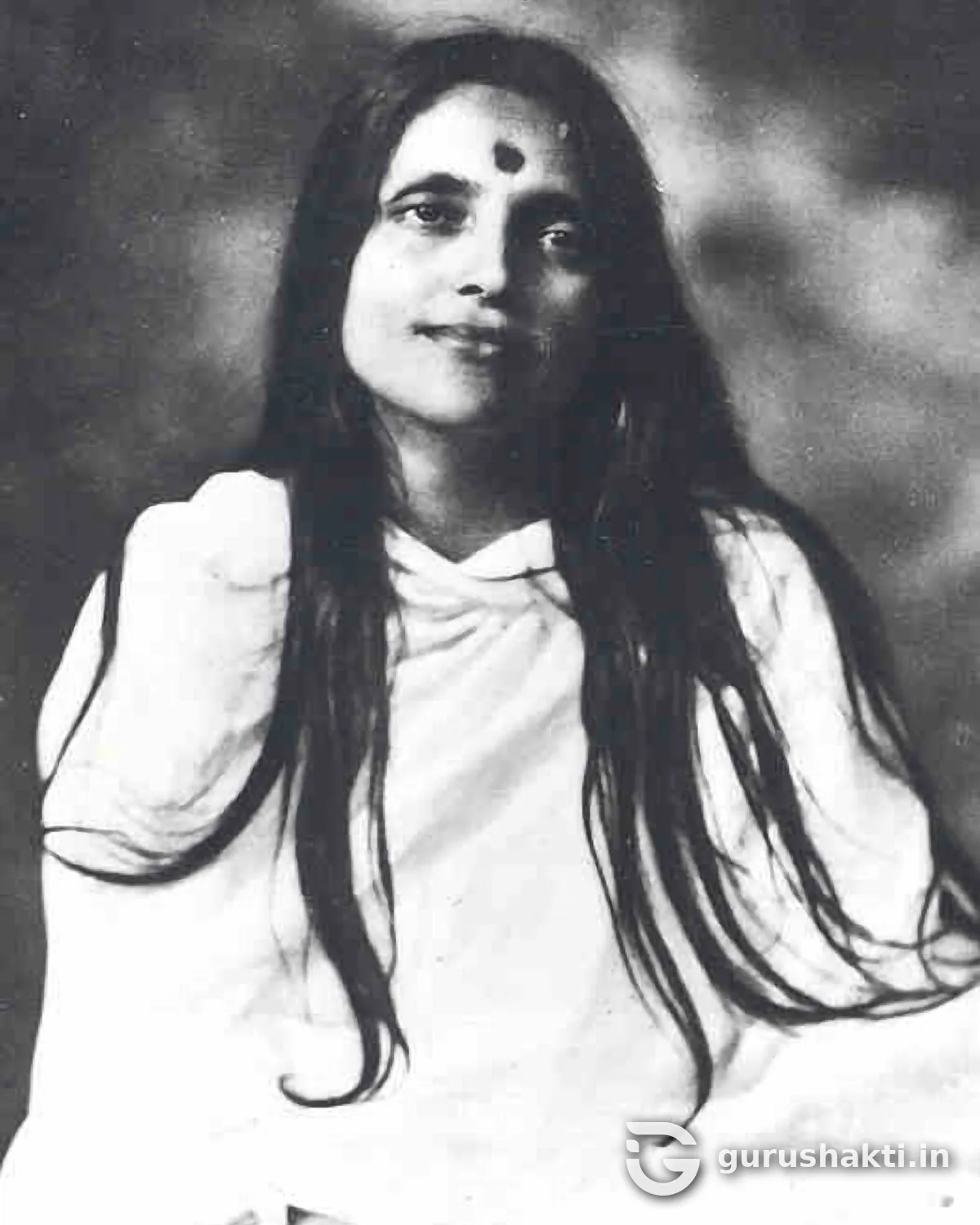
On the night of Jhulan Purnima, 3 August 1922, in the small town of Bajitpur in East Bengal, a young married woman named Nirmala sat down to receive initiation. No guru was in the room. No priest whispered a mantra in her ear. Devotees recount that she performed the initiation herself, and she later said that God Himself, in the role of guru, revealed the name to her.
That woman became Anandamayi Ma, the "Mother permeated with joy". She never wrote a book, never founded a new creed and never asked anyone to change religion. People of every faith came to sit near her, and her answer to their questions was usually simple: "Know yourself, and that is knowing God." For anyone who feels that the spiritual life belongs only to monks, scholars or those with a famous teacher, her life is a quiet reminder that the search begins where you already are.
Life story
A girl from Kheora
Nirmala Sundari was born on 30 April 1896 in Kheora, a village in East Bengal that now lies in the Brahmanbaria district of Bangladesh. Her father was Bipin Bihari Bhattacharya and her mother Mokshada Sundari Devi. Many years later her mother took sannyasa (formal renunciation) herself.
Devotees regard Nirmala as naturally realised from birth. In their eyes she did not become a saint later in life; she was turned towards God from the start.
Marriage and the years of sadhana
On 7 February 1909, at about thirteen, Nirmala was married to Ramani Mohan Chakravarti, who would later be known as Bholanath. Through the 1910s and into the early 1920s the couple lived in a string of small places: Sripur, Atpara, Bajitpur and others.
During these years she went through long periods of sadhana (spiritual practice) that arose on their own, without instruction from anyone. She did not follow a teacher's programme. The practice came to her, and she followed it. It was in Bajitpur, on Jhulan Purnima in August 1922, that she gave herself initiation.
Her husband watched all of this for years. Devotees recount that in time Bholanath asked for initiation from her, and became her first formal disciple. The man she had married as a girl now sat before her as a student.
Dhaka and the name "Anandamayi"
In 1924 the couple moved to Dhaka, to the Shahbag area, and people began to gather around her. One of them was Jyotish Chandra Roy, remembered as Bhaiji. Around 1925, near Dhaka, she located a Kali shrine at Siddheswari that had been forgotten. There, devotees recount, Bhaiji first called her "Anandamayi", the Mother full of bliss. The name stayed.
Between 1926 and 1929 her first ashram rose at Siddheswari, and then a second at Ramna in Dhaka.
Always on the move
From the 1930s she moved to north India, and from then on she travelled almost constantly. Ashrams grew at Varanasi, Dehradun, Kankhal and elsewhere as the circle around her widened.
In 1950 her followers formally established the Shree Shree Anandamayee Sangha to look after this growing network. Among those who came to her was a French-born seeker who became Swami Vijayananda. Her circle also included well-known public figures, among them Kamala Nehru and Indira Gandhi.
She did not set conditions for who could come. Hindus and people of other faiths sat in the same satsang (gathering for spiritual company). She asked no one to give up their own path.
The last years
Anandamayi Ma left the body on 27 August 1982 at the Kishanpur ashram on Rajpur Road in Dehradun. Her body was carried to the Kankhal ashram near Haridwar and laid to rest in samadhi (a shrine over the resting place of a saint). Kankhal remains the Sangha's headquarters.
One line, quoted in Orianne Aymard's study of her life, sums up how she spoke of herself: "I am what I was and what I shall be." She spoke of herself as unchanged by time, from Kheora to Kankhal.
Core teachings
Know yourself to know God
For Anandamayi Ma, searching for God and searching for your own true self were the same search. The goal of a human life, she taught, is to realise your real nature, which is one with God. This did not mean looking at your personality more closely. It meant looking beneath it, beneath roles, moods and opinions, to what is always there. The Sangha records her teaching in seven words: "Know yourself, and that is knowing God."
The One behind every form
She taught that behind every name and every form there is only the One. A tree, a stranger, a rival and a friend are different shapes of the same reality. Suffering, in her view, grows from seeing separation where there is none. Once you take the other person to be truly other, fear and envy follow. Her practical answer was to keep looking for the One in whoever was in front of you, especially when that was difficult.
Every sincere path leads home
People of every faith and practice came to her, and she welcomed them as they were. She did not ask anyone to convert, and she did not set one practice above the rest. A devotee of Krishna, a student of Vedanta and a visitor from another religion could all receive guidance suited to them. Her teaching sits close to Advaita Vedanta (the philosophy of non-duality), yet it never felt narrow to those who met her.
Remember God at all times
Devotees record that she asked people to keep God's name and presence in mind through the whole day. Not only during puja (worship) or meditation, but while cooking, working, travelling and resting. Remembrance was not meant to be a special event. It was meant to run underneath ordinary life, the way breath does, so that the day itself became a kind of prayer.
Divine love as the real wealth
In the collection of her sayings called Matri Vani, devotees preserved her teaching that love turned towards God is the true wealth of a human being. Money, status and comfort come and go. Love for God, she taught, is the one possession that leaves nothing lacking. For her listeners this was not a rejection of daily duties. It was a way of putting them in order, with love at the centre.
Principles for daily life
- Ask "Who am I?" for a few minutes. Once a day this week, sit quietly and look beneath your roles as parent, worker or child, and notice what remains when the roles fall silent.
- Keep a name of God with you at work. Choose one name and return to it while washing dishes, commuting or waiting in a queue.
- Respect every sincere path. When a conversation turns to whose religion is best, step back from the argument and listen instead.
- Let hurt pride teach you. When someone's remark stings, treat the sting as information about your own ego rather than as an insult to avenge.
- Serve the One in others. Do one act of seva (selfless service) this week for someone outside your family, and offer it quietly to God.
- Hold death lightly. When fear of loss arises, recall that she likened death to changing a dress.
Places of pilgrimage
- Kankhal ashram, Haridwar, Uttarakhand. Headquarters of the Sangha and site of her samadhi shrine, where devotees come to sit in quiet remembrance.
- Kishanpur ashram, Rajpur Road, Dehradun, Uttarakhand. The ashram where she left the body in 1982.
- Bhadaini ashram, Varanasi, Uttar Pradesh. A major ashram and school on the bank of the Ganga.
- Kheora, Brahmanbaria, Bangladesh. The village of her birth.
- Ramna and Siddheswari, Dhaka, Bangladesh. Sites of her first ashrams, where she received the name Anandamayi.
- Naimisharanya, Uttar Pradesh, and Almora, Uttarakhand. Further ashrams of the Sangha.
Legacy today
The Shree Shree Anandamayee Sangha, formally established in 1950, still carries her work. It runs some 26 ashrams, with its headquarters at Kankhal beside her samadhi. The Bhadaini ashram in Varanasi includes a school on the Ganga.
Her words survive because devotees wrote them down. Matri Vani, in two volumes, gathers her sayings, and the Sangha's own account, "Ma's Life", keeps the outline of her story. Her disciples included Swami Vijayananda, born in France. Scholars such as Orianne Aymard have written about her, and writers like Maria Wirth have recorded their memories of sitting with her.
Her circle included public figures such as Kamala Nehru and Indira Gandhi.
Images
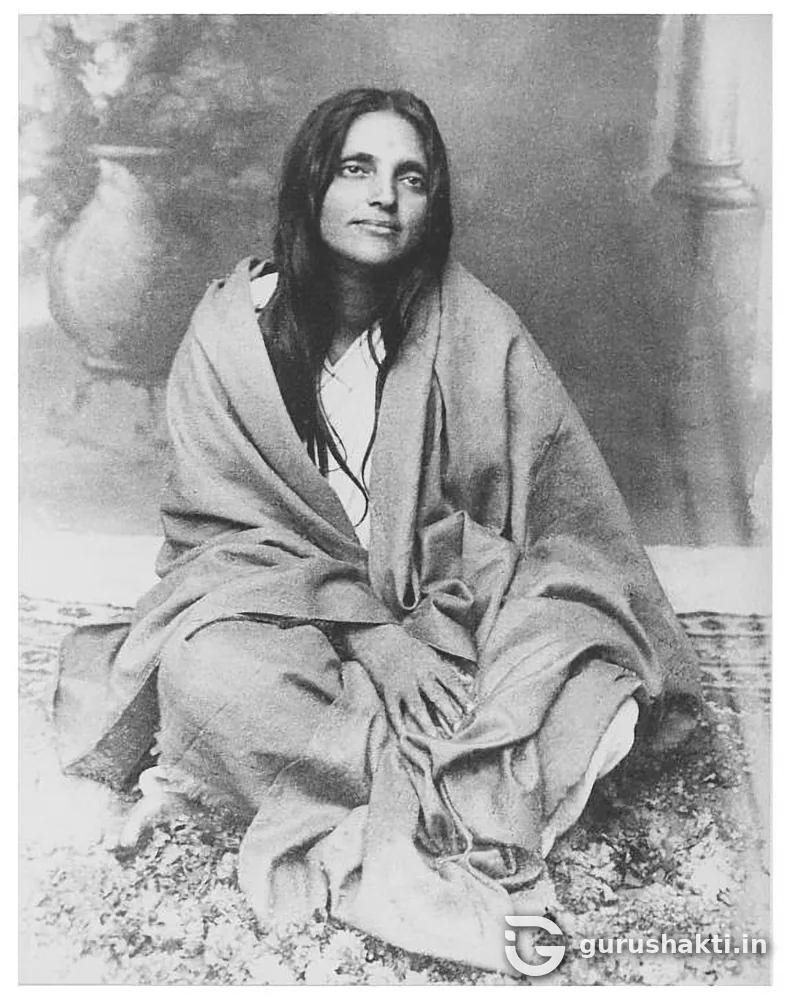
Image may be restored, upscaled or regenerated with generative AI.
Walk the path
Anandamayi Ma asked for nothing complicated. This week, choose one name of God that feels natural to you, and keep it company through ordinary tasks: while you cook, walk or wait. Once a day, sit for a few minutes and ask gently, "Who am I?" You may also wish to offer a small act of seva in her memory, such as feeding someone or helping at a local temple or ashram. There is no right result to look for. The practice is simply to remember.
Frequently asked questions
Who was Anandamayi Ma?
Anandamayi Ma was a Bengali saint born Nirmala Sundari on 30 April 1896 in Kheora, East Bengal. She had no human guru and wrote nothing, yet people of many faiths sought her out. Her devotee Bhaiji gave her the name Anandamayi, "full of bliss". She taught that knowing yourself is knowing God.
Who was Anandamayi Ma's guru?
She had no human guru. On Jhulan Purnima, 3 August 1922, at Bajitpur, she performed her own initiation. She later said that God Himself, in the role of guru, revealed the name to her. Devotees regard her as naturally realised from birth.
Where is Anandamayi Ma's samadhi?
Her samadhi shrine is at the Kankhal ashram in Haridwar, Uttarakhand, which is also the headquarters of the Shree Shree Anandamayee Sangha. She left the body at a different ashram, Kishanpur in Dehradun, and her body was then laid to rest at Kankhal.
When did Anandamayi Ma die?
Anandamayi Ma left the body on 27 August 1982 at the Kishanpur ashram on Rajpur Road, Dehradun. She was 86. Her body was taken to Kankhal near Haridwar and laid to rest in samadhi there, where devotees still come to pay their respects.
What did Anandamayi Ma teach?
She taught that self-knowledge and God-knowledge are one search, and that only the One exists behind every name and form. She welcomed every sincere path and asked no one to change religion. She urged people to remember God through the whole day and held divine love to be the real wealth.
Sources
Researched and written by GuruShakti, October 2026.