
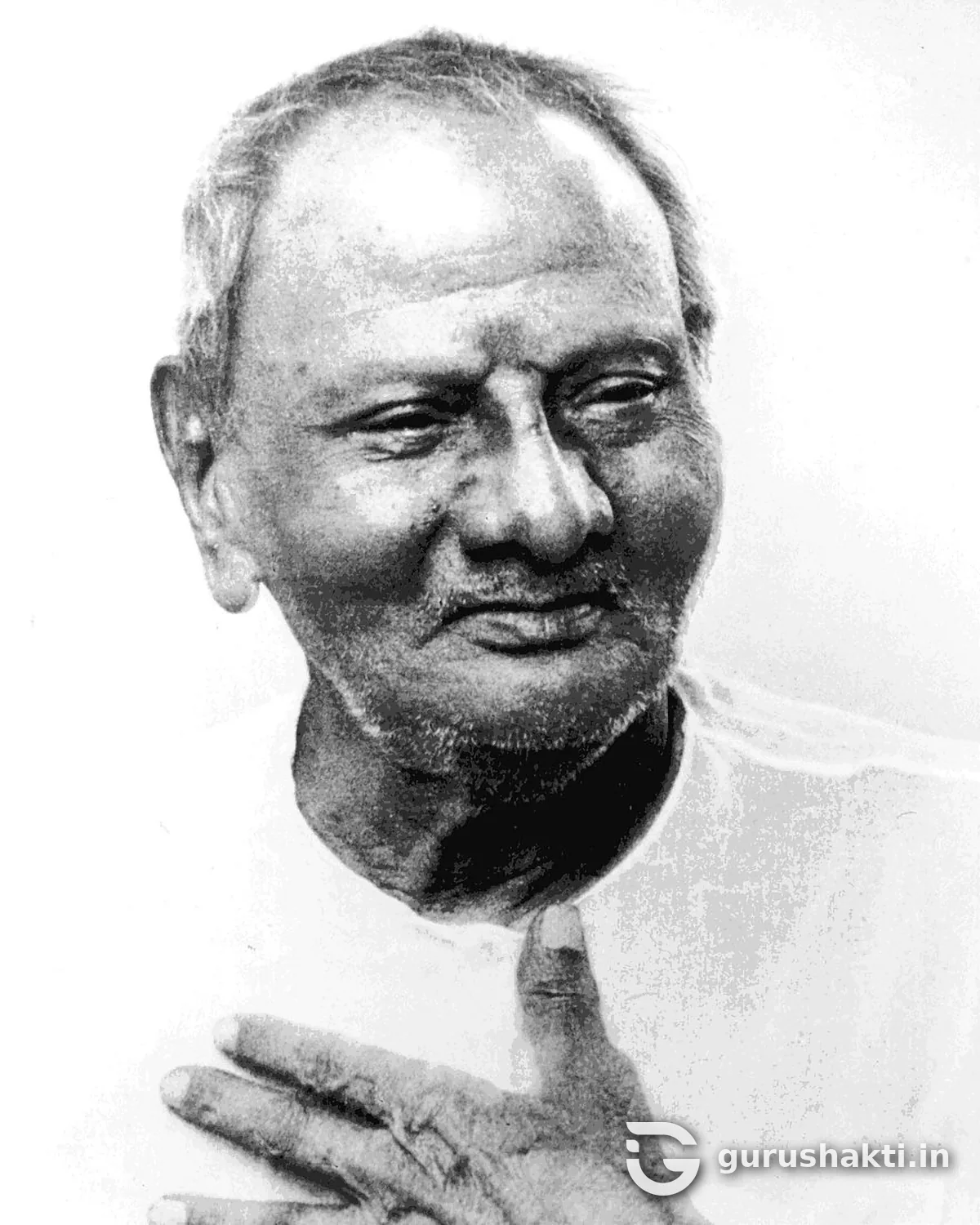
In a narrow lane of Khetwadi in south Mumbai, a man sold bidis (small hand-rolled cigarettes) from a modest shop. Above it was a tiny room. Seekers from India and abroad climbed the stairs to sit with him there, and the shopkeeper talked to them about who they really were. Among the portraits of saints on the wall hung a picture of Shivaji. His son wanted it there, he joked, because Shivaji was the brand image on their bidis.
This was Sri Nisargadatta Maharaj. He never left the householder's life, never built an ashram and never wrote a book. Yet the record of his talks, I Am That, published in 1973, drew seekers to that small room from around the world. His teaching is close to hand for anyone with a job and a family: sit quietly, notice the bare feeling "I am", and stop mistaking yourself for the body and the mind.
Life story
A farm boy in Maharashtra
He was born on 17 April 1897 and named Maruti Shivrampant Kambli. His parents were devout, and he grew up on the family farm in rural Maharashtra. He had little schooling. What he did absorb was the spiritual talk of his father's circle.
As a young man he moved to Bombay to work. He began as a clerk. Then he opened small shops selling bidis and, over time, grew them into several stores. In the 1920s he married Sumatibai, and the couple had four children.
Three visits to his guru
Late in 1933 a friend took him to see Sri Siddharameshwar Maharaj, a teacher of the Inchagiri branch of the Navnath Sampradaya (a teaching lineage). Devotees recount that on his third visit he received a mantra (a sacred phrase for repetition) and was told that he was the Supreme Reality.
His guru gave him one instruction: hold to the bare sense of "I am". He did not argue or ask for proof. He simply trusted the words and practised them. Years later, the same plain instruction would become the heart of his own teaching. His guru also asked him to keep up the daily bhajans (devotional songs), and he did so for the rest of his life.
Wandering, and the return home
Siddharameshwar Maharaj passed away in 1936. In 1937 or 1938 he left home as a wandering renunciate, and wandered for about eight months.
Then he came back. He returned to Bombay and to family life, now settled in realisation. From then on he lived as a householder, running his shop and caring for his family. He did not take on the robes or the life of a monk.
Loss and the first disciples
The 1940s brought grief. He lost his wife and, later, a daughter. He chose not to marry again. David Godman recalls him saying of his wife: "The day she died I married freedom."
In 1951 he began to initiate disciples in his guru's lineage. For the next fifteen years he did this while still working at the shop. In 1966 he retired from business, and the shop no longer set the shape of his day. After that he gave talks twice a day and kept up the daily bhajans in his small loft.
I Am That and the last years
Maurice Frydman recorded many of these talks, and in 1973 his record was published as I Am That. The book drew seekers from around the world to the lane in Khetwadi. Indian and Western visitors climbed the stairs to the loft above the shop. Among them were Maurice Frydman, Ramesh Balsekar and Jean Dunn.
Other devotees kept records too. Jean Dunn edited later talks into Seeds of Consciousness, Prior to Consciousness and Consciousness and the Absolute. Ramesh Balsekar compiled Pointers from Nisargadatta Maharaj.
He kept teaching in the same small room until the end. Sri Nisargadatta Maharaj passed away in Mumbai on 8 September 1981, aged 84. He was cremated at Banganga, the sacred tank in Walkeshwar.
Core teachings
The sense "I am"
This was the instruction his guru gave him, and it became the centre of his own teaching. Before any thought of "I am this" or "I am that", there is the simple feeling of being. Everyone has it. Maharaj asked seekers to stay with that plain "I am" and not add anything to it. No label, no story, no role. He did this himself after his guru's instruction in 1933, and he found it enough. It costs nothing and needs no special place.
Mistaken identity
Maharaj taught that suffering comes from one error. We take ourselves to be the body and the mind. Because the body is born and dies, and the mind is restless, we believe we are born, restless and bound to die. Our real nature, he said, is awareness itself, which is unborn and undying. The work is not to become something new. It is to see clearly what we already are, and to stop identifying with what comes and goes.
Hear, reflect, meditate
He did not treat understanding as a matter of words alone. First, listen to the truth. Then reflect on it until the doubts clear. Then meditate until it becomes firm conviction. Some listeners hoped that clever understanding would be enough. Maharaj disagreed, and he could be blunt about it. As Timothy Conway records his insistence: "You must meditate!"
Devotion alongside knowledge
Maharaj taught pure non-duality, the view that there is only one reality. Yet he sang bhajans several times a day all his life, because his guru had asked him to. He taught that the Self needs no ritual. He kept the ritual anyway, out of faithfulness to his guru. For him, knowledge and devotion were not rivals. A seeker can inquire into the Self in the morning and sing to the guru in the evening.
Live fully in the world
He ran a shop, raised a family, and taught from a room above the business. He did not tell people to leave home. Duties, in his view, are to be done wholeheartedly while resting in self-knowledge. The lane in Khetwadi, with its traffic and trade, was his place of practice. His life shows that a householder with bills and children can still take the deepest teaching seriously.
Principles for daily life
- Rest in "I am". Sit quietly for a few minutes each day and stay with the plain feeling "I am". Do not add labels such as your job or your worries.
- Ask who is upset. When anger or worry rises this week, pause and ask who it is that is upset. Notice that awareness itself is untouched.
- Do your duties fully. Give your work and your family your full attention. Spiritual life does not require leaving home.
- Keep one devotional habit. Sing one bhajan or say one prayer to your guru each day, alongside your inquiry.
- Stay with one instruction. Choose a sincere teaching you trust and practise it steadily, rather than collecting many methods.
- Meditate, not only read. After reading or listening, give the idea quiet time each day until it becomes your own.
Places of pilgrimage
- Khetwadi, Mumbai, Maharashtra. The lane and building where he lived, ran his shop and taught in his upstairs room. Devotees still visit to see where the talks took place.
- Banganga, Walkeshwar, Mumbai, Maharashtra. The sacred tank area where he was cremated in 1981. Devotees come here to remember him.
- Inchagiri, Karnataka. The village associated with the teachers of his guru's lineage, which gives the Inchagiri branch its name.
Legacy today
Sri Nisargadatta Maharaj left no institution and no large ashram. His legacy lives mainly in books and in people. I Am That, Maurice Frydman's 1973 record of his talks, is the best known. The talks edited by Jean Dunn, Seeds of Consciousness, Prior to Consciousness and Consciousness and the Absolute, record his later years. Ramesh Balsekar, who sat with him, compiled Pointers from Nisargadatta Maharaj.
He stands in the Inchagiri branch of the Navnath Sampradaya, through his guru Sri Siddharameshwar Maharaj, and from 1951 he initiated disciples in that line. Seekers in India and abroad still read his talks and practise his one simple instruction. Devotees continue to visit the lane in Khetwadi where he lived and taught.
Images
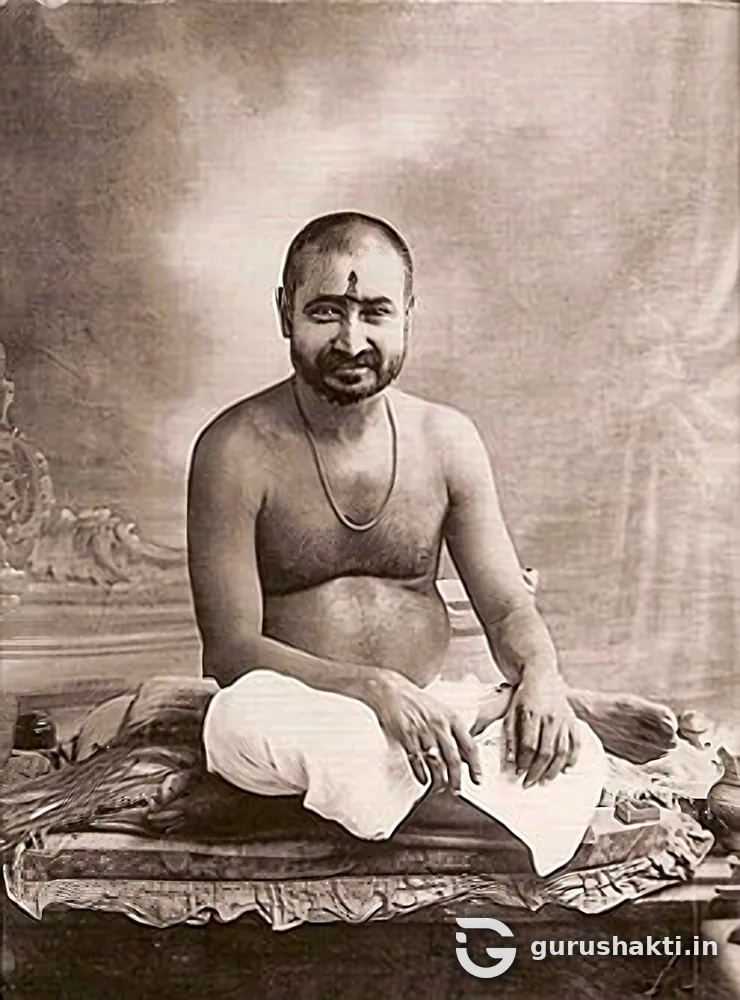
Image may be restored, upscaled or regenerated with generative AI.
Walk the path
His teaching asks for very little equipment. This week, set aside five quiet minutes each morning. Sit, let the breath settle, and notice the plain feeling "I am" before you put on any label. When the mind wanders, return gently.
In the evening, keep one small act of devotion, as he did: a bhajan, a prayer, or the name of God said quietly. If you wish, add a small act of seva (selfless service) for your family. Nothing needs to happen. Simply practise, and keep going.
Frequently asked questions
Who was Nisargadatta Maharaj and who was his guru?
Sri Nisargadatta Maharaj (1897–1981) was a teacher of Advaita, or non-duality, who lived as a householder in Mumbai and ran a bidi shop. His guru was Sri Siddharameshwar Maharaj (1888–1936) of the Inchagiri branch of the Navnath Sampradaya, who initiated him in 1933.
What does "I Am That" mean?
I Am That is the title of Maurice Frydman's record of his talks, published in 1973. The title points to his central teaching. Beneath every "I am this" lies the plain sense "I am", and our real nature is unborn awareness, not the body or the mind.
What did Nisargadatta Maharaj teach about the sense "I am"?
He taught seekers to stay with the simple feeling of being, before any thought of "I am this" or "I am that". This was the instruction his own guru gave him. By holding to it steadily, one stops mistaking oneself for the body and mind.
Did Nisargadatta Maharaj write any books?
No. He wrote nothing himself. His talks were recorded by devotees. The best known is I Am That, edited by Maurice Frydman (1973). Others include Seeds of Consciousness, Prior to Consciousness and Consciousness and the Absolute, edited by Jean Dunn, and Ramesh Balsekar's Pointers from Nisargadatta Maharaj.
Where did Nisargadatta Maharaj live and teach in Mumbai?
He lived in Khetwadi, in south Mumbai. He ran his bidi shop there and held talks and bhajans in a small upstairs room above it. After retiring from business in 1966, he gave talks twice a day in that loft. Devotees still visit the lane.
Sources
Researched and written by GuruShakti, October 2026.