
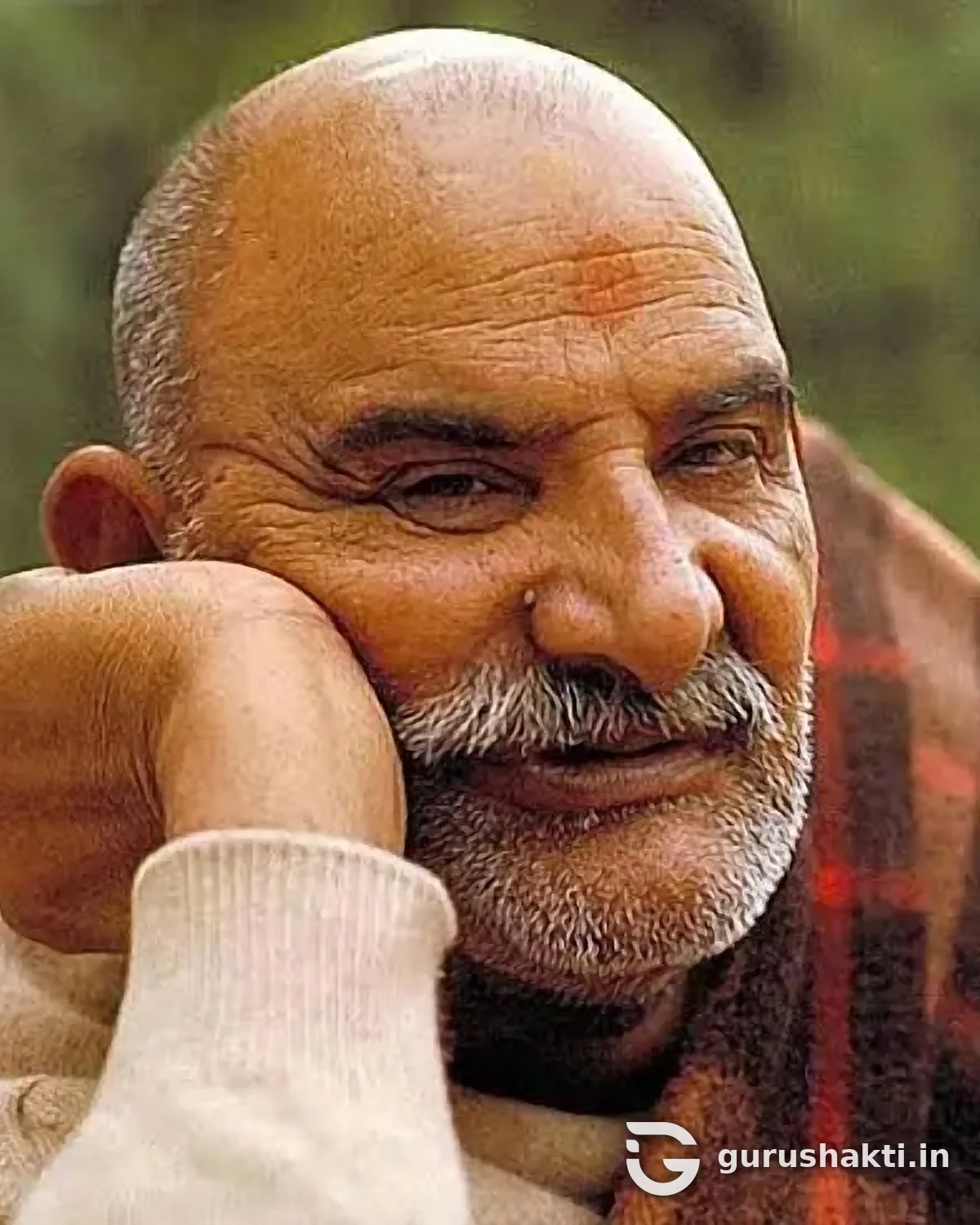
In 1962, a wandering holy man who owned little more than a blanket began work at Kainchi, near Bhowali in Uttarakhand. It started as a chabutra, a plain raised platform. On 15 June 1964 a Hanuman temple was consecrated on the site. Every year on 15 June, crowds still come to Kainchi Dham for a fair, and prasad (blessed food) is handed out to everyone who arrives.
That is a fair picture of Neem Karoli Baba, whom devotees simply call Maharajji. He left no books. What he left was a habit of feeding people, the sound of Ram's name, and a few plain instructions that Ram Dass later summed up as love, serve and remember. For people who find religion complicated, his life is a reminder that the path can begin with a meal shared and a name repeated.
Life story
A boy from Akbarpur
Neem Karoli Baba was born around 1900 in Akbarpur village, in the Firozabad district of Uttar Pradesh. The year comes from tradition, not from a record. His family were Brahmins, and he was named Lakshmi Narayan Sharma (some accounts give Lakshman Narayan).
He was married very young, at about eleven. Soon after, he left home to wander as a sadhu, a renunciant who lives without property or fixed address. Nothing is recorded of a formal guru, a lineage or a teacher who trained him. How he trained spiritually is simply not documented.
Many names on the road
For years he lived as a wandering ascetic and practised austerities. One place remembered from this time is Vavania, in Morbi, Gujarat. People who met him gave him whatever name suited what they saw. He was known as Lakshman Das, as Handi Wala Baba and as Tikonia Wala Baba.
The name that stayed came from a stay near the village of Neeb Karori in Farrukhabad district, Uttar Pradesh. Neeb Karori became Neem Karoli, and that is the name by which the world now knows him. Devotees in India and abroad more often call him Maharajji.
A householder who kept travelling
At his father's request, he came back to family life. He raised two sons and a daughter. He did not settle into one place, though. He kept travelling.
Many of his devotees were Indian householders with families of their own. What he asked of them could be done at home: feed people, remember God, and treat others as God.
Kainchi and the arrival of the West
In 1962 work began at Kainchi with that simple platform. On 15 June 1964 the Hanuman temple at Kainchi Dham was consecrated. The date is still kept every year with a large fair and distribution of prasad.
In the late 1960s, young Western seekers began to arrive. Among them was the American Richard Alpert, who became Ram Dass. His book Be Here Now, published in 1971, carried Maharajji's name far beyond India. Krishna Das and Bhagavan Das were also among his disciples.
The last days in Vrindavan
Neem Karoli Baba died in the early hours of 11 September 1973, in a hospital in Vrindavan, Uttar Pradesh. Some sources give the date as 10 September. His samadhi shrine stands at his Vrindavan ashram.
On 15 June 1976 a murti (consecrated statue) of him was installed in the memorial temple at Kainchi Dham. In 1979 Ram Dass published Miracle of Love, which records his teachings as devotees remembered them.
Core teachings
Love, serve, remember
Ram Dass summed up Maharajji's teaching in three verbs: love all beings, serve them, and keep God in mind, as he recorded in Miracle of Love. The order matters. Love is the ground, service is how love shows itself, and remembering God keeps both honest. The same three words name the Love Serve Remember Foundation. None of the three needs a temple, a ritual or a teacher's permission. They can be practised at a kitchen table.
Feed people
Maharajji constantly told devotees to feed the hungry. Food was at the centre of life in his ashrams, and prasad was given to everyone who came, according to the Maharajji Seva Trust. For him, hunger was the first need in front of you, and meeting it was worship. This is why Kainchi's foundation day is marked by prasad for the crowds. Feeding someone is seva (selfless service) in its plainest form: no theory, no debate, only a plate passed to another person.
Ram Naam and the Hanuman Chalisa
He taught that chanting Ram Naam (the name of Ram) and reciting the Hanuman Chalisa is the simplest way to God. The Hanuman Chalisa is a hymn to Hanuman. Maharajji himself was a lifelong devotee of Hanuman and Ram, and the temples linked with him are Hanuman temples. His approach asks for no special learning. Anyone can repeat a name, and anyone can learn a hymn a few lines at a time.
Seeing God in everyone
Devotees remember him teaching that every person is a form of God. The NKB Meditation Foundation records his teaching that all water is the Ganga and all land is Varanasi. In other words, holiness is not stored in a few places. If that is true, then the stranger at the door deserves the same care you would give a saint, and every ordinary place is a fit place for prayer.
Holding little
Maharajji owned almost nothing beyond a blanket, and he moved freely, as the Divine Life Society notes. He did not teach this as a rule for others. He showed it. His life suggested that peace does not depend on what you own. A man who could walk out of any room with everything he had was free to give his full attention to whoever was in front of him.
Principles for daily life
- Feed someone every day. It can be small: tea for a worker, a meal for a neighbour, food for a stray animal. Do it this week without telling anyone.
- Repeat Ram's name. Choose a quiet moment each day for Ram Naam or the Hanuman Chalisa. Begin with a few minutes and keep the time steady.
- See God in the next person. When someone irritates you, pause and remember Maharajji's teaching that every person is a form of God.
- Hold things lightly. Give away one thing you do not use. Notice how little you need to feel at ease.
- Serve without credit. Do one act of help where no one will know it was you.
- Make your own place holy. If all land is Varanasi, your home is a fit place to pray. Keep one corner clean and quiet for it.
Places of pilgrimage
- Kainchi Dham, near Bhowali, Nainital, Uttarakhand. The Hanuman temple and ashram he founded. The fair on 15 June draws large crowds for prasad. Overnight stays need permission, so plan a day visit unless you have arranged one.
- Neem Karoli Baba Ashram, Vrindavan, Uttar Pradesh. His samadhi shrine and a Hanuman temple, where devotees come to sit quietly near his memorial.
- Neeb Karori village, Farrukhabad, Uttar Pradesh. The village that gave him his name.
- Hanuman Setu and Hanuman temples, Lucknow, Uttar Pradesh. Temples associated with him, where devotees recite the Hanuman Chalisa.
- Neem Karoli Baba Ashram, Taos, New Mexico, USA. A Hanuman temple serving his Western devotees.
Legacy today
Kainchi Dham remains the centre of his memory. Each 15 June it hosts the foundation day fair, and prasad is still given out as it was in his lifetime. His Vrindavan ashram keeps his samadhi shrine, and temples in Lucknow are associated with him.
Outside India, his name travelled mainly through Ram Dass. Be Here Now (1971) and Miracle of Love (1979) introduced him to readers who never met him. The ashram in Taos, New Mexico, keeps a Hanuman temple for Western devotees. Groups such as the Maharajji Seva Trust, the Love Serve Remember Foundation and the NKB Meditation Foundation continue to share his teaching. Published accounts say well-known technology founders visited his ashram, though those visits came long after his death.
Images
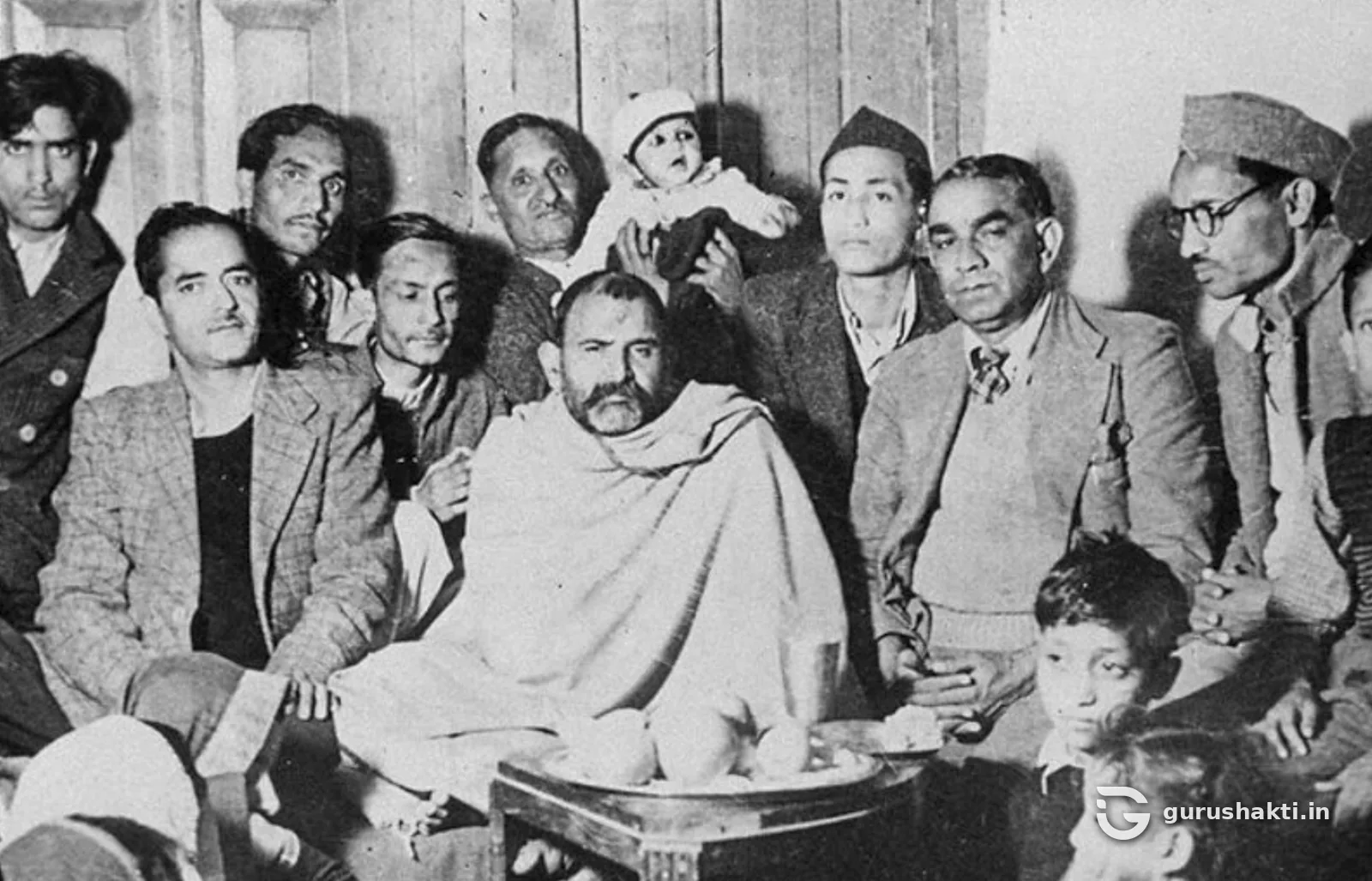
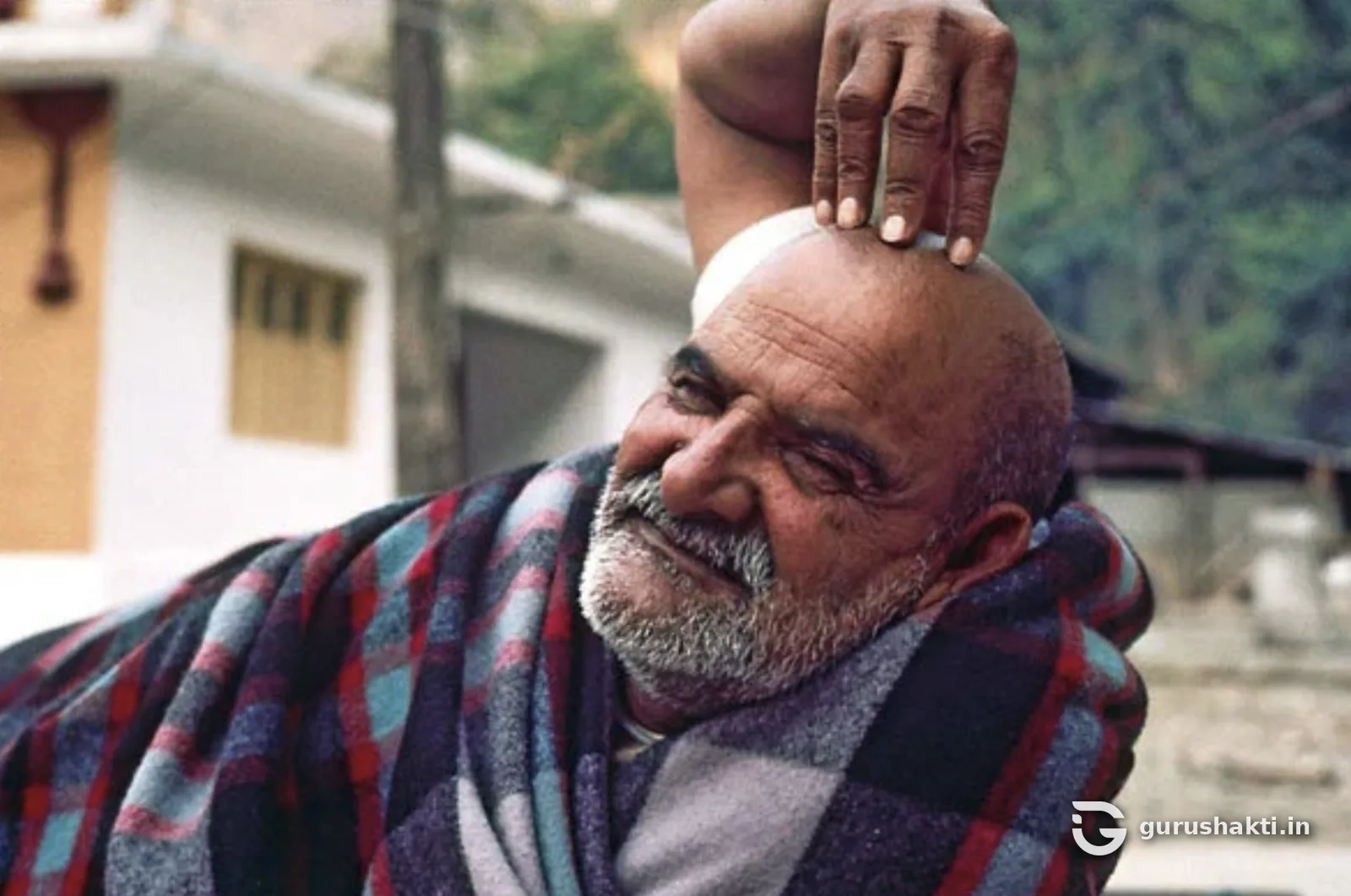
Image may be restored, upscaled or regenerated with generative AI.
Walk the path
Maharajji's way asks very little to begin. This week, you might sit for a few minutes each morning and recite the Hanuman Chalisa, or simply repeat Ram's name. You might also feed one person, quietly, without telling anyone. If you have something you no longer use, give it to someone who needs it. None of this has to be done perfectly. Start where you are, and let love, service and remembrance grow at their own pace.
Frequently asked questions
Who was Neem Karoli Baba?
He was a Hindu holy man and devotee of Hanuman and Ram, born around 1900 in Akbarpur, Firozabad district, Uttar Pradesh. Devotees call him Maharajji. He founded the Hanuman temple at Kainchi Dham in Uttarakhand and died in Vrindavan on 11 September 1973. His teaching is often summed up as love, serve, remember.
Why is Kainchi Dham famous?
Kainchi Dham, near Bhowali in Nainital district, is the Hanuman temple and ashram Neem Karoli Baba founded. Work began in 1962 and the temple was consecrated in 1964. A murti of him was installed there in 1976. Devotees from India and abroad visit it as the main centre of his memory.
When is the Kainchi Dham foundation day fair?
It is held every year on 15 June. That date marks the consecration of the Hanuman temple at Kainchi Dham in 1964. The day brings a large fair, and prasad is distributed to visitors, continuing his habit of feeding everyone who came. Overnight stays at the ashram need prior permission.
Did Steve Jobs and Mark Zuckerberg visit Neem Karoli Baba's ashram?
Published accounts say that both visited his ashram. These visits took place long after his death in 1973, so neither of them met him in person. His teaching reached the West mainly through Ram Dass and the Western seekers who came to him from the late 1960s.
What were Neem Karoli Baba's main teachings?
He taught people to love all beings, serve them and remember God. He urged devotees to feed the hungry. He saw chanting Ram's name and reciting the Hanuman Chalisa as the simplest path to God. He taught that every person is a form of God, and he lived with almost no possessions.
Sources
Researched and written by GuruShakti, October 2026.