
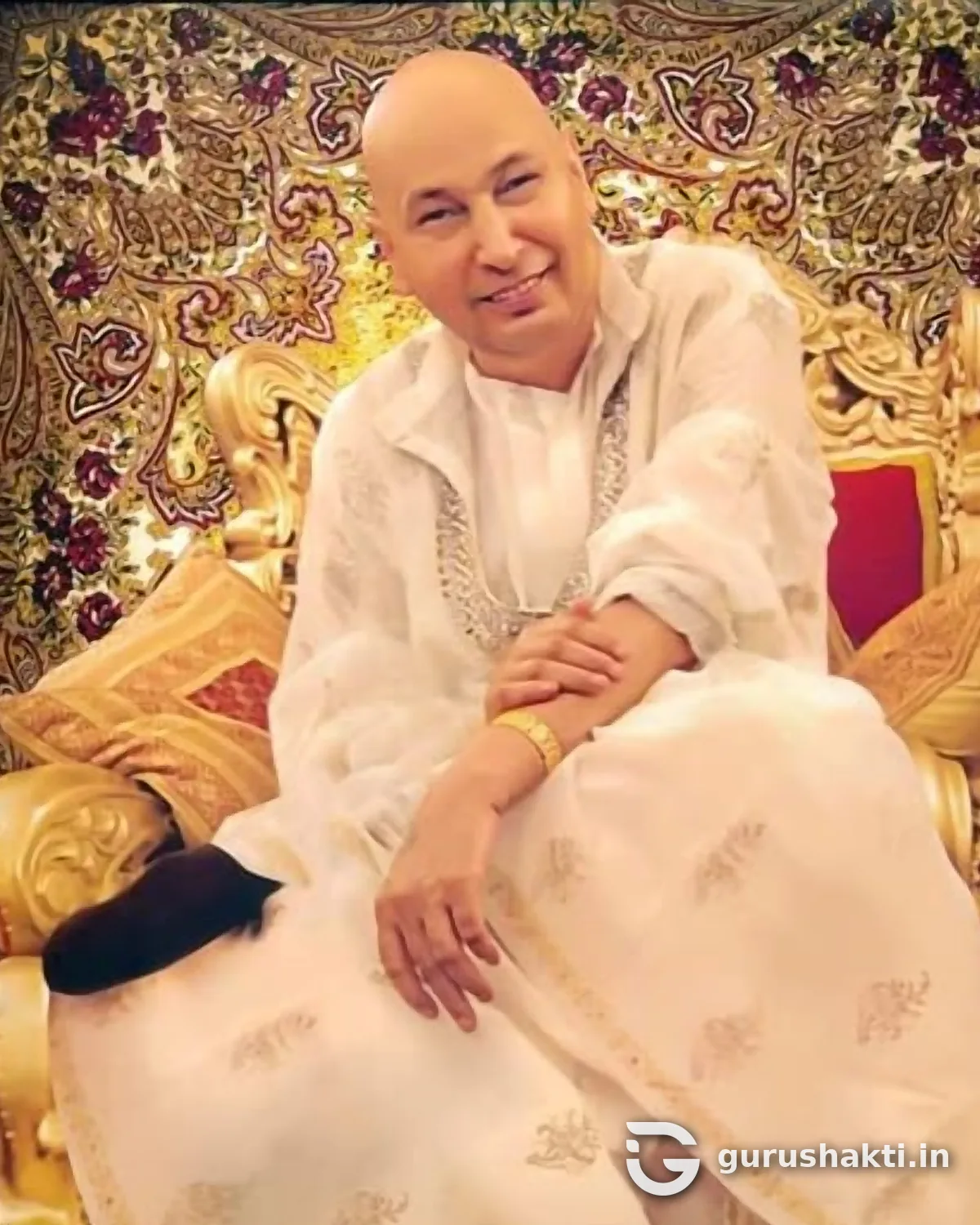
Guruji, born Nirmal Singh in a Punjab village, left no books and no successor. He gave no sermons and set no rituals. People came to sit with him, listen to shabad and bhajans, drink tea and share a meal on the floor. His devotees still greet one another with a single word, shukrana, thank you. In a time of anxious prayers for results, his sangat (community of devotees) practises gratitude for whatever comes.
Life story
A boy from Dugri
Guruji was born in the early 1950s in Dugri, a village near Malerkotla in Punjab, and was named Nirmal Singh. Sources differ on the exact year. Devotees say he showed a deep spiritual absorption even as a child.
He went to school in Dugri and nearby, and then to Government College, Malerkotla. According to a devotee site and published accounts, he went on to earn two master's degrees, in English and in Economics.
Leaving home, and an ordinary job
Published accounts say he left home in 1975. In 1983, according to these accounts, he worked for a time as a clerical assistant with the Punjab School Education Board.
Satsangs across north India
Through the 1980s and 1990s he held satsangs, gatherings of devotees, while living in several cities: Jalandhar, Chandigarh, Panchkula, Delhi and Mumbai. These gatherings had no fixed liturgy. Shabad, verses of Gurbani, and bhajans were sung, and people sat together. Afterwards, tea and langar (a shared meal) were served to everyone, seated on the floor.
In the 1990s, a Shiv Mandir was built at Bhatti Mines in South Delhi. Devotees know it as the Bade Mandir, the big temple. It became the main gathering place of his sangat.
Empire Estate and the Chhota Mandir
He then settled at Empire Estate on MG Road, Delhi. Sources differ on the year, giving 1997 and 2002. His residence there came to be called the Chhota Mandir, the small temple.
Mahasamadhi
Guruji died in Delhi on 31 May 2007. He named no successor and left no formal disciples. What he left was a large lay sangat in India and abroad, which still meets at the Bade Mandir.
Core teachings
Shukrana: gratitude
The word most tied to Guruji is shukrana, gratitude. His devotees greet one another with it and close their prayers with it, thanking Guruji for every outcome, as published accounts describe. This is why many call him Shukrana Guruji. The practice turns prayer around. Instead of asking for a result, the devotee gives thanks for what has already come, pleasant or hard. It is a small word, and it can change the mood of a whole day.
Simplicity
Devotee accounts, such as those on the Bade Mandir Guruji site, describe his teaching that people should live simply, and that simplicity leads to happiness. His own satsangs reflected this. People sat on the floor, drank tea and ate the same food. There was no ritual to learn. For a devotee, living simply means cutting the wants that crowd out peace.
All faiths are one
According to published accounts, Guruji taught that all faiths are one and that all people are children of God. His satsangs showed this in practice. Shabad from Gurbani and bhajans were sung in the same gathering. His devotees revere him as a form of Shiva, and his sangat today spans India and other countries.
Freedom from the five thieves
The Bade Mandir devotee site records his teaching on the five thieves: kaam (desire), krodh (anger), lobh (greed), moh (attachment) and ahankar (ego). They are called thieves because they quietly rob a person of peace. Overcoming them does not need a retreat from the world. It begins with noticing them, one at a time, in ordinary moments.
Langar and seva
At Guruji's satsangs, everyone sat together on the floor and shared tea and langar prasad (blessed food from a common kitchen). Devotees, as published accounts say, see this food as his blessing. It also teaches equality: the same tea and the same meal for everyone, seated at the same level. Serving at langar is a form of seva (selfless service) open to anyone who comes.
Principles for daily life
- Say shukrana. At the end of each day this week, say thank you for whatever it brought, including what you did not want.
- Cut one want. Choose one unnecessary purchase or habit and let it go this week.
- Share food as equals. Eat with someone you would not usually sit with, or serve at a langar or community kitchen.
- Watch the five thieves. Each evening, notice which of desire, anger, greed, attachment or ego showed up that day.
- Respect all faiths. Listen to a hymn or prayer from a tradition other than your own, with an open heart.
- Sit quietly. Give ten minutes a day to sitting in stillness, as his devotees sat in his presence.
Places of pilgrimage
- Shiv Mandir (Bade Mandir), Bhatti Mines Road, South Delhi. The main temple of his sangat, with satsang and langar on Sundays. Published accounts describe it as the site of his samadhi shrine. Timings change, so confirm locally before you go.
- Chhota Mandir, Empire Estate, MG Road, Delhi. His former residence, open to devotees on special days.
- Dugri, near Malerkotla, Punjab. His birthplace, where a Guruji temple stands.
- Guruji's temple, Jalandhar, Punjab. A former residence and satsang place from his years in Punjab.
Legacy today
Guruji named no successor and founded no formal line of disciples. His legacy is his sangat, a large lay community in India and abroad. It gathers at the Bade Mandir for Sunday satsang and langar, and at the Chhota Mandir on special days. Temples in Dugri and Jalandhar mark places from his life.
Devotee websites, including GurujiSangat and Bade Mandir Guruji, collect accounts of his satsangs and of devotees' experiences. The greeting shukrana remains the clearest sign of his teaching.
Images
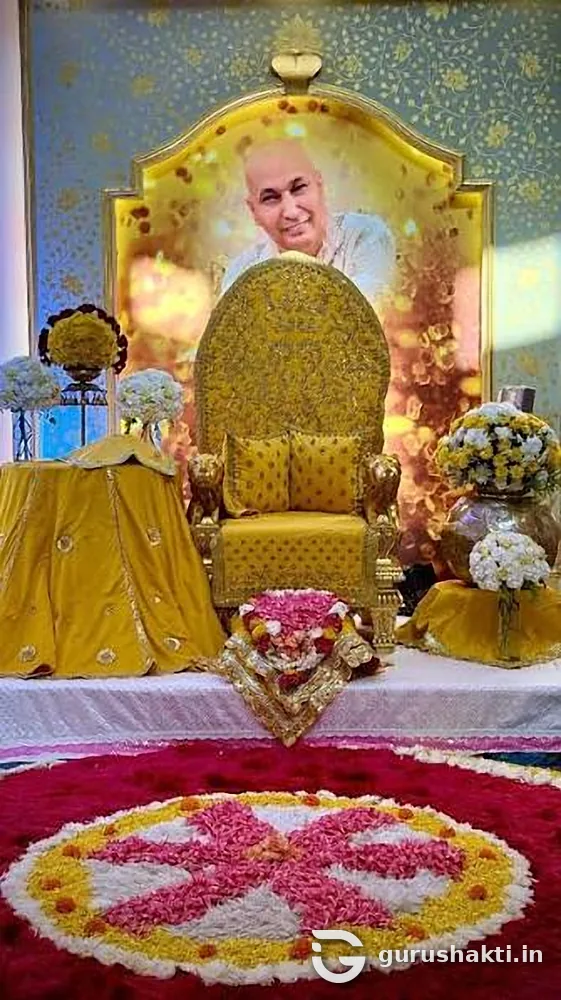
Image may be restored, upscaled or regenerated with generative AI.
Walk the path
Guruji's sangat begins and ends with gratitude. This week, you might close each day by saying shukrana for whatever it held. Sit quietly for a few minutes, perhaps with a shabad or a bhajan playing. If you can, share tea or a meal with others as equals, or offer seva at a langar or community kitchen. Let go of one small want. Nothing here needs to be forced, and no result is promised. Gratitude simply grows with practice.
Frequently asked questions
Who is Guruji of Bade Mandir, Chhatarpur?
Guruji, born Nirmal Singh in Dugri near Malerkotla, Punjab, in the early 1950s, was a spiritual teacher whose devotees regard him as a form of Shiva. He held satsangs across north India and in Mumbai. The Shiv Mandir, or Bade Mandir, at Bhatti Mines in South Delhi is the main temple of his sangat. He died in 2007.
What is the meaning of "Shukrana Guruji"?
Shukrana means gratitude. Guruji's devotees greet one another with the word and close their prayers with it, thanking him for every outcome, good or hard. Because this practice is so central to his sangat, devotees often call him Shukrana Guruji. He is also known as Dugri Wale Guruji, after his birthplace.
What are Bade Mandir's satsang days and timings?
Satsang and langar are held at the Bade Mandir on Sundays. Exact timings change from time to time, so please confirm locally or with the temple before you visit. The Chhota Mandir at Empire Estate, his former residence, opens to devotees only on special days, so confirm those dates in advance as well.
When is Guruji's birthday and mahasamadhi day?
His birthday falls on 7 July; sources differ on the year, which is in the early 1950s. His mahasamadhi day is 31 May: he died in Delhi on 31 May 2007.
Is Bade Mandir the same as Chhatarpur Temple?
No. Bade Mandir is the Shiv Mandir on Bhatti Mines Road, the main temple of Guruji's sangat. The Chhatarpur Mandir, Shri Adya Katyayani Shaktipeeth, is a separate temple complex associated with Baba Sant Nagpal Ji. They are different places, linked to different gurus.
Researched and written by GuruShakti, October 2026.