
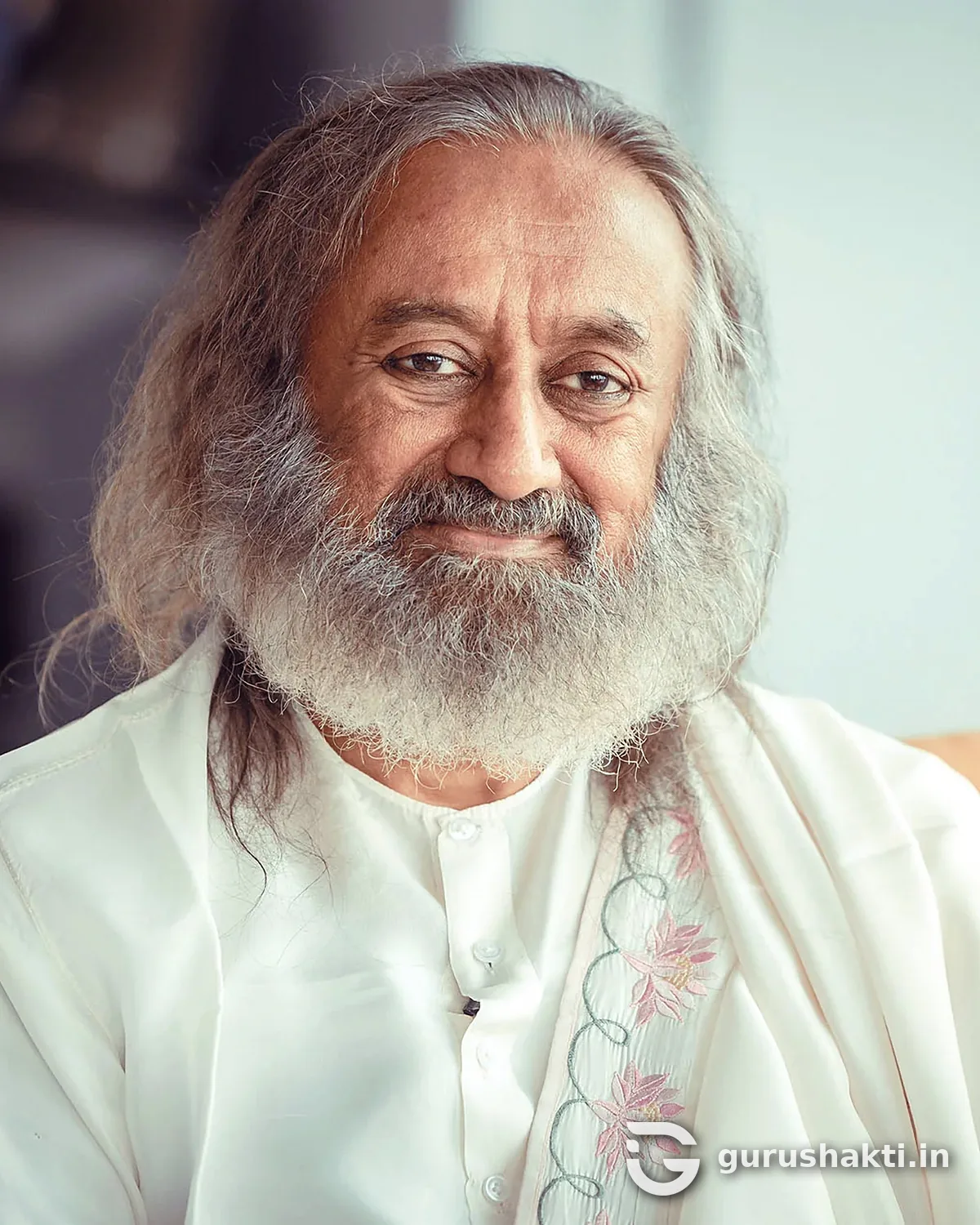
In 1982, at Shimoga in Karnataka, a young teacher kept ten days of silence. He had been turning over one problem: how to close the gap between the quiet people find in meditation and the way they live the rest of the day. At the end of that silence, he later said, "the Sudarshan Kriya came like an inspiration." The breathing practice that arose there is still at the centre of his work.
That teacher was Sri Sri Ravi Shankar, known to his followers as Gurudev, founder of the Art of Living. He is a living teacher, based at his ashram near Bengaluru. His message is practical. Notice that the breath carries every emotion. Do not keep spiritual practice in a separate box from work and family. Serve others because they need it, not to feel good about yourself. For anyone who finds their peace disappearing the moment the day begins, that is a useful place to start.
Life story
A child who sat in meditation
Ravi Shankar was born in 1956 in Tamil Nadu, in southern India. According to the Art of Living, by the age of four he could recite parts of the Bhagavad Gita. As a small boy he was often found sitting in deep meditation.
His first teacher was Sudhakar Chaturvedi, who had worked with Mahatma Gandhi. The boy went to MES school in Bangalore. In 1973, at the age of 17, he graduated with degrees in physics and Vedic literature.
Founding the Art of Living
According to the foundation, he founded the Art of Living in 1981. It describes itself as an international non-profit educational and humanitarian organisation. Its courses would later be built around a single breathing practice, which came the following year.
Ten days of silence at Shimoga
In 1982 he went into ten days of silence at Shimoga in Karnataka. He has explained what he was seeking. Many people meditated, yet their inner peace stayed separate from their outer life. He wanted a way to bridge the two: to join inner silence with the outward expression of life, so that practice and daily living would no longer pull in different directions.
During that silence, in his words, the Sudarshan Kriya "came like an inspiration." Sudarshan Kriya is a rhythmic breathing practice. It became the foundation of the Art of Living's courses, and the organisation teaches it in its Happiness Program and in an online breath workshop. Gurushakti does not describe the technique; those who wish to learn it are directed to the Art of Living.
An ashram near Bengaluru
In 1986 the Art of Living International Center was established about 21 km south of Bangalore, in the countryside of Karnataka. It became his home base. Among its landmarks is the Vishalakshi Mantap. Each week the ashram runs residential courses. In the evenings there is satsang (a gathering for devotional singing and meditation). Visitors also do seva (selfless service), working in the kitchen or helping to keep the grounds.
Service and peace work
In 1997 he co-founded the International Association for Human Values (IAHV), a sister organisation working on service, conflict resolution and human values. Through these bodies his work has reached into disaster relief, support for marginalised communities and interfaith harmony. The foundation credits him with efforts to bring opposing parties together in places including Iraq, Ivory Coast, Kashmir and Bihar.
One example the foundation records in detail is Colombia. According to the foundation, in June 2015 he met President Juan Manuel Santos and then held discussions with leaders of the FARC rebel group in Cuba, urging non-violence. In July 2015 the FARC declared a unilateral ceasefire. In September 2016 he attended the signing of the final peace agreement in Cartagena.
Honours
In 2016 the Government of India conferred on him the Padma Vibhushan. He was listed under "Others-Spiritualism", from Karnataka. He continues to teach from his ashram near Bengaluru.
Core teachings
Breath carries the emotions
Gurudev teaches that the breath and the mind are closely linked. "For every emotion, there is a corresponding rhythm in the breath," he explains, in the Art of Living's account of Sudarshan Kriya. Anger, fear and calm each have their own pattern of breathing. Just as emotions change the breath, changing the rhythm of the breath can change patterns of mind and behaviour. This is the idea behind Sudarshan Kriya. The practice itself is taught in the foundation's courses.
Join inner silence and outer life
Many people keep their spiritual practice in one corner of the day and live the rest of it in a hurry. Gurudev saw this split as the real problem. During his silence at Shimoga in 1982, he was asking how to bridge the gap between inner silence and outward activity. In his teaching, meditation and breath steady a person for work, family and service.
Seva is our nature
In a talk at the Bangalore ashram on 22 August 2013, Gurudev spoke about seva. He warned against serving only for enjoyment or to feel good about oneself. "If you serve only to enjoy, then you are being selfish," he said. Service of that kind soon turns into complaint. Real seva comes from seeing that someone needs help. "You serve because you have to. There is no other choice."
A world without violence
Gurudev speaks openly of what he calls his "crazy idea": a world without violence. On his official site he explains that his aim is to make people proud of being non-violent, compassionate and helpful to others. The same idea runs from his breathing courses to his peace work.
Human values across borders
Through the Art of Living and the International Association for Human Values, Gurudev links personal practice with public service. The same organisations that teach breathing and meditation also work in disaster relief, support for people on the margins, and interfaith harmony. For him, spiritual life shows itself in how a person treats others.
Principles for daily life
- Watch your breath. This week, notice how your breathing changes when you are angry, anxious or at ease.
- Carry quiet into the day. Keep a few minutes of inner stillness, morning or evening, and try to bring that calm into one busy moment.
- Serve because it is needed. Do one act of seva this week without expecting thanks or a good feeling in return.
- Choose non-violence. When anger rises, pause before you speak. Take pride in being patient and helpful.
- Sit in silence. Give yourself a short period of silence each day, without phone or chatter.
- Learn from a proper teacher. If you want to learn a breathing practice such as Sudarshan Kriya, learn it from the organisation that teaches it, not from a video or a friend's description.
Places of pilgrimage
- Art of Living International Center, near Bengaluru, Karnataka. His home base, about 21 km south of the city. Join the evening satsang of songs and meditation, see the Vishalakshi Mantap, take a residential course, or offer seva in the kitchen and grounds.
- Shimoga (Shivamogga), Karnataka. The place where, according to the foundation, Sudarshan Kriya arose during ten days of silence in 1982. No single shrine marks the spot; it is remembered for what happened there.
Legacy today
Gurudev is a living teacher, and his work continues day by day. The Art of Living, which he founded in 1981 according to the foundation, runs courses built around Sudarshan Kriya, meditation and yoga. Its Happiness Program and online breath workshop are the usual starting points. The International Association for Human Values, which he co-founded in 1997, carries the service and conflict-resolution side of his work.
His ashram near Bengaluru remains the centre, with weekly courses, evening satsang and seva. The Government of India honoured him with the Padma Vibhushan in 2016. His talks are published by the foundation, along with his book Notes for the Journey Within. Gurushakti is not associated with the Art of Living; for his teachings and courses, please see the foundation's official channels.
Images
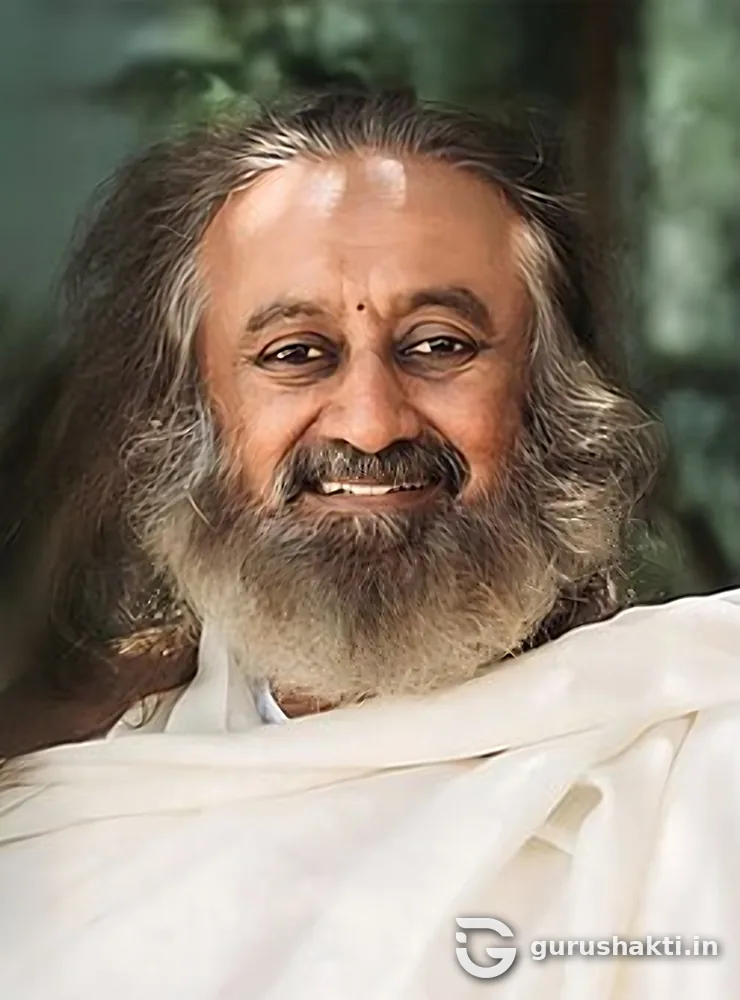
Image may be restored, upscaled or regenerated with generative AI.
Walk the path
Gurudev's teaching starts with something everyone already has: the breath. This week, simply notice it. When you feel irritated or rushed, observe how your breathing has changed, and let it settle on its own. Keep a few quiet minutes each day, perhaps with a short prayer or the Name dear to you.
Then do one small act of seva, or offer daan (giving) to someone in need, without looking for thanks. Nothing is promised and nothing needs to be. If you wish to learn Sudarshan Kriya itself, approach the Art of Living directly.
Frequently asked questions
Who is Sri Sri Ravi Shankar?
Sri Sri Ravi Shankar, called Gurudev by his followers, is a living spiritual teacher born in 1956 in Tamil Nadu. He founded the Art of Living in 1981, according to the foundation, and co-founded the International Association for Human Values in 1997. He teaches breathing, meditation and service from his ashram near Bengaluru.
What is Sudarshan Kriya?
Sudarshan Kriya is a rhythmic breathing practice that Gurudev says came to him during ten days of silence at Shimoga in 1982. It rests on his teaching that every emotion has a matching rhythm in the breath. The Art of Living teaches it in its Happiness Program and online workshop; learn it there, not from descriptions.
When was the Art of Living founded?
According to the foundation, Sri Sri Ravi Shankar founded the Art of Living in 1981. It describes itself as an international non-profit educational and humanitarian organisation. Its central practice, Sudarshan Kriya, arose the following year, in 1982, at Shimoga. The Bengaluru ashram followed in 1986, and the sister organisation IAHV in 1997.
Where is the Art of Living ashram in Bengaluru?
The Art of Living International Center lies about 21 km south of Bengaluru, Karnataka, and was established in 1986. It offers weekly residential courses, evening satsang with songs and meditation, and seva for visitors. Gurushakti is not associated with the ashram; please see the Art of Living's official channels for visiting details.
What does Sri Sri Ravi Shankar teach about seva?
He teaches that seva, selfless service, is our nature and should be done because others need help. In a 2013 talk at the Bangalore ashram he warned that serving only to enjoy it is a form of selfishness, and leads to complaint. "You serve because you have to," he said.
Sources
Researched and written by GuruShakti, October 2026.