
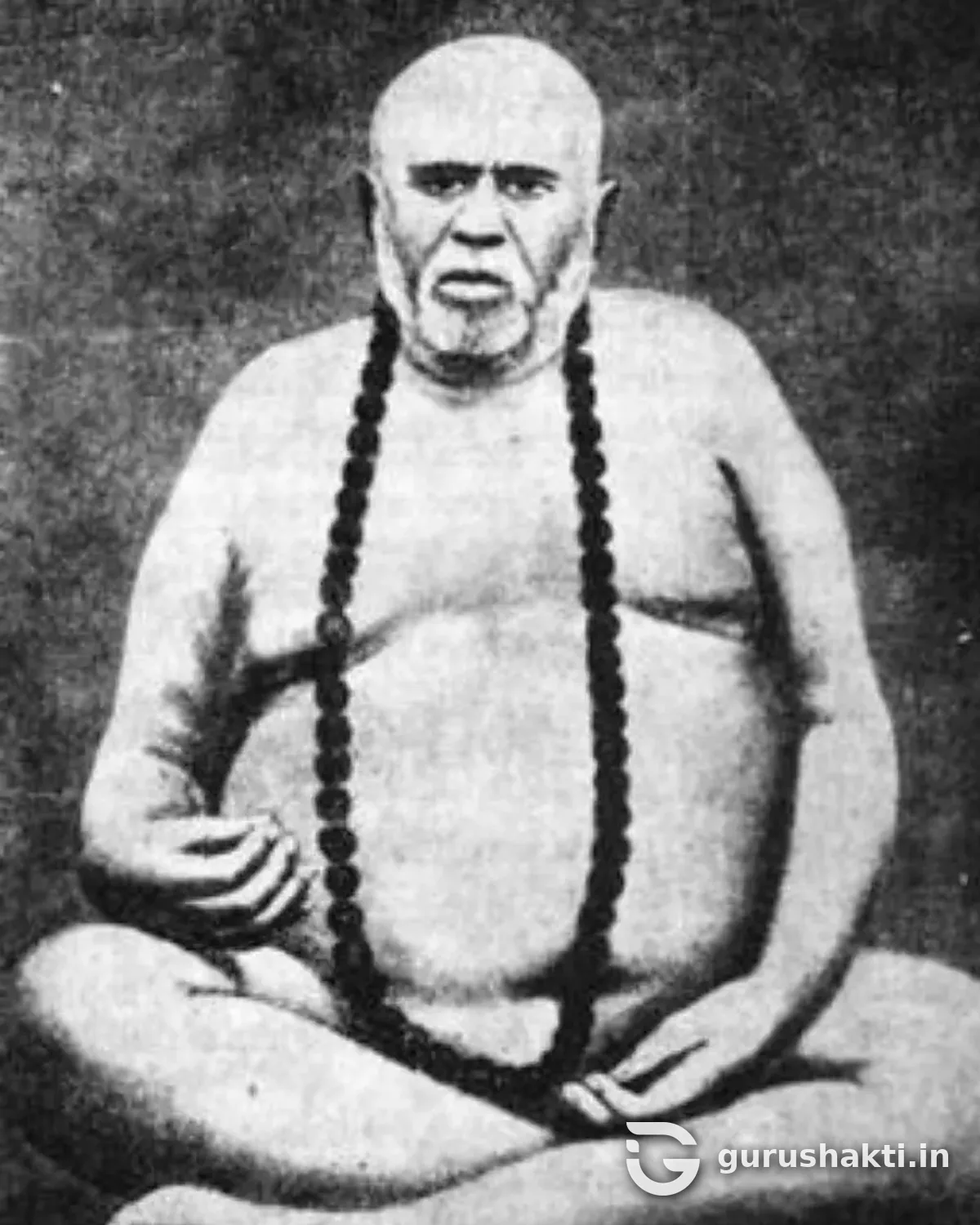
On 26 December 1887, at Panchganga Ghat in Varanasi, his devotees did not light a funeral pyre. At his own wish, the body of the old ascetic was placed in a box and given to the Ganga. This is jal samadhi (committing the body to the sacred river). The city had watched him for decades: silent, unclothed, fasting, sitting on the ghats in meditation through heat and cold.
Sri Trailanga Swami left no book and gave few talks. People knew him by how he lived. In Paramahansa Yogananda's account, he said God was present in his own stomach, as in every atom of creation. For anyone today who finds spiritual talk too busy, his life offers another way in: fewer words, simpler needs, and the plain recognition that the Divine lives in everyone you meet.
Life story
A boy from the Telugu country
According to tradition, he was born in 1607 at Kumbilapuram, near Vizianagaram in present-day Andhra Pradesh. Devotional accounts name him Shivarama and his parents Narasingha Rao and Vidyavati Devi. Biographers do not agree on the year. One gives 1529, and devotees treat his great age as part of his legend rather than settled history.
Tradition says that after his mother died, he spent about twenty years in meditation at the cremation ground. It is the first picture tradition gives of him: a seeker sitting in meditation among the dead.
A guru and a new name
According to tradition, in 1679 he met his guru, Swami Bhagirathananda Saraswati. In 1685, by the same reckoning, he took sannyasa (formal vows of renunciation) in the Dashanami order, within its Saraswati branch. His guru gave him the monastic name Swami Ganapati Saraswati.
He then set out on pilgrimage. Tradition says he wandered across India for many years, visiting holy places as a renunciate.
Settling in Kashi
According to tradition, he settled in Varanasi in 1737. The people of the city did not use his monastic name. They called him "Trailanga", the swami from the Telugu country. The name stayed with him for the rest of his life, and it is the name pilgrims still use.
Through the nineteenth century he lived on the ghats of the city, the stone steps that run down to the Ganga. Devotees place him at Assi Ghat, Hanuman Ghat, Dashashwamedh Ghat and Panchganga Ghat. He was known for three things. He kept long silence. He fasted almost completely. And he went unclothed, as an ascetic who no longer counted the body as his own.
Yogananda reports that he lived over 300 years and weighed over 300 pounds. These are accounts passed down with reverence, and they are best read that way. In these years, too, the stories of his powers spread through the city: a pail of lime drunk calmly, a locked cell that could not hold him, days spent sitting on the river.
Visitors from Bengal
In the middle of the 1800s, saints and seekers from Bengal came to see him. Among them was Lahiri Mahasaya, the householder yogi. Trailanga Swami honoured him openly. Yogananda records that he described Lahiri Mahasaya as "like a divine kitten". For a renunciate to honour a householder in this way made a quiet point: realisation does not depend on outer renunciation.
By tradition, Sri Ramakrishna also visited him. Mahendranath Gupta, known as "M", the recorder of Ramakrishna's conversations, came too, and fed him sweets.
The final years
Among his disciples was Shankari Mai Jiew, whom Yogananda names as his last living disciple. Umacharan Mukhopadhyay later wrote his life in Bengali, and much of what we know comes from that book.
On 26 December 1887, Trailanga Swami left the body in Varanasi. This date is the firmest fact in his story. At his wish, his body was not cremated. It was placed in a box and committed to the Ganga near Panchganga Ghat. Close to that spot stands the Shri Trailanga Swami Math, which keeps his image and his meditation chamber.
Core teachings
God in every atom
Trailanga Swami taught that the same Divine lives in every being and every particle of creation. Nothing stands outside it. From this follows a simple ethic: harm done to another returns to oneself, because the other is not truly separate. Yogananda records his words to a man who tried to poison him: "God is present in my stomach, as in every atom of creation." The teaching asks us to see the person in front of us, even one who wrongs us, as a home of the Divine.
Silence as teaching
He spoke rarely. His presence and his example were the teaching. He did not need to argue for detachment or peace. He simply sat on the ghats and lived them. Even his teaching on oneness, as Yogananda records it, came in a single sentence to a man who had tried to poison him. His life suggests that much of what we say could be left unsaid, and that a quiet person can teach more than a busy one.
Mastery over the body
He fasted almost completely, endured heat and cold, and went without clothing. Devotees did not see this as a display. They saw it as a lesson: the Self is not the body. A body that is fed, cooled and clothed is still not who we are. Few people are called to such austerity. But his example invites a gentler question for each of us: how much of our day is spent serving the body's comfort alone?
One goal behind all faiths
Devotees remember him teaching respect for all religions as paths to moksha (liberation). In his view, as his devotees recall it, different paths lead toward the same freedom. This does not erase the differences between traditions. It asks for courtesy toward them. A seeker can be faithful to his own path and still bow to the sincerity of another's.
Recognising true saints
Trailanga Swami was a renunciate who owned nothing. Yet he openly honoured Lahiri Mahasaya, a householder yogi who lived a family life. Yogananda records that he called Lahiri Mahasaya "like a divine kitten". The point was plain to those who saw it. Holiness is not measured by robes, poverty or outward renunciation. It is recognised in the inner life. He taught people to honour realisation wherever it appears, in a monk or in a householder.
Principles for daily life
- Keep a little silence. Set aside ten minutes each day this week to sit without speaking, reading or using your phone.
- Eat simply. Choose one meal a day to eat plainly, and take only what you need.
- See the Divine in the difficult person. When someone wrongs you, pause before you respond, and remember that the same Divine lives in them.
- Respect other paths. Speak of other faiths with courtesy this week, even in casual talk.
- Honour holiness where you find it. Notice goodness in an ordinary householder, a neighbour or a colleague, and thank them for it.
Places of pilgrimage
- Shri Trailanga Swami Math, Panchganga Ghat, Varanasi, Uttar Pradesh. His math keeps his image and his meditation chamber, near the place of his jal samadhi. Pilgrims come to sit quietly and offer prayers.
- Dashashwamedh, Assi and Hanuman ghats, Varanasi, Uttar Pradesh. The ghats where he lived and sat in meditation. Sitting on the steps by the river at dawn is a simple way to remember him.
- Kumbilapuram, near Vizianagaram, Andhra Pradesh. His traditional birthplace in the Telugu country, which gave him the name Trailanga.
Legacy today
The Shri Trailanga Swami Math near Panchganga Ghat keeps his memory in Varanasi. It holds his image and the meditation chamber, close to where his body was given to the Ganga in 1887.
His wider fame came through books. Umacharan Mukhopadhyay's Bengali biography recorded his life for devotees. In 1946, Paramahansa Yogananda's Autobiography of a Yogi gave a full chapter to him, and through it readers around the world learned the stories of the lime, the jail roof and the river. Yogananda also named Shankari Mai Jiew as his last living disciple. In Varanasi he is popularly called the walking Shiva of the city.
Images
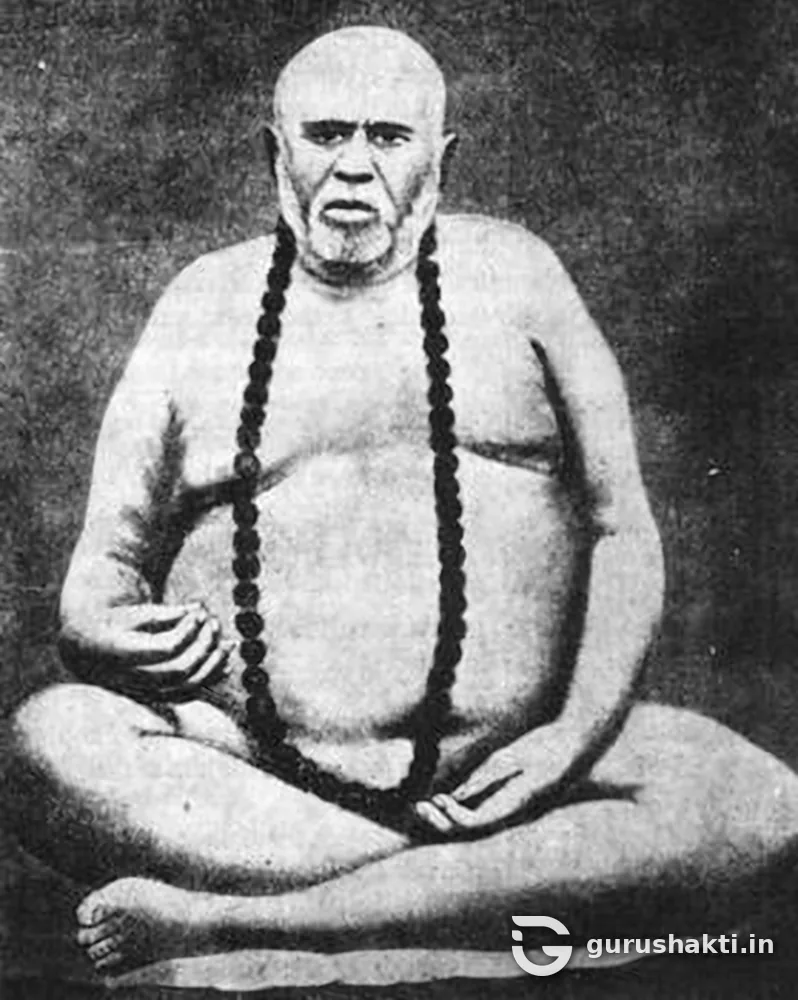
Image may be restored, upscaled or regenerated with generative AI.
Walk the path
Trailanga Swami taught mostly through silence and simplicity, and his path asks for little. This week, try sitting in silence for a few minutes each morning. Let the mind settle without forcing it.
Once this week, eat a plain meal and offer the money you save as daan (giving) to someone who needs food. When a difficult person crosses your path, quietly remember his teaching that the same Divine lives in them. Nothing dramatic is needed. Small, steady practice is enough.
Frequently asked questions
Did Trailanga Swami really live for 280 years?
According to tradition he was born in 1607 and died in 1887, which would make about 280 years. This is devotee belief, not verified history. Biographers disagree on his birth year, one giving 1529, and Yogananda reported over 300 years. Only his death in Varanasi in 1887 is firmly recorded.
Why is Trailanga Swami called the walking Shiva of Varanasi?
He is popularly called the walking Shiva of Varanasi by devotees. The title expresses how they saw him: a silent, unclothed ascetic sitting on the ghats in deep meditation, fasting and untouched by heat and cold. It is a name of reverence from his devotees.
Where is Trailanga Swami's math in Varanasi?
The Shri Trailanga Swami Math stands near Panchganga Ghat in Varanasi, Uttar Pradesh. It keeps his image and his meditation chamber. It is close to the place where his body was given to the Ganga in jal samadhi on 26 December 1887.
Who was Trailanga Swami's guru?
His guru was Swami Bhagirathananda Saraswati. According to tradition, they met in 1679, and in 1685 the guru initiated him into sannyasa in the Dashanami order with the monastic name Swami Ganapati Saraswati. The people of Varanasi later called him Trailanga, the swami from the Telugu country.
What miracles are told about Trailanga Swami?
Devotees recount several, many recorded by Yogananda. He is said to have drunk a pail of lime offered as curd without harm. He is said to have been seen on the jail roof while his cell stayed locked. Crowds, they say, saw him float on the Ganga for days.
Sources
Researched and written by GuruShakti, October 2026.