
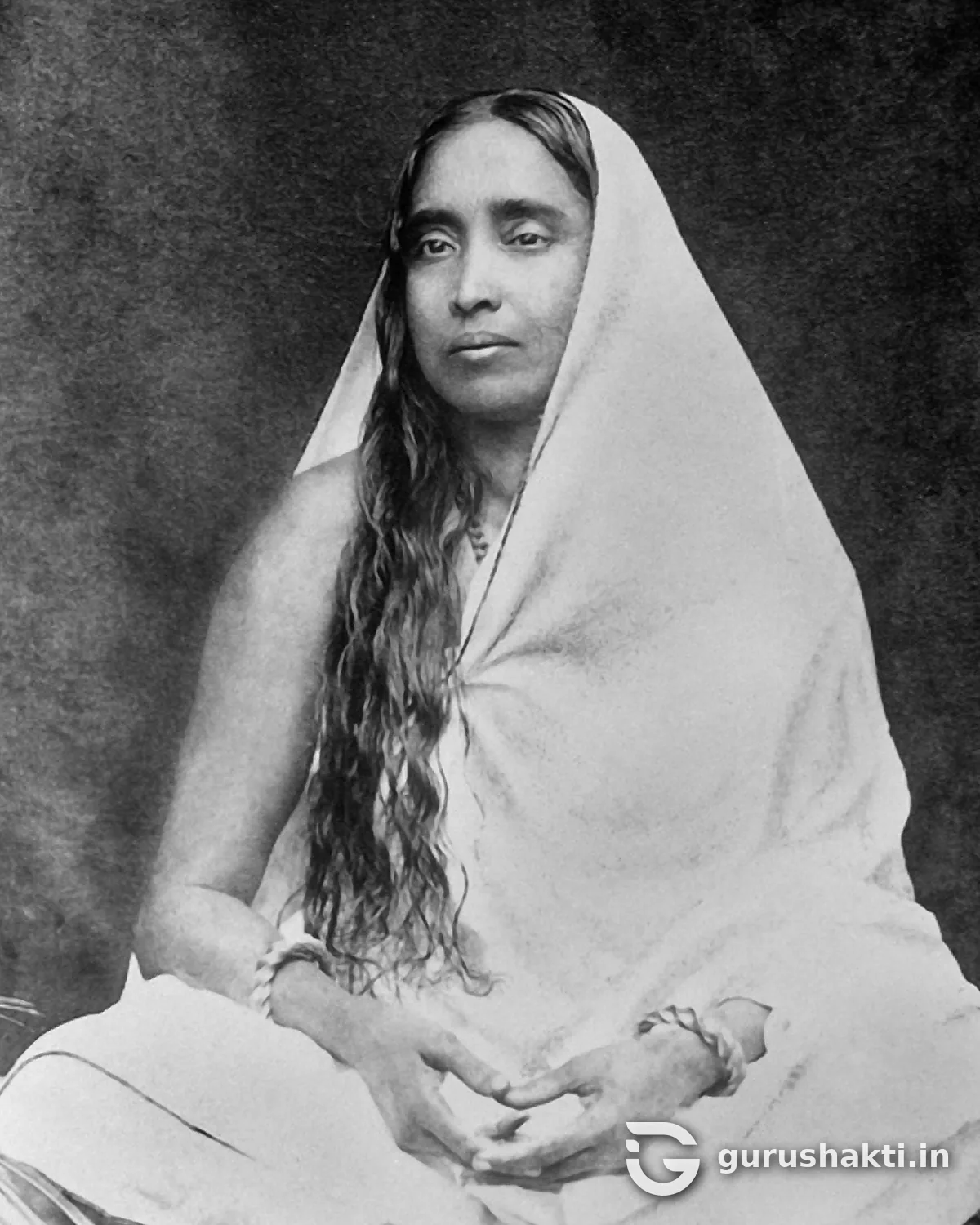
In July 1920, at Udbodhan House in north Kolkata, Sri Sarada Devi lay near the end of her life. She was 66. Five days before she left the body, she gave a last piece of advice. It was not a teaching about visions or heaven. It was this: "If you want peace of mind, do not find fault with others." And then: "Learn to make the whole world your own."
That counsel sums up the woman the Ramakrishna Order calls Sangha-janani, the Mother of the Order, and whom devotees know as Sri Maa, the Holy Mother. She was Sri Ramakrishna's wife, but far more than that. She was a realised saint and a guru in her own right, who initiated hundreds of disciples and guided the young monks after his passing. She lived a plain village life, cooked, served and prayed. For anyone today who struggles with anger, judgement or loneliness, her counsel can be tried the same day it is read.
Life story
A girl of Jayrambati
Sarada was born on 22 December 1853 in Jayrambati, a village in the Bankura district of West Bengal. Her parents, Ramachandra Mukhopadhyay and Shyama Sundari Devi, were poor but devout. Around 1859, as a small child of about five or six, she was married to Sri Ramakrishna. The marriage was a spiritual partnership from first to last. She continued to live with her own family in Jayrambati.
The walk to Dakshineswar
In 1872, at about 18, she set out on foot for Dakshineswar near Kolkata, where Sri Ramakrishna lived beside the Kali temple. He received her as a spiritual companion. From then on he was her guru as well as her husband, and she learned the spiritual life at his side. On the night of Phalaharini Kali Puja that year, he performed the Shodashi puja, ritually worshipping her as the Divine Mother. In this way he honoured the Mother he saw in her.
For about 13 years, from 1872 to 1885, she lived at Dakshineswar. Her home was the Nahabat, a tiny room in the temple grounds. From there she cooked for and served Sri Ramakrishna and the devotees who came to him.
Years of loss and poverty
Sri Ramakrishna passed away in August 1886. Sarada went on pilgrimage, and afterwards lived at Kamarpukur, his village in Hooghly district, in near-poverty. Those were hard years, spent without the companion who had been her teacher. Yet this is also when her work as a guru began. From the late 1880s she started to initiate disciples, and the young monks who had gathered around Sri Ramakrishna turned to her for guidance. Swami Vivekananda called her the ideal for the women of the modern age.
Mother of all
Swami Saradananda, one of the monks, built Udbodhan House in the Baghbazar area of Kolkata for her to live in. Devotees call it Mayer Bari, the Mother's House. She divided her time between Kolkata and her village of Jayrambati. Disciples came to her from every walk of life. Some were monks, many were householders, and some came from the West, like Sister Nivedita. She refused no one who called her Mother. In Jayrambati even Amjad, a robber the villagers feared, came to see her, and she fed him as her own son. She saw herself, in her own words, as "the mother of the virtuous as well as the wicked."
In November 1912 she visited the Ramakrishna Mission Sevashrama in Varanasi, where the monks ran a hospital. Some people then doubted whether nursing the sick was proper work for monks. She blessed their service as worship, and the doubts were settled.
The last days
In July 1920 she was at Udbodhan House. Five days before the end she gave her last counsel on not finding fault with others. In the small hours of 21 July 1920, at about 1:30 am, she left the body. Her disciples gathered her words in Sri Sri Mayer Katha, known in English as The Gospel of the Holy Mother. She was cremated at Belur Math by the Ganga, where her temple now stands.
Core teachings
Do not find fault; make the world your own
Her last counsel is her best-known teaching. "If you want peace of mind, do not find fault with others," she said, as recorded in The Gospel of the Holy Mother. Real peace comes from looking at our own faults, not other people's. She went further. No one, she said, is a stranger; we must learn to make the whole world our own. It is a teaching that can be practised at every meal and in every quarrel.
Universal motherhood
Sarada Devi's love did not depend on whether a person was good. "I am the mother of the virtuous as well as the wicked," she said, as quoted by Belur Math. She treated robbers, villagers, monks and visitors from abroad the same way, as her own children. For her this was not an idea. It was how she lived in Jayrambati and Kolkata every day, feeding people and refusing no one who called her Mother.
Steady japa and meditation
She asked her disciples to keep the mind fixed on God through japa (repetition of the Name), done regularly. As Sri Sarada Math records from The Gospel of the Holy Mother, she advised sitting at least in the morning and the evening. What she asked for was steadiness: the same small practice, day after day, so that the Name becomes a habit of the mind.
Surrender and faith
Through poverty and loss, Sarada Devi relied on complete trust in God and in Sri Ramakrishna. Britannica notes this surrender and faith in her teaching. She taught her disciples the same. Their part was to do their practice and their duty honestly. The rest they could leave in God's hands. That trust, she held, carries one through every difficulty, without needing to understand everything.
Work as worship
Most of Sarada Devi's life was spent in ordinary work: cooking, serving, nursing and looking after a large household of devotees. She treated these duties, done with love, as spiritual practice in themselves, balanced by prayer. That is why she could bless the monks' hospital in Varanasi as worship. For a householder, her life shows that the kitchen and the office can also be places of sadhana (spiritual practice).
Principles for daily life
- Look at yourself first. This week, before judging anyone, pause and look first at your own faults.
- Keep two fixed times. Sit for prayer or japa at least twice a day, morning and evening, even if only briefly.
- Widen the family. Treat everyone you meet, including difficult people, as your own family.
- Make work worship. Do household and office work with love, and offer it to God.
- Stay simple. Keep your life plain and stay humble, whatever progress you feel you have made.
Places of pilgrimage
- Matri Mandir, Jayrambati, West Bengal. The temple on her birthplace in Bankura district, run by the Ramakrishna Math.
- Nahabat, Dakshineswar Kali Temple, Kolkata, West Bengal. The tiny room where she lived for years while serving Sri Ramakrishna.
- Udbodhan House (Mayer Bari), Kolkata, West Bengal. Her home in later life in Baghbazar, where she passed away; her room is preserved.
- Holy Mother's Temple, Belur Math, Howrah, West Bengal. Built by the Ganga over the site of her cremation.
- Kamarpukur, Hooghly, West Bengal. Sri Ramakrishna's village, where she lived after 1886.
Legacy today
The Ramakrishna Order honours Sarada Devi as Sangha-janani, the Mother of the Order. Her temple stands at Belur Math in Howrah, beside the Ganga. The Ramakrishna Math runs the Matri Mandir at her birthplace in Jayrambati, and her room at Udbodhan House in Kolkata is preserved. Her words, gathered by disciples in The Gospel of the Holy Mother (Sri Sri Mayer Katha), are still read by devotees. The monks' hospital work in Varanasi, which she blessed in 1912 as worship, is part of that inheritance. Her birthday, Sarada Devi Jayanti, is kept each year. The Nahabat at Dakshineswar, where she lived so long, is visited by pilgrims to this day.
Images
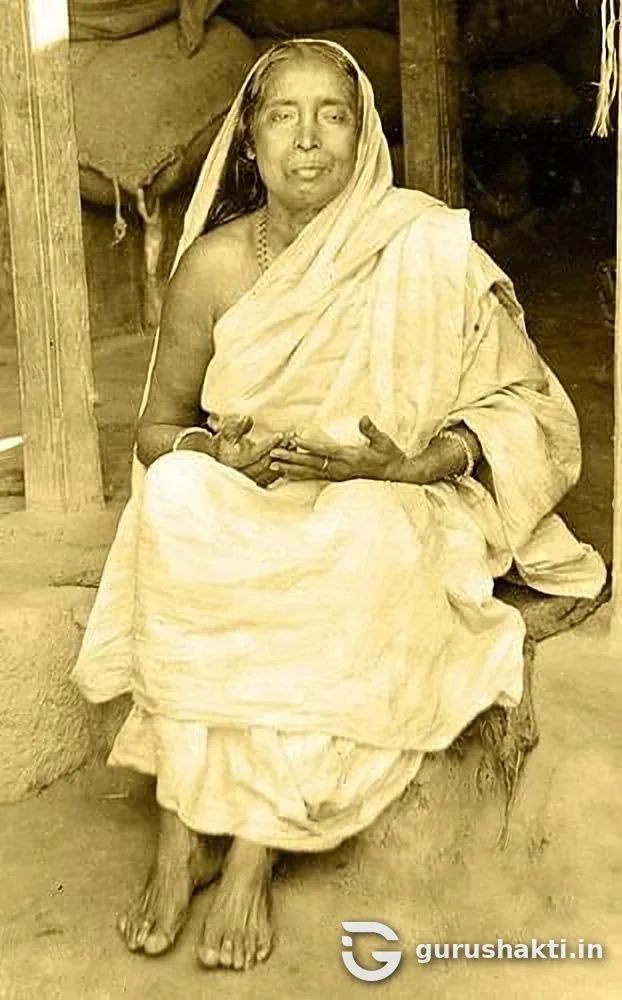
Image may be restored, upscaled or regenerated with generative AI.
Walk the path
The Holy Mother asked for very little. This week, try one thing: each time you notice yourself finding fault with someone, stop and look at your own faults instead. Sit for a few minutes of japa in the morning and again in the evening, repeating whatever Name is dear to you. Then do one quiet act of seva (selfless service) for someone outside your family, the way she fed and cared for everyone who came to her door.
Frequently asked questions
Who was Sri Sarada Devi (Holy Mother)?
Sri Sarada Devi (1853–1920) was a saint and guru of Bengal, the wife and spiritual companion of Sri Ramakrishna. After his passing she initiated hundreds of disciples and guided the monks of the Ramakrishna Order, who revere her as their spiritual mother. Her words are recorded in The Gospel of the Holy Mother.
What was Sarada Devi's last message?
Five days before she left the body in July 1920, she said: "If you want peace of mind, do not find fault with others." She added that one should see one's own faults and "learn to make the whole world your own", because no one is a stranger. It is her most quoted teaching.
Why is Sarada Devi called the Holy Mother?
She saw herself as mother to everyone, "the mother of the virtuous as well as the wicked", and refused no one who called her Mother. The monks of the Ramakrishna Order, including Swami Vivekananda, treated her as their spiritual mother, and the Order honours her as Sangha-janani, Mother of the Order.
Where is Sarada Devi's birthplace and how to visit Jayrambati?
She was born in Jayrambati, a village in the Bankura district of West Bengal. The Matri Mandir, a temple run by the Ramakrishna Math, stands on her birthplace. Many pilgrims also visit Kamarpukur, Sri Ramakrishna's village in Hooghly district. The Ramakrishna Math can advise on visiting arrangements.
When is Sarada Devi Jayanti celebrated?
Sarada Devi Jayanti follows the Hindu lunar calendar. It falls on Krishna Saptami, the seventh day of the waning moon, in the month of Agrahayana (Margashirsha). Because of this, the date in the Gregorian calendar changes each year. Her recorded birth date is 22 December 1853.
Sources
- Sri Sarada Devi – Belur Math (Ramakrishna Math and Mission)
- Sri Sarada Devi (1853-1920) – Sri Sarada Math
- Sarada Devi – Britannica
- Sri Sarada Devi – Ramakrishna Mission Bilaspur
- Two Reminiscences of Sarada Devi – Vedanta Society of Southern California
- Sri Sarada Devi, A Brief Introduction – Kali Mandir
Researched and written by GuruShakti, October 2026.