
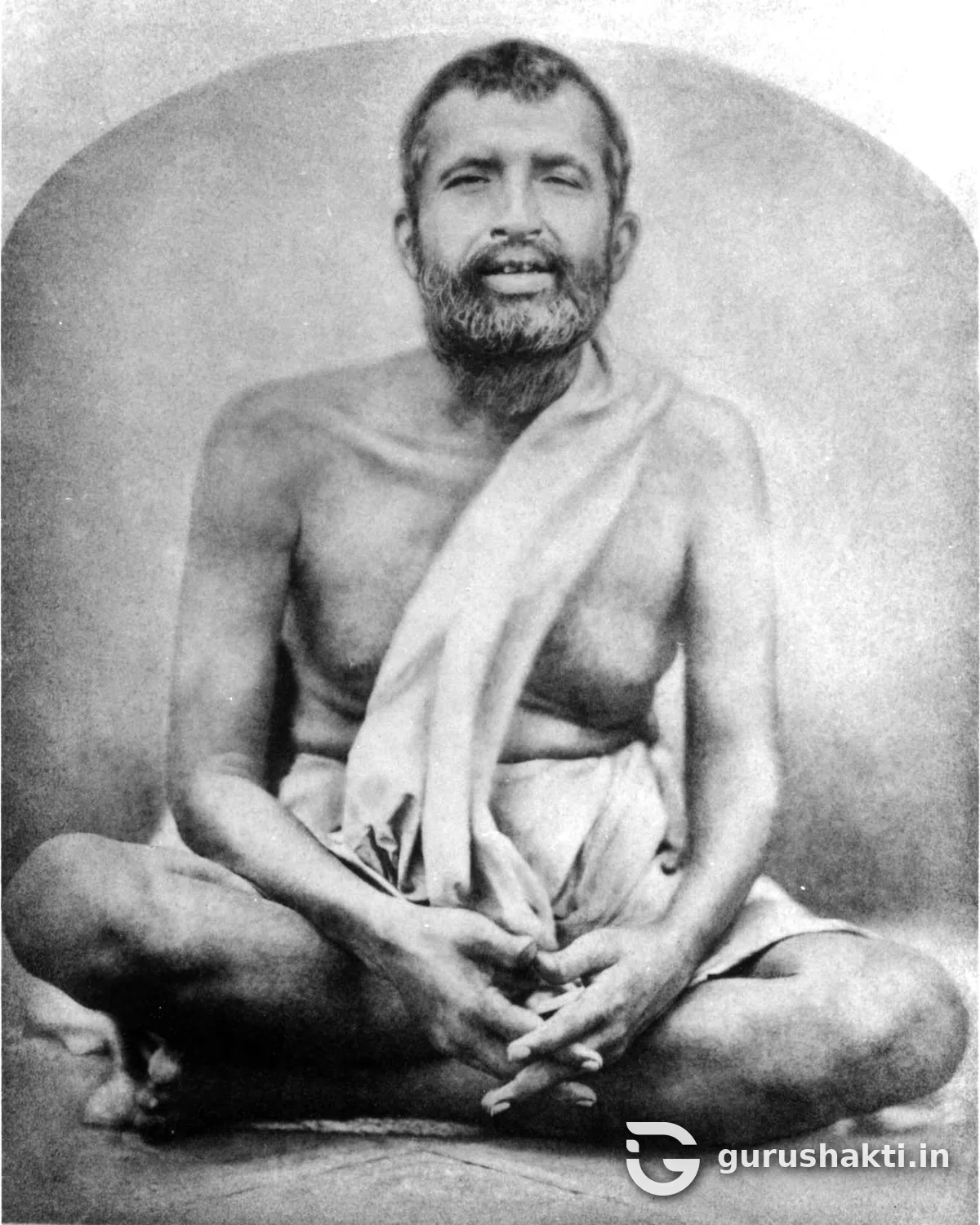
A small boy was walking through the fields near his village of Kamarpukur in Bengal. Above him a dark cloud was gathering, and against it flew a line of white cranes. As devotees tell it, the sight filled him with such joy that he lost all outer awareness. He was about six years old.
That boy, Gadadhar, grew up to be Sri Ramakrishna Paramahamsa, the priest of the Kali temple at Dakshineswar. He wrote nothing himself. A devotee, Mahendranath Gupta, known as "M.", recorded what he said. His central claim was simple and bold: God can be seen and known directly, by anyone who longs for God enough. He also taught that every sincere faith is a road to the same God.
Life story
Gadadhar of Kamarpukur
He was born on 18 February 1836 at Kamarpukur, in the Hooghly district of Bengal. His parents were Kshudiram Chattopadhyay and Chandramani Devi, and they named him Gadadhar. His birthday is also kept by the Hindu calendar, on Phalgun Shukla Dwitiya, so the festival date moves each year.
Around 1842, when he was about six, came the moment with the white cranes. Around 1852, at about sixteen, he moved to Calcutta to help his elder brother Ramkumar.
Priest of the Kali temple
In 1855 he became priest at Rani Rasmani's new Kali temple at Dakshineswar. For him, Kali was the Divine Mother, the living power behind the world.
Around 1859, when he was about 23, he was married to Sarada Devi of Jayrambati, who was then a child of about five. It was a betrothal-style marriage and was never consummated. Sarada Devi became his spiritual companion.
Many paths, one summit
In 1861 he began Tantra sadhana (spiritual discipline) under a teacher known as the Bhairavi Brahmani. In late 1864 a monk named Totapuri arrived and taught him Advaita Vedanta, the teaching that God and the self are one. Under Totapuri, Ramakrishna entered nirvikalpa samadhi, a state beyond all forms, and stayed absorbed in it for three days.
From the mid-1860s into the 1870s he followed Islamic and Christian paths of practice as well. He reported reaching the same realisation by each of them. This experience became the root of his best-known teaching: as many faiths, so many paths.
The disciples come
In his later years, disciples began to gather around him. In November 1881 he met Narendranath Datta, who would become Swami Vivekananda. Another young disciple became Swami Brahmananda. Mahendranath Gupta, known as "M.", recorded his conversations. These became the Sri Sri Ramakrishna Kathamrita, known in English as The Gospel of Sri Ramakrishna.
The last days at Cossipore
On 11 December 1885, during an illness of the throat, he moved to a garden house at Cossipore in Calcutta.
On 1 January 1886, though ill, he walked in the Cossipore garden and blessed the devotees gathered there. That day is remembered as Kalpataru Day. He passed away at Cossipore on 16 August 1886. Today the Ramakrishna Order, which bears his name, has its headquarters at Belur Math.
Core teachings
As many faiths, so many paths
His most quoted teaching is Jato mat, tato path: as many faiths, so many paths. He did not reach this as a theory. He had followed several paths himself and found that each led to the same God. Belur Math records this teaching: all sincere religions lead to the same God. The seeker on any sincere road deserves respect.
God can be known
Sri Ramakrishna taught that the goal of human life is to realise God. He did not mean believing in God at a distance. He meant seeing and knowing God directly, as the introduction to the Gospel explains. The way there, he taught, is longing and devotion: crying for God with the whole heart, the way a child cries for its mother.
The Divine Mother
God, he taught, can be loved as Mother. For Ramakrishna, Kali was the living power behind the world, as Belur Math describes. This made his religion warm and personal. A devotee can come to the Mother with fears, failures and requests, the way a child comes home.
Freedom from lust and greed
He often warned against kamini-kanchan, a Bengali phrase usually translated as "woman and gold." He used it to name lust and greed, the two great obstacles on the spiritual path. It was never a teaching against women: he honoured the Divine as Mother and revered his own wife as a spiritual companion. In modern terms, the warning is against craving and possessiveness, which pull the mind away from God.
Serve beings as God
He taught that living beings should be served as manifestations of God: Shiva-jnane jiva seva, service to beings knowing them to be Shiva. According to Belur Math, this idea inspired Swami Vivekananda's ideal of service. Kindness here is not charity from above. It is worship, offered to God in the form of the person in front of you.
Principles for daily life
- Pray with longing. Once a day, pray as a child cries for its mother, honestly and without formality.
- Respect every sincere path. This week, listen to someone of another faith without trying to correct them.
- Work with your mind on God. Do your duties fully, but remember, as Ramakrishna said of a maid in a rich house, that your real home is elsewhere.
- Watch for greed and lust. Notice them in small choices, an extra purchase or a lingering look, and gently turn away.
- Keep a little solitude. Spend some time each day alone in prayer, even ten quiet minutes.
- Serve as worship. Help one person this week as if you were serving God in them.
Places of pilgrimage
- Dakshineswar Kali Temple, Kolkata, West Bengal. The temple where he served as priest. Visit his room and the Panchavati, the grove where he practised.
- Kamarpukur, Hooghly, West Bengal. His birthplace, where a Ramakrishna Math temple stands on the site of his home.
- Cossipore Udyanbati, Kolkata, West Bengal. The garden house where he spent his last months and where Kalpataru Day began.
- Belur Math, Howrah, West Bengal. The Sri Ramakrishna temple and headquarters of the Ramakrishna Order.
- Jayrambati, Bankura, West Bengal. Sri Sarada Devi's birthplace, near Kamarpukur.
Legacy today
His disciples included Swami Vivekananda, Swami Brahmananda and Mahendranath Gupta. The Ramakrishna Order has its headquarters at Belur Math, where a temple is dedicated to him. Belur Math records that his ideal of Shiva-jnane jiva seva, serving beings as God, inspired Vivekananda's ideal of service.
"M."'s Kathamrita, read in English as The Gospel of Sri Ramakrishna, keeps his conversations in print. Each year devotees mark his birthday on Phalgun Shukla Dwitiya, and celebrate Kalpataru Day on 1 January. Dakshineswar, Kamarpukur and the Cossipore garden house remain places of pilgrimage, and his phrase jato mat, tato path remains his best-known teaching.
Images
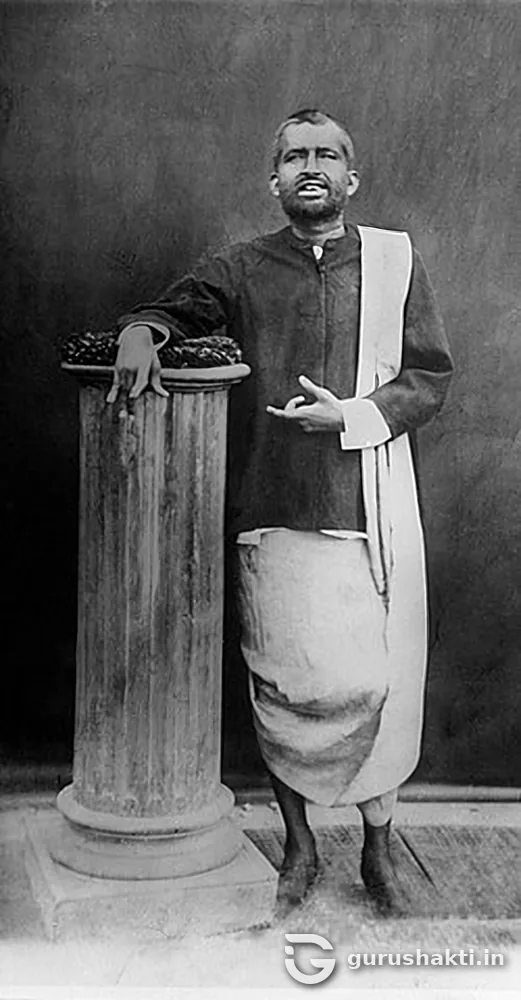
Image may be restored, upscaled or regenerated with generative AI.
Walk the path
Sri Ramakrishna's way begins with longing. This week, you might set aside ten minutes each evening to sit quietly and pray to God as Mother, in your own words, as a child speaks to its parent. If a puja at home helps you, keep it simple: a lamp, a flower, a few honest words. Let one act of service count as worship too. There is no hurry here. Longing grows slowly, and each sincere minute is enough.
Frequently asked questions
Who was Ramakrishna Paramahamsa's guru?
He had two main teachers. From 1861 the Bhairavi Brahmani guided him in Tantra practice. In late 1864 the monk Totapuri taught him Advaita Vedanta and gave him sannyasa, monastic initiation. Under Totapuri he entered nirvikalpa samadhi and stayed absorbed for three days. He also followed Islamic and Christian paths.
What did Ramakrishna teach about all religions?
He taught jato mat, tato path, as many faiths, so many paths. All sincere religions, in his view, lead to the same God. He did not hold this as theory: from the mid-1860s into the 1870s he practised Islamic and Christian paths and reported reaching the same realisation through each of them.
How did Ramakrishna meet Swami Vivekananda?
Narendranath Datta, later Swami Vivekananda, met him in November 1881. Sri Ramakrishna was then living at Dakshineswar, where he had served as priest of the Kali temple since 1855. Narendra became one of his key disciples, and Gurushakti's page on Swami Vivekananda tells the story of their first meeting.
What is Kalpataru Day?
Kalpataru Day falls on 1 January. On that day in 1886, though ill, Sri Ramakrishna walked in the Cossipore garden and blessed the devotees there. The day takes its name from the kalpataru, the wish-fulfilling tree, and devotees celebrate it each year.
What is the Gospel of Sri Ramakrishna?
It is the English translation of the Sri Sri Ramakrishna Kathamrita, the record of his conversations kept by Mahendranath Gupta, known as "M." It is the main source for his teachings, since he wrote nothing himself. Its introduction also tells his life story, including his time with Totapuri and his last days at Cossipore.
Sources
Researched and written by GuruShakti, October 2026.