
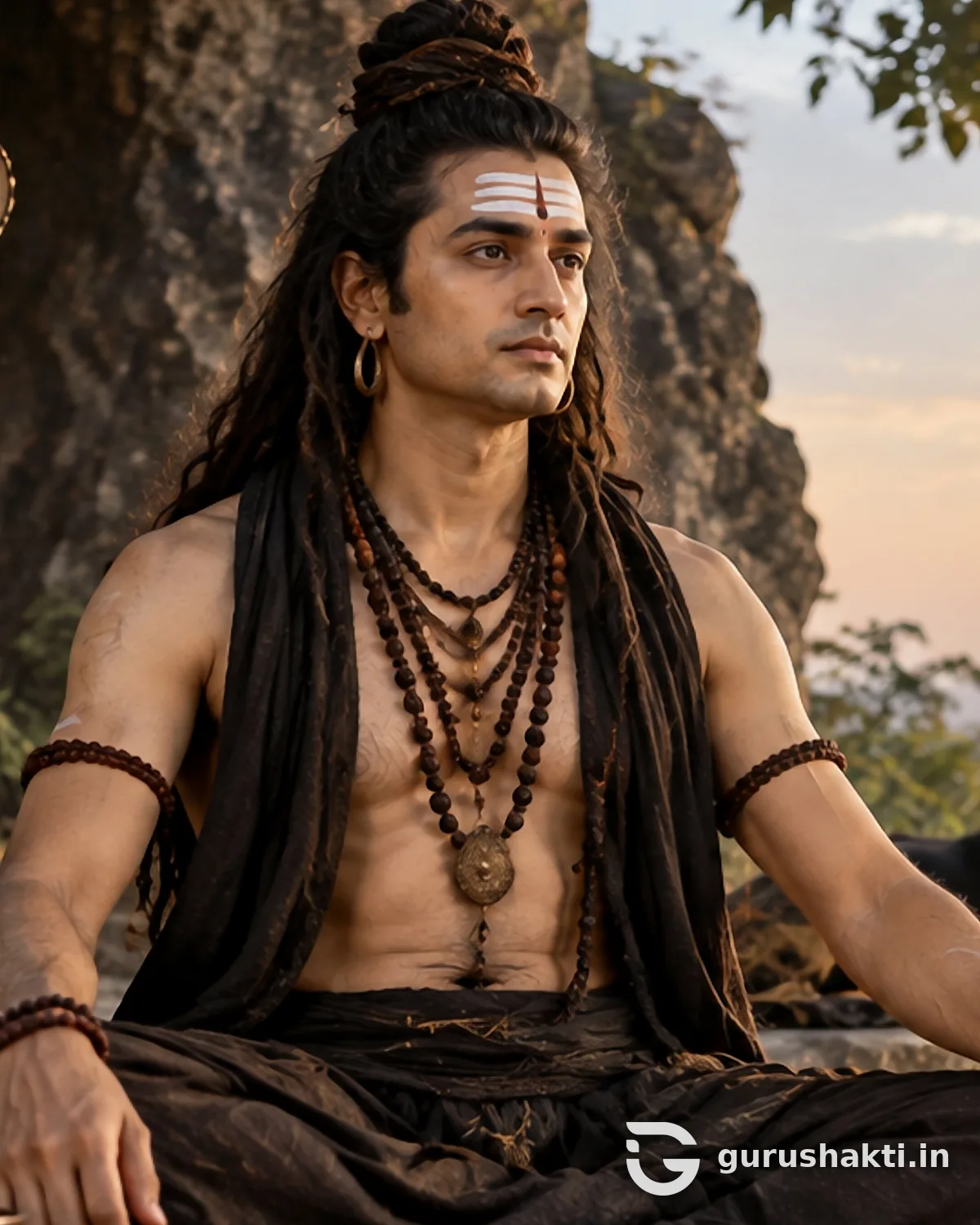
Every year on Makar Sankranti, pilgrims come to the Gorakhnath Mandir in Gorakhpur to offer khichdi, the plain dish of rice and dal cooked together, to Baba Gorakhnath. Devotees say the custom is very ancient, and that the first offering traditionally comes from Nepal's royal line. The day is kept as the Khichdi Mela: one of the plainest foods of India, offered to a yogi.
Guru Gorakhnath is a figure without firm dates and without a certain birthplace. Several regions claim him. Yet the Nath yogis, the kings who left their thrones in the old songs, and the pilgrims who still bring khichdi all trace something to him. His teaching speaks plainly to anyone today who wants a steady mind without giving up a cheerful life: laugh, play, and hold to meditation.
Life story
A yogi beyond dates
No one knows exactly when Gorakhnath lived. Scholars place him anywhere from about the tenth to the early thirteenth century, most often around the eleventh or twelfth. Encyclopaedia Britannica says the twelfth century or even earlier. He is generally thought to have lived and taught in north India.
His birthplace is just as uncertain. Punjab, Bengal, Odisha, Maharashtra and Nepal, among others, have all claimed him. The Nath tradition holds a different view of his life altogether. For Naths, he is a chiranjivi, an ever-living yogi who never died.
Disciple of Matsyendranath
Tradition says that early in life he became the disciple of Matsyendranath, also called Minanath, and mastered yoga under him. Gorakhnath is remembered as his leading disciple. He is counted among the 84 Siddhas (perfected yogis) and the Nine Naths, the great masters of the Nath line.
The best-known story of the two concerns the land of Kadali. According to legend, Matsyendranath forgot yoga and lived a life of pleasure there. Gorakhnath went to Kadali disguised as a dancer and woke his guru with songs. The guru returned to the path. The disciple had helped the master.
Building the Nath order
In his teaching years, tradition credits Gorakhnath with organising wandering yogis into the Nath order. His disciples wore large earrings through the cartilage of the ear. This gave them the name Kanphata, meaning "split-ear". The twelve branches of the Naths, the barah panth, trace themselves to him.
He set hatha yoga (the yoga of bodily discipline and breath) within a wider path of discipline, breath control and inner awakening. Texts in his name describe the subtle body, the inner map of energy that the yogi works with. Scholars debate whether he wrote them himself. The Sanskrit Siddha Siddhanta Paddhati and Goraksha Shataka are among the works attributed to him.
Songs in the people's tongue
He also spoke in the language of ordinary people. His sabadis, short verse sayings, are among the earliest verses in old Hindi. Together with Gorakh Bodh and other pieces, they were later gathered as Gorakh Bani, edited by the scholar Pitambar Datt Barthwal.
Legend says kings came to him and left their thrones. King Bhartrihari and King Gopichand took initiation from him and turned to yoga. Guga, also called Goga, is counted among his followers in legend. The songs of these kings are still sung by folk singers in north India.
A long influence
His influence did not end with his own era. Over the following centuries it reached the Sant poets. Kabir and others used Nath words such as sahaj (natural ease) and shunya (the void, or emptiness). Through them, the language of the Naths entered the devotional poetry of north India.
Today Nath maths stand across India and Nepal. The Gorkha region of Nepal takes its name from him. At Gorakhpur, the Gorakhnath Mandir is the chief seat of the Nath tradition, known as the Gorakshpeeth. There, every Makar Sankranti, the khichdi is still offered to Baba Gorakhnath.
Core teachings
Yoga as inner discipline
For Gorakhnath, yoga was the control of body, breath and mind. Its goal was inner freedom. It was not a way to gain powers or impress others. The body is trained so that the mind can become still, and the still mind can awaken. A yogi who gains some unusual ability and stops there has, in this view, missed the point. The work is inward, and its fruit is freedom.
Balanced living
Gorakhnath did not ask for gloomy austerity. One of his best-known sabadis begins:
हसिबा खेलिबा धरिबा ध्यान: "Laugh, play, and hold to meditation."
The yogi may be cheerful and light. What matters is that the mind stays steady through it all. In his teaching, neither harsh self-punishment nor careless indulgence leads anywhere. The middle way is a lively life held steady by meditation. This makes his path open to people who work, raise families and enjoy the company of others.
Humility and restraint in speech
Another sabadi gives very practical advice: "Do not speak harshly, do not stamp about; set your foot down gently." The same verse adds: "Do not be proud; live in natural ease." Gorakhnath saw yoga in small things. How a person speaks to others, how they walk into a room and how they carry their learning all show their inner state. A yogi who shouts and struts has not yet tamed the mind, however advanced the practices.
Die to the ego
Gorakhnath taught that the yogi must "die" while still living. This is not the death of the body. It is the death of the small self, the ego that wants, fears and brags. In Gorakh Bani he calls out: "Die, O yogi, die: such dying is sweet." The word is striking, and meant to be. In his image, when pride and grasping fall away, what remains is not loss but sweetness.
Guru and lineage
In the Nath path, liberation comes through a living guru and steady practice. Books alone are not enough. Gorakhnath received yoga from Matsyendranath, and the line passed on through the twelve branches. The Kadali legend adds something unexpected. Even a great guru can lose the way, and a sincere disciple can help him back. The bond between guru and disciple, in this teaching, is a living one that serves the truth, not a matter of rank.
Principles for daily life
- Keep a fixed time. Choose one time each day this week for breath practice or meditation, and keep it.
- Be cheerful, stay steady. Laugh and enjoy your day, but return to a calm mind when things stir you up.
- Speak softly and walk calmly. Notice your voice and your step this week. Let restraint show in small things.
- Drop one pride. Notice where you feel proud, of learning, money or spiritual progress, and let it go quietly.
- Share food on Makar Sankranti. Cook khichdi or a simple meal and share it with others on the festival day.
Places of pilgrimage
- Gorakhnath Mandir, Gorakhpur, Uttar Pradesh. The chief seat of the Nath tradition, called the Gorakshpeeth. Visit for darshan, and on Makar Sankranti join the Khichdi Mela.
- Gorkha, Nepal. The Gorkha region takes its name from him. Nath shrines across Nepal keep his memory.
- Girnar, Junagadh, Gujarat. A sacred hill of the Nath tradition and of Dattatreya, with a peak named after Gorakhnath.
Legacy today
The Nath Sampradaya, also known as the Kanphata Yogis, continues today, with its twelve branches tracing themselves to Gorakhnath. Nath maths stand across India and Nepal. The Gorakhnath Mandir in Gorakhpur remains the chief pilgrimage seat of the tradition, and its Khichdi Mela on Makar Sankranti draws pilgrims every year.
His influence also lives in language and song. His sabadis are among the earliest verses in old Hindi, collected in Barthwal's Gorakh Bani. Nath words such as sahaj and shunya passed into the poetry of Kabir and other Sant poets. Folk singers in north India still sing of Bhartrihari and Gopichand.
Images
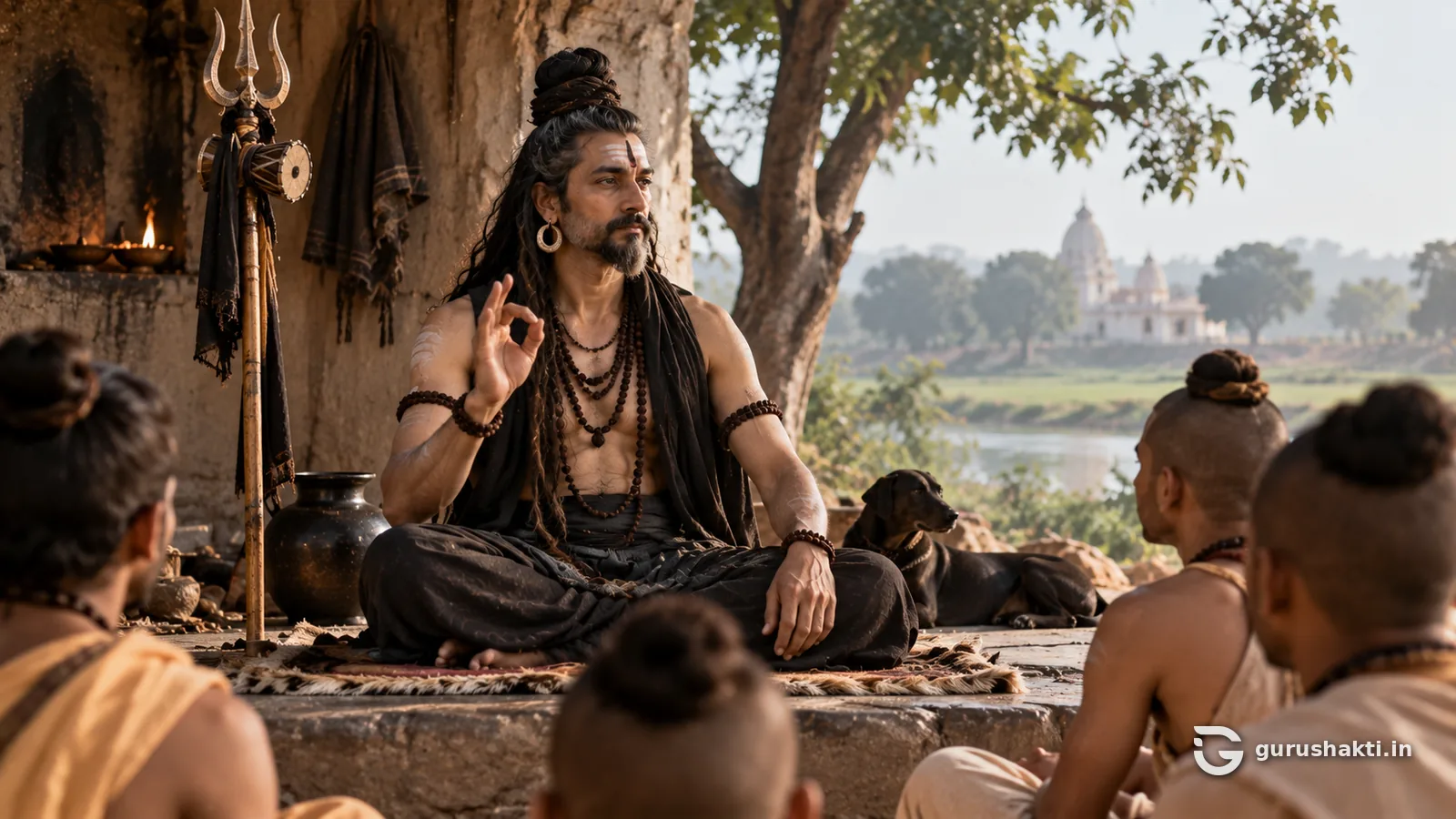
Image may be restored, upscaled or regenerated with generative AI.
Walk the path
Gorakhnath's path begins with steadiness. This week, set a fixed time each day, even ten minutes, to sit quietly and follow your breath. Let it be a light practice, not a grim one. He told yogis to laugh and play, and to hold to meditation.
Watch your speech and your step: speak gently, walk calmly. On Makar Sankranti, cook a pot of khichdi and share it with neighbours or with someone in need, as a small act of daan (giving). Nothing more is asked.
Frequently asked questions
Who was Guru Gorakhnath and who was his guru?
Guru Gorakhnath was a great yogi of north India and the leading figure of the Nath Sampradaya. He is counted among the 84 Siddhas and the Nine Naths. His guru was Matsyendranath, also called Minanath. Tradition credits Gorakhnath with organising the Nath order, whose twelve branches trace to him.
When did Gorakhnath live?
No one knows for certain. Scholars place him anywhere from about the tenth to the early thirteenth century, most often around the eleventh or twelfth. Britannica says the twelfth century or even earlier. The Nath tradition itself regards him as a chiranjivi, an ever-living yogi, and gives no date of passing.
What is the Nath Sampradaya?
The Nath Sampradaya is a Shaiva tradition of yogis who trace their line to Matsyendranath and Gorakhnath. Its members are also called Kanphata Yogis, "split-ear" yogis, after the large earrings worn through the ear cartilage. It has twelve branches, the barah panth, and maths across India and Nepal.
What did Gorakhnath teach about yoga?
He taught yoga as inner discipline: control of body, breath and mind, leading to inner freedom rather than powers. He set hatha yoga within a path of discipline and awakening. He also taught balance, humility in speech and the "death" of the ego while living, all within the guidance of a guru.
Why is khichdi offered to Baba Gorakhnath on Makar Sankranti?
Devotees say the custom goes back to ancient times. Every Makar Sankranti, pilgrims bring khichdi to the Gorakhnath Mandir in Gorakhpur, and the occasion is celebrated as the Khichdi Mela. According to tradition, the first offering comes from Nepal's royal line. It is a simple, shared food offered to a beloved yogi.
Sources
Researched and written by GuruShakti, October 2026.