
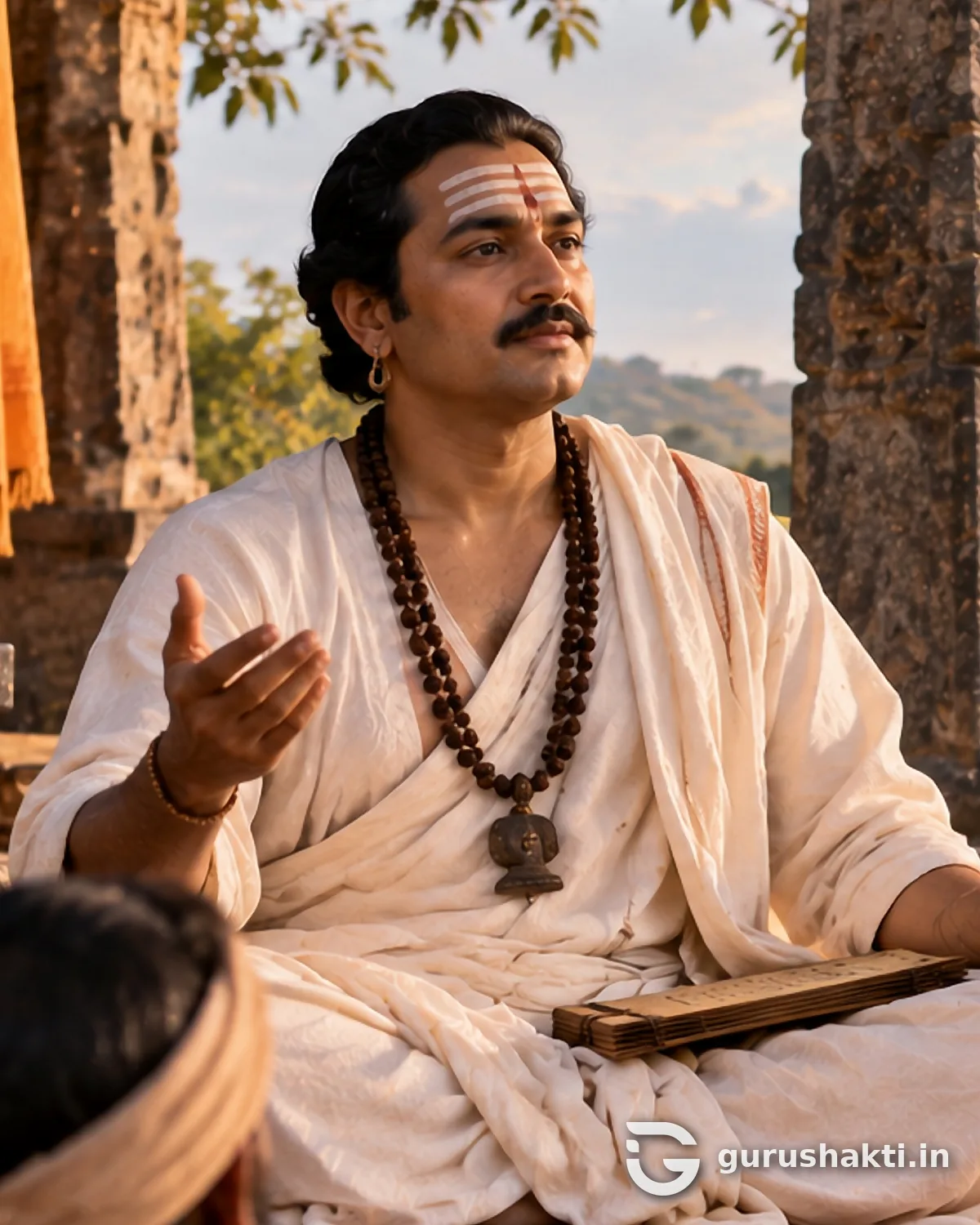
In one of his vachanas (short free-verse sayings in Kannada), Basavanna looks at the temples the rich build for Shiva and speaks for the poor man who cannot build one. The poor man has only his body, he says. My legs are the pillars, my body is the temple, my head is the golden dome. The poor man's body becomes the shrine, and nothing is missing from his worship.
This was Basavanna, also honoured as Basaveshwara, the great leader of the Lingayat or Virashaiva movement in twelfth-century Karnataka. He served as a minister at a royal court and gathered a hall where cobblers, washermen and a queen-turned-ascetic spoke of God as equals. His teaching still reaches anyone who works for a living: honest work is worship, sharing is a duty, and no one is lower by birth.
Life story
A Brahmin boy at Bagewadi
Basavanna was born in the early twelfth century at Bagewadi, now called Basavana Bagewadi, in the Vijayapura district of Karnataka. Sources give different years, from about 1105 to about 1134. His family were Shaiva Brahmins. Tradition names his parents Madarasa and Madalambike. The town now carries his name: Basavana Bagewadi, the Bagewadi of Basavanna.
Tradition says that as a youth he set aside the sacred thread rather than accept rites that excluded others. It was an early sign of the path he would take. He did not want a form of worship that kept some people out.
The meeting rivers
He went to Kudalasangama, where the Krishna and Malaprabha rivers meet. There he studied and worshipped at the Sangameshwara temple. He came as a seeker and stayed to learn. Shiva, as worshipped at this place, became his chosen deity: Kudalasangama Deva, the Lord of the Meeting Rivers.
That name would sign every vachana he composed. Whatever he said about work, honesty or caste, he ended by addressing it to the Lord of the Meeting Rivers. His poetry was always a conversation with God. The confluence where he first learned would also, tradition says, be the place where his life ended.
Minister at Kalyana
Around the 1150s he moved to Kalyana, today's Basavakalyan, the capital of the Kalachuri king Bijjala. The young devotee from the confluence now entered the life of a royal capital. Encyclopaedia Britannica records that during Bijjala's reign, from 1156 to 1167, he became chief of the treasury and later a chief minister.
He held high office and handled the kingdom's money. His vachanas warn against stealing, lying and contempt for others, and teach that honest work of any kind, done with devotion, is worship.
The hall of experience
In Kalyana he gathered the Anubhava Mantapa, the "hall of experience". Here sharanas (devotees of Shiva in this movement) of every caste, men and women, met to discuss spiritual life in Kannada, the language of the people.
Among them were Allama Prabhu, Akka Mahadevi, his nephew Channabasavanna and Siddharama. Many were working people. A cobbler, a washerman and a ferryman sat beside a queen who had become an ascetic. Such an open forum was rare in its time. In these years Basavanna composed vachanas teaching ishtalinga worship (worship of Shiva through a personal linga), kayaka (work as worship) and dasoha (sharing what one earns).
Turmoil and return
Tradition recounts that around 1167 a marriage took place among the sharanas between a family of former "untouchable" background and a Brahmin family. For Basavanna's community, this followed from what they believed: birth does not decide a person's worth. Orthodox anger followed, and intrigue at court followed the anger, and Kalyana was thrown into turmoil.
Basavanna left Kalyana. According to Britannica, he left the kingdom and died soon after. Tradition says he went back to Kudalasangama, where he had studied as a young man. He passed away there around 1167–68. The place is marked today by the Aikya Mantapa, the shrine of his union with the Lord, at the meeting of the rivers.
Core teachings
Inner and outer purity
For Basavanna, true religion was honest everyday conduct. Rituals mean little if a person steals, lies or looks down on others. One of his best-known vachanas begins with a list of plain commands:
कळबेड, कोलबेड, हुसिय नुडियलु बेड: "Do not steal, do not kill, do not speak falsehood."
The vachana goes on to warn against rage and contempt for others. Purity, in this teaching, is inner and outer at once. It is tested every day in what we say and do.
The body is the temple
Basavanna did not think God was confined to stone temples. He insisted that a devoted life makes the body itself a shrine. In his vachana on the poor man's temple, he says: "My legs are the pillars, my body the temple." This opened worship to anyone, however poor. No donation and no building stands between a sincere devotee and Shiva.
Kayaka: work is worship
Kayaka means work, and Basavanna gave it a sacred meaning. Honest work of any kind, done with devotion, is worship. No labour is lowly. The cobbler at his last, the washerman at the river and the minister at the treasury stand equal if each works honestly and offers the work to God. This teaching gave dignity to people whose work was looked down on. It also asked something of them: work done carelessly or dishonestly is not worship.
Dasoha and compassion
Dasoha means sharing what one earns. In Basavanna's teaching, honest work and sharing go together: you earn through kayaka, and you share through dasoha. A worker who keeps everything for himself has missed half the teaching. Beneath both lies compassion for all living beings. One vachana asks what dharma can exist without compassion, and answers plainly: "Compassion is the root of dharma."
Equality of all devotees
Birth and caste, Basavanna taught, do not decide holiness. He welcomed people of every caste, and women, as equals in the Anubhava Mantapa. One vachana asks the Lord not to let him say "whose man is he?" but rather "he is one of us, he is one of us". This was not a side issue for him. It followed directly from his devotion. If Shiva dwells in every devotee, no devotee can be lower than another.
Principles for daily life
- Offer your work. Before you start work each day this week, offer it silently to God, whatever the work is.
- Share a part. Set aside a portion of what you earn this week for someone in need, as dasoha.
- Weigh your words. Before speaking, ask whether it is true, kind and free of contempt.
- Ask the right question. When you meet someone this week, do not ask about their birth, caste or job. Ask "is he one of ours?" and answer "yes".
- Remember God in your own language. Keep a simple daily remembrance of God in the language you speak at home, as the sharanas did in Kannada.
Places of pilgrimage
- Kudalasangama, Bagalkot district, Karnataka. The Aikya Mantapa, his samadhi, stands at the meeting of the Krishna and Malaprabha rivers, near the Sangameshwara temple where he studied and worshipped.
- Basavakalyan, Bidar district, Karnataka. Old Kalyana, the city linked to the Anubhava Mantapa and the sharanas, with a memorial to the hall of experience.
- Basavana Bagewadi, Vijayapura district, Karnataka. His birthplace, with the Basaveshwara temple.
Legacy today
Basavanna is remembered as the great leader of the Lingayat or Virashaiva movement. His vachanas are sung across Karnataka. Each one is short free verse in Kannada, addressed to Kudalasangama Deva.
Basava Jayanti, his birth anniversary, is observed in the month of Vaishakha, around Akshaya Tritiya. Pilgrims visit the Aikya Mantapa at Kudalasangama, the Anubhava Mantapa memorial at Basavakalyan and the Basaveshwara temple at his birthplace. His teachings of kayaka (work as worship) and dasoha (sharing) remain at the heart of the tradition he led. The fellow sharanas of his hall, among them Allama Prabhu, Akka Mahadevi, Channabasavanna and Siddharama, are remembered with him.
Images
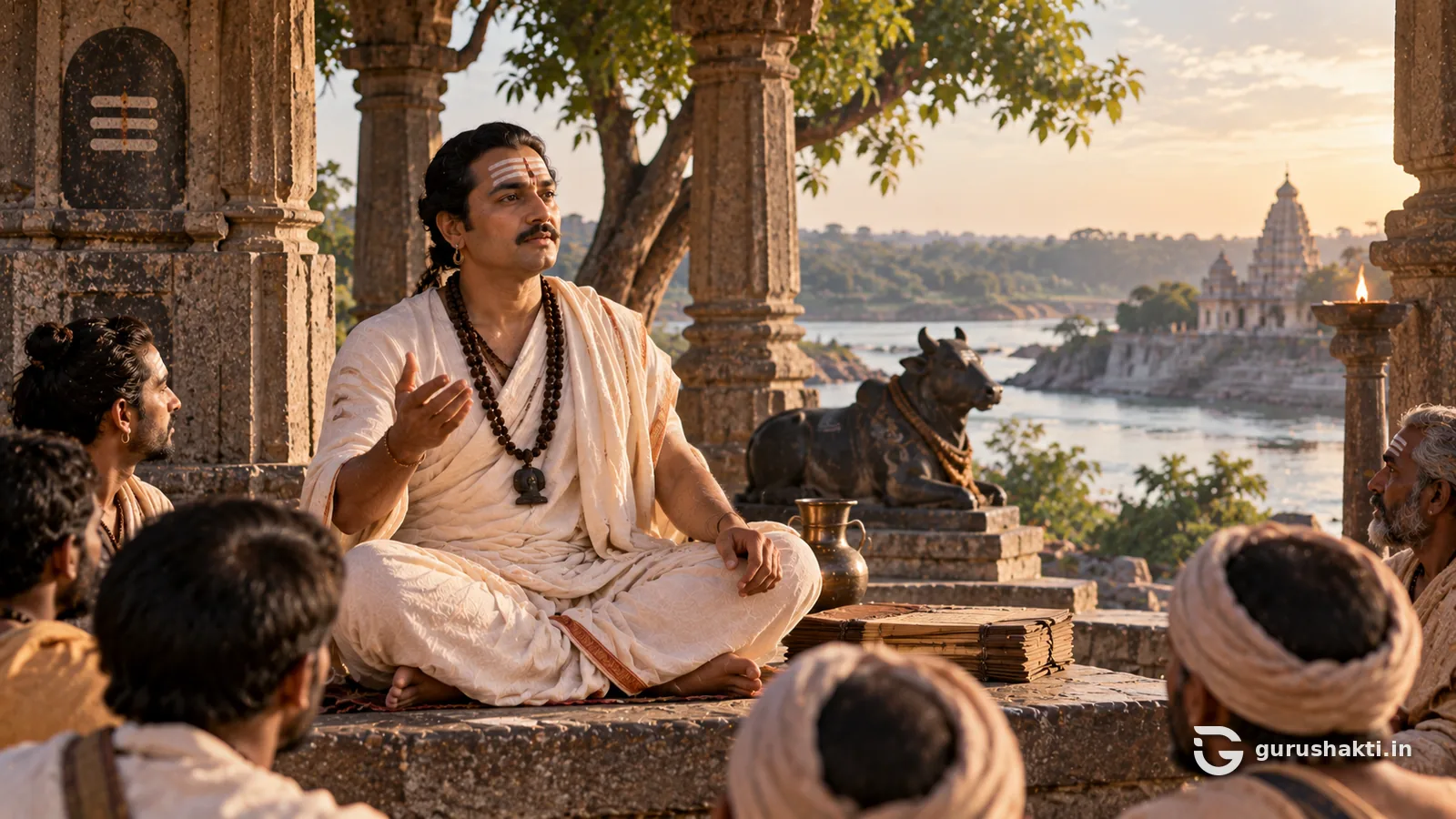
Image may be restored, upscaled or regenerated with generative AI.
Walk the path
Basavanna's path begins in ordinary places: at work, at home, at the table. This week, before you begin your work each morning, offer it quietly to God, in your own words and your own language.
Then practise dasoha. Set aside a small part of what you earn and give it, without fuss, to someone who needs it. When you meet a person whose birth or work is different from yours, remember his words: "he is one of us". No grand gesture is needed. Honest work and a shared meal are already worship.
Frequently asked questions
Who was Basavanna and what did he teach?
Basavanna, also called Basaveshwara, was a twelfth-century Shaiva saint of Karnataka and the great leader of the Lingayat or Virashaiva movement. He served as a minister at Kalyana and taught that honest work is worship, that sharing and compassion are duties, and that caste and birth do not decide holiness.
What is the meaning of Kayakave Kailasa?
"Kayakave Kailasa" means "work itself is Kailasa", the heavenly abode of Shiva. The phrase is widely linked to Basavanna and belongs to the vachana tradition of the sharanas. It expresses the idea of kayaka he taught: honest work, done with devotion, is itself worship and needs no other temple.
What was the Anubhava Mantapa?
The Anubhava Mantapa, or "hall of experience", was the gathering Basavanna formed in Kalyana. Sharanas of every caste, men and women, met there to discuss spiritual life in Kannada. A cobbler, a washerman, a ferryman and Akka Mahadevi sat together as equals. A memorial stands at Basavakalyan today.
When is Basava Jayanti celebrated?
Basava Jayanti, the birth anniversary of Basavanna, is observed in the Hindu month of Vaishakha, around the festival of Akshaya Tritiya. On this day devotees across Karnataka remember him, visit the places linked to his life and sing his vachanas, which are still sung throughout the state.
Where is Basavanna's samadhi?
His samadhi, the Aikya Mantapa, is at Kudalasangama in the Bagalkot district of Karnataka, where the Krishna and Malaprabha rivers meet. Tradition says he returned here from Kalyana around 1167–68 and merged with his Lord. The Sangameshwara temple, where he studied and worshipped, stands nearby.
Sources
Researched and written by GuruShakti, October 2026.