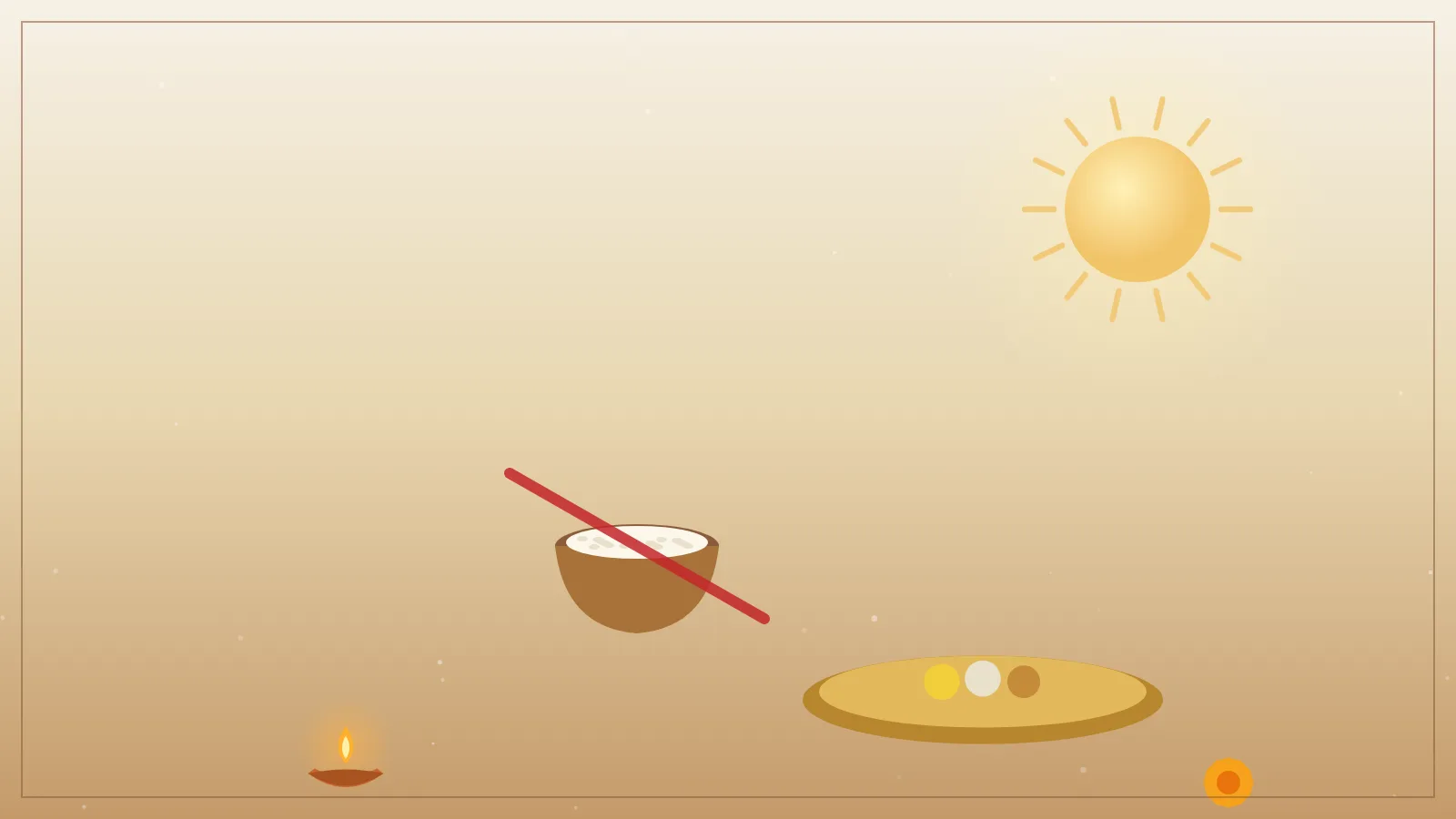
- Rice is not eaten on Ekadashi because the day is a fast from grain, and rice is the staple most families give up first; wheat, millets and pulses are avoided too.
- Tradition gives three reasons: the story of Medha Rishi, whose body is said to have grown as rice and barley, the Padma Purana teaching that sin hides in grain on Ekadashi, and the idea that a heavy meal clouds the mind.
- For Dev Uthani Ekadashi on Friday 20 November 2026, rice can be eaten again at parana on Saturday 21 November, about 1:15 PM to 3:30 PM in Delhi; check your local Panchang.
Rice is not eaten on Ekadashi because the tradition treats the day as a fast from grain (anna), and rice, the staple of most Indian homes, is the first grain people give up. Three reasons are usually given: the story of Medha Rishi, whose body is said to have grown as rice and barley; a Purana teaching that sin takes shelter in grain on Ekadashi; and the old idea that a heavy, watery meal clouds the mind on a day meant for prayer. Today, Friday 20 November 2026, is Dev Uthani Ekadashi, and rice can be eaten again at parana on Saturday 21 November, about 1:15 PM to 3:30 PM in Delhi. Times vary by city, so check your Panchang.
This page explains the reasons with respect for the tradition and without overclaiming. For the full fasting rules and food list, see Dev Uthani Ekadashi 2026 vrat rules.
Why rice is not eaten on Ekadashi: the short answer
| Reason | What it says |
|---|---|
| Medha Rishi story | the sage's body became rice and barley, so these grains are treated as living on Ekadashi |
| Padma Purana teaching | on Ekadashi, sin takes shelter in grain, so grain is avoided |
| Moon and mind | rice holds a lot of water; tradition links water to the Moon and the Moon to the mind |
| Practical view | giving up the staple meal is the core of the fast and keeps the day light |
The rule is not about rice alone. Wheat, millets, corn, dal and all pulses are also avoided. Rice is named because, for most families, "no rice" is what the fast actually feels like.
The story of Medha Rishi
A story told in many families says that the great sage Medha, to escape the anger of the Goddess (Adi Shakti), gave up his body through yoga. Parts of his body went into the earth and later sprouted as rice and barley (jau). Because this happened on Ekadashi, these grains are regarded as living beings on that day, and eating them is likened to eating the sage's own body.
The story is told in different ways, and it is better known in homes than in any single text. Its message is clear, though: on Ekadashi, grain is not ordinary food. It reminds the one who fasts that the day belongs to restraint and to Vishnu.
The Purana teaching: sin takes shelter in grain
Vaishnava teachers often cite a passage from the Padma Purana. Vishnu created Ekadashi as a day that burns away sin. Papa-purusha, the personified form of sin, was afraid and asked for a place to hide. He was told that on Ekadashi he could stay in grain. So those who eat grain on Ekadashi are said to take in sin, while those who fast from grain are freed of it.
This is why Vaishnava and ISKCON communities are especially strict about grain on Ekadashi, and why many families who do not otherwise fast still skip rice on this day.
The Moon, water and the mind
Rice needs a lot of water to grow and holds a lot of water when cooked. In traditional thinking, water is ruled by the Moon, and the Moon by the mind. On Ekadashi the Moon is moving towards full or new, so a heavy, watery meal is said to make the mind dull or restless just when it should be quiet for japa and prayer.
Treat this as traditional reasoning, not as a proven scientific fact. Its practical point holds anyway: a light stomach makes it easier to stay alert for the evening puja and a night of bhajan.
The practical view
- The staple is the sacrifice. A fast means giving up what you eat every day. For most of India that is rice, so leaving it is the real offering.
- It keeps the day simple. Without the main meal, there is less cooking and more time for prayer, reading and seva.
- It builds discipline. Keeping one clear rule twice a month trains the mind to keep promises to oneself.
None of this needs fear. Ekadashi is a day of devotion. A fast kept with a calm mind matters more than its strictness.
Have a question on your mind this Ekadashi? Ask GuruShakti one question for ₹299 and get an answer from your own birth chart.
What to eat instead of rice on Ekadashi
| Instead of | Try |
|---|---|
| rice, khichdi, pulao | sabudana khichdi with peanuts, or samak (barnyard millet) if your family allows it |
| roti, puri | kuttu (buckwheat), singhara (water chestnut) or rajgira (amaranth) flour puri |
| dal, sambar | potato, sweet potato, arbi or pumpkin sabzi in sendha namak |
| poha, idli, dosa, puffed rice | roasted makhana, fruit chaat, sabudana vada, curd |
| rice kheer | makhana kheer or sabudana kheer |
Poha, murmura, rice flour, idli, dosa and appam are all made from rice, so they are avoided too. Some families avoid samak rice because it is a grass seed; others treat it as fasting food. Follow your family custom.
A Friday note: Friday is usually the day for a white rice kheer to Lakshmi. Today it falls on Ekadashi, so offer makhana or sabudana kheer, fruit or mishri instead. If you keep the Vaibhav Lakshmi vrat, see the note there.
When can you eat rice again?
Rice is avoided from Dashami night until parana. For today's fast, parana is on Saturday 21 November 2026, about 1:15 PM to 3:30 PM in Delhi, after Hari Vasara ends at about 12:10 PM. Vaishnava and ISKCON calendars fast on Saturday and break the fast on Sunday 22 November in the morning. At parana, rice is allowed again, and in many homes the first Dwadashi meal includes it.
Health first
If you are diabetic, pregnant, elderly, unwell or on regular medication, keep a gentle fruit-and-milk fast or a single grain-free meal, drink water and keep taking your medicines. Ask your doctor if you are unsure. Giving up rice for a day is a vow, not a test of endurance.
A simple mantra for the day
ॐ नमो भगवते वासुदेवाय
Om Namo Bhagavate Vasudevaya
Meaning: Salutations to Lord Vasudeva (Vishnu), who dwells in all beings.
Anyone can chant it, at any time of the fast. See the Om Namo Bhagavate Vasudevaya page. In the evening, wake the Lord and sing Om Jai Jagdish Hare. For the meaning of the day, read Dev Uthani Ekadashi and Tulsi Vivah 2026 and the Dev Uthani Ekadashi vrat katha. The next Ekadashi is Utpanna Ekadashi on 4 December.
Personal guidance from GuruShakti
If something is weighing on you, Ask GuruShakti one question about career, money, family or health for ₹299, answered from your own birth chart. For a fuller reading, Basic GuruShakti Guidance is ₹499. Not ready to buy? Ask a free question first.
Frequently asked questions
Why is rice not eaten on Ekadashi?
Because Ekadashi is a fast from grain, and rice is the main grain in most homes. Tradition adds the story of Medha Rishi, whose body is said to have grown as rice and barley, and the Padma Purana teaching that sin takes shelter in grain on Ekadashi.
Is it a sin to eat rice on Ekadashi?
For someone keeping the fast, eating rice breaks the vow. If it happens by mistake, do not worry: say a prayer, continue the fast as you can, and keep the next Ekadashi with care.
Can I eat rice on Ekadashi if I am not fasting?
Many families avoid rice on Ekadashi even when they do not fast; others avoid it only while fasting. Follow your family custom.
Can we eat samak (sama) rice on Ekadashi?
Many families eat samak (barnyard millet) as a fasting food, but some, especially Vaishnava homes, avoid it. Follow your family or temple practice.
Are poha, idli and dosa allowed on Ekadashi?
No. Poha, murmura, rice flour, idli, dosa and appam are made from rice, so they are avoided on an Ekadashi fast.
When can I eat rice after Dev Uthani Ekadashi 2026?
At parana on Saturday 21 November 2026, about 1:15 PM to 3:30 PM in Delhi, after Hari Vasara. Vaishnava calendars break the fast on Sunday 22 November. Check your local Panchang.
Is only rice avoided on Ekadashi, or wheat too?
All grains and pulses are avoided: rice, wheat, millets, corn, dal and beans. Rice is simply the best-known example.
Explore with AI
Choose an AI assistant to explore this article further:
Opens in a new tab. ChatGPT, Claude and Perplexity open with the prompt filled in; for Gemini, DeepSeek and Qwen the prompt is copied for you to paste.