- The Ganesh Dwadash Naam Stotram begins Sumukhashchaikadantashcha Kapilo Gajakarnakah and names Ganesha twelve times, from Sumukha (auspicious face) to Gajanana (elephant face).
- Its phalashruti says whoever recites or even hears the twelve names at the start of study, at a wedding, on entering or leaving, in conflict or in difficulty meets no obstacle.
- Recite it tonight on Sankashti Chaturthi, Friday 27 November 2026, before breaking the fast after moonrise (about 8:15 PM in Delhi; check your local panchang), and before study, travel or new work.
The Ganesh Dwadash Naam Stotram is a short Sanskrit hymn that names Ganesha twelve times, beginning "Sumukhashchaikadantashcha Kapilo Gajakarnakah": the one with the auspicious face, the one-tusked, the tawny one, the elephant-eared. Its phalashruti says that whoever recites or even hears these names before study, a wedding, a journey or any difficulty meets no obstacle, which is why it is often said at the start of a puja, before exams and before setting out. Today, Friday 27 November 2026, is Sankashti Chaturthi, Ganesha's monthly fast of the dark fortnight, broken after moonrise tonight. Below are the stotram in Sanskrit and English, the meaning of each name and when to recite it.
Ganesh 12 names at a glance
| Deity | Ganesha |
| Language | Sanskrit |
| Source | found in standard puja manuals and recited at the start of rituals; its exact scriptural source is not firmly fixed |
| Structure | 2 lines of names (12 names), then the phalashruti |
| Best times | before study, travel, a new home or new work; Wednesday and Chaturthi |
| Time to recite | under a minute |
"Dwadash" (dvadasha) means twelve and "naam" means name. This is a different list from the twelve names in the Sankat Nashan Ganesh Stotra ("Pranamya shirasa devam"), though several names, such as Ekadanta, Lambodara, Vikata, Bhalachandra and Gajanana, appear in both.
Sumukhashcha Ekadantashcha lyrics with meaning
The 12 names
सुमुखश्चैकदन्तश्च कपिलो गजकर्णकः।
लम्बोदरश्च विकटो विघ्ननाशो विनायकः॥
धूम्रकेतुर्गणाध्यक्षो भालचन्द्रो गजाननः।
Sumukhashchaikadantashcha kapilo gajakarnakah,
Lambodarashcha vikato vighnanasho vinayakah,
Dhumraketur ganadhyaksho bhalachandro gajananah.
Meaning: The one with the auspicious face, the one-tusked, the tawny one, the elephant-eared; the big-bellied, the formidable one, the destroyer of obstacles, the supreme leader; the one with the smoke-coloured banner, the lord of the ganas, the one who wears the moon on his forehead, the elephant-faced.
Phalashruti: the fruit of reciting
द्वादशैतानि नामानि यः पठेच्छृणुयादपि॥
विद्यारम्भे विवाहे च प्रवेशे निर्गमे तथा।
संग्रामे संकटे चैव विघ्नस्तस्य न जायते॥
Dvadashaitani namani yah pathech chhrinuyad api,
Vidyarambhe vivahe cha praveshe nirgame tatha,
Sangrame sankate chaiva vighnas tasya na jayate.
Meaning: Whoever recites these twelve names, or even listens to them, at the beginning of studies, at a wedding, on entering (a new home or place) and on setting out, in conflict and in times of difficulty, for that person no obstacle arises.
This is the traditional promise of the stotram, and many families find real steadiness in it. It is a support for your intention and effort, not a guarantee of outcomes.
The 12 names of Ganesha and their meaning
| # | Sanskrit | Name | Meaning |
|---|---|---|---|
| 1 | सुमुख | Sumukha | the one with the auspicious, pleasing face |
| 2 | एकदन्त | Ekadanta | the one with a single tusk |
| 3 | कपिल | Kapila | the tawny, reddish-brown one |
| 4 | गजकर्णक | Gajakarnaka | the one with elephant ears |
| 5 | लम्बोदर | Lambodara | the one with a large belly |
| 6 | विकट | Vikata | the formidable one, of extraordinary form |
| 7 | विघ्ननाश | Vighnanasha | the destroyer of obstacles |
| 8 | विनायक | Vinayaka | the supreme leader, who has no one above him |
| 9 | धूम्रकेतु | Dhumraketu | the one with a smoke-coloured banner |
| 10 | गणाध्यक्ष | Ganadhyaksha | the lord of the ganas, Shiva's attendants |
| 11 | भालचन्द्र | Bhalachandra | the one who wears the moon on his forehead |
| 12 | गजानन | Gajanana | the elephant-faced one |
What the names remember
- Sumukha: a pleasant, auspicious face; Ganesha is the first face we see at the start of any good work.
- Ekadanta: in a well-known tradition Ganesha broke one tusk to keep writing the Mahabharata as Vyasa dictated it. Other stories tell it differently; all of them honour a sacrifice made for knowledge.
- Kapila: a tawny, reddish-brown colour, an old epithet of Ganesha's form.
- Gajakarnaka: large elephant ears, read by devotees as a god who listens to every prayer and fans away what is not needed.
- Lambodara: the large belly that, devotees say, holds the whole universe and digests both good and bad experience calmly.
- Vikata: an imposing, unusual form; in the Mudgala Purana tradition Vikata is also one of Ganesha's forms who overcomes desire (Kama).
- Vighnanasha and Vinayaka: the remover of obstacles and the leader without a superior; these are his best-known titles.
- Dhumraketu: in the Ganesha Purana tradition, Dhumraketu is the form Ganesha is said to take at the end of the Kali Yuga.
- Ganadhyaksha: leader of the ganas, the attendants of Shiva; the name "Ganapati" means the same.
- Bhalachandra: the moon on his forehead. A popular story says the moon once laughed at Ganesha and was cursed, then forgiven, and Ganesha wore the moon on his brow. That is why the moon is part of the Sankashti puja and arghya is offered to it after moonrise.
- Gajanana: the elephant face, given after Shiva restored the child Ganesha to life; the story is told in several Puranas with differences.
A question on your mind before a new start? If you are about to begin study, a job, a move or a venture and want clarity, Ask GuruShakti one question for ₹299.
When to recite the Ganesh 12 names
The phalashruti itself names the moments:
- Vidyarambhe: at the start of study, before an exam or a new course. Many children learn the stotram as their first Sanskrit prayer.
- Vivahe: at a wedding or engagement; Ganesha is worshipped first in every marriage ritual.
- Praveshe: on entering a new home, office or shop (griha pravesh).
- Nirgame: when setting out on a journey.
- Sangrame and sankate: in conflict and in difficult times.
Wednesdays and both Chaturthis of the month are also traditional.
Recite it on Sankashti Chaturthi tonight
Today, Friday 27 November 2026, Krishna Tritiya ends at about 9:50 AM and Chaturthi then runs until about 6:45 AM on Saturday (Delhi). The Sankashti fast is broken after moonrise, at about 8:15 PM in Delhi; moonrise differs by city by up to about 30 minutes, so check your local panchang. Read the full Sankashti Chaturthi puja vidhi and katha.
- Prepare: after evening bath, light a ghee lamp before Ganesha and offer durva grass, red flowers and modak or laddoo.
- Begin: with the Vakratunda Mahakaya shloka.
- Recite: the 12 names once, three times or 11 times, slowly and clearly. Some recite the stotram nine times to make 108 names.
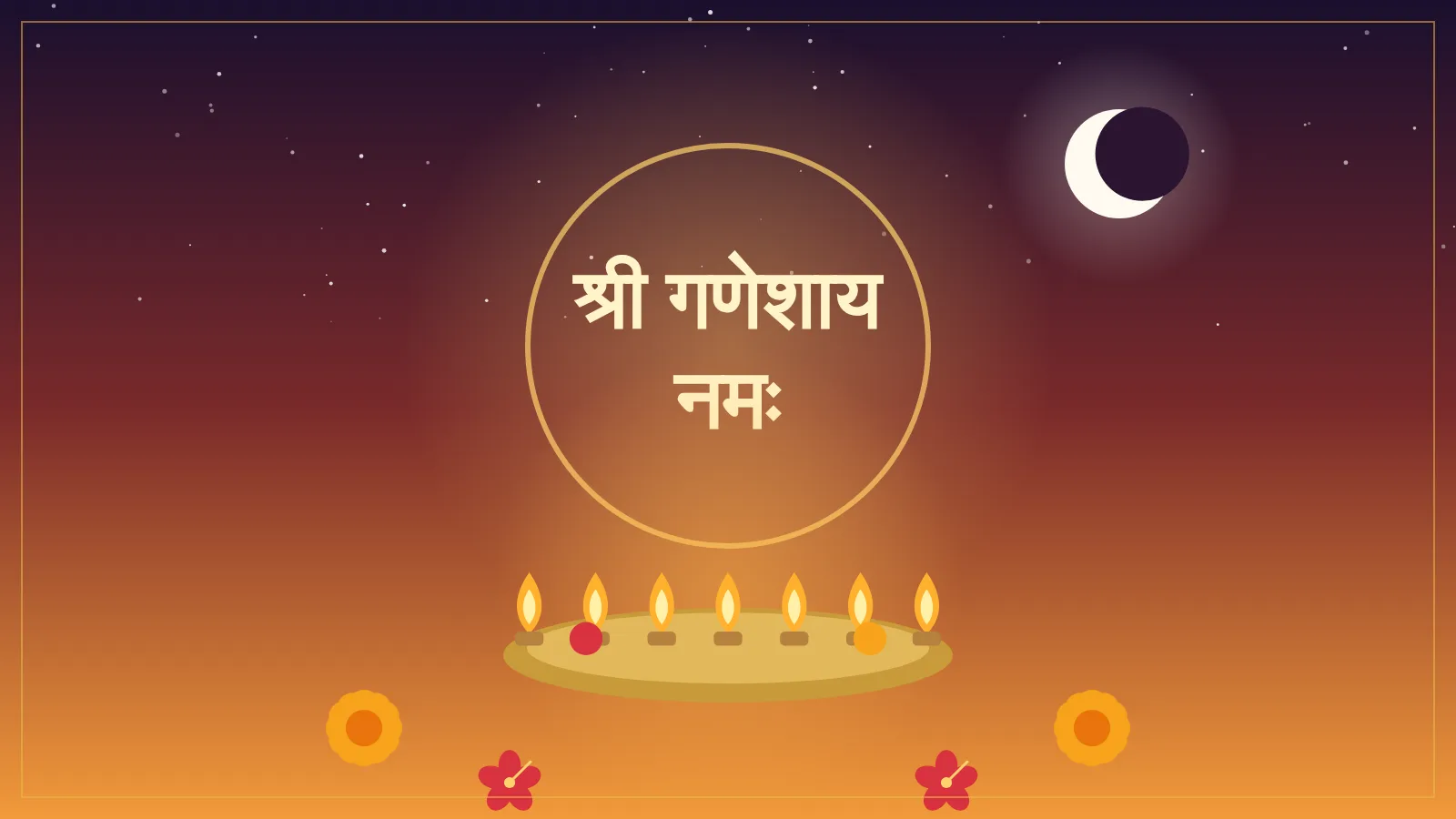
- Chant: Om Shri Ganeshaya Namah 11 or 108 times; anyone can chant it.
- Close: with the Ganesh aarti Jai Ganesh Deva, then offer arghya to the moon after moonrise and break the fast.
If you are fasting, keep it gentle: anyone unwell, pregnant, elderly or diabetic can eat fruit and milk or keep a lighter fast.
Ganesh 12 names and other Ganesha prayers
- Dwadash Naam Stotram (Sumukhashcha): 12 names in two lines; under a minute, ideal before study and travel.
- Sankat Nashan Ganesh Stotra: eight verses from the Narada Purana with a different list of 12 names; about two minutes.
- Ganesh Atharvashirsha: the Upanishadic hymn to Ganesha, recited with more discipline.
- Ganesh Chalisa: 40 verses in Hindi on Ganesha's stories.
Learn more, free: astrologers link Ganesha with Ketu and with Mercury, the planet of learning and Wednesday's ruler. Tonight the Moon is in Gemini and enters Punarvasu at about 3:45 PM.
Personal guidance from GuruShakti
Before a new beginning, for one clear question about study, work, a move or a family matter, Ask GuruShakti for ₹299. Welcoming a child? Child Name Guidance, ₹1,499, suggests names that suit the birth chart and numerology, and Ganesha's names are a favourite source. Not ready to buy? Ask a free question first.
Frequently asked questions
What are the 12 names of Ganesha?
Sumukha, Ekadanta, Kapila, Gajakarnaka, Lambodara, Vikata, Vighnanasha, Vinayaka, Dhumraketu, Ganadhyaksha, Bhalachandra and Gajanana, as listed in the "Sumukhashcha Ekadantashcha" stotram.
What is the meaning of Sumukhashcha Ekadantashcha?
It means "the one with the auspicious face and the one-tusked", the first two of Ganesha's twelve names in the stotram.
When should I recite the Ganesh 12 names?
The stotram says at the start of study, at a wedding, on entering a new place, on setting out, in conflict and in difficulty. Wednesdays and Chaturthi, including Sankashti Chaturthi on 27 November 2026, are also traditional.
Are these the same 12 names as in the Sankat Nashan Ganesh Stotra?
No. The Sankat Nashan Stotra begins with Vakratunda and has a different list, though several names, such as Ekadanta, Lambodara, Vikata, Bhalachandra and Gajanana, appear in both.
Can children recite the Ganesh 12 names?
Yes. It is short and easy, and many families teach it to children as a prayer before study and exams.
Can I recite the Ganesh Dwadash Naam Stotram without initiation?
Yes. It is a stotram of names, and anyone can recite it with devotion at any time, at any age.
Why is Ganesha called Bhalachandra?
Bhalachandra means "the one with the moon on his forehead". A popular story says Ganesha forgave the moon after it mocked him and placed it on his brow, which is why the moon is worshipped on Sankashti Chaturthi.
Explore with AI
Choose an AI assistant to explore this article further:
Opens in a new tab. ChatGPT, Claude and Perplexity open with the prompt filled in; for Gemini, DeepSeek and Qwen the prompt is copied for you to paste.